Canon patent targets easier support removal in UV inkjet 3D printing
Canon’s new patent aimed at the messiest part of UV inkjet printing: getting support off without wrecking fine detail. If it works, smaller parts could get a lot less risky to print.
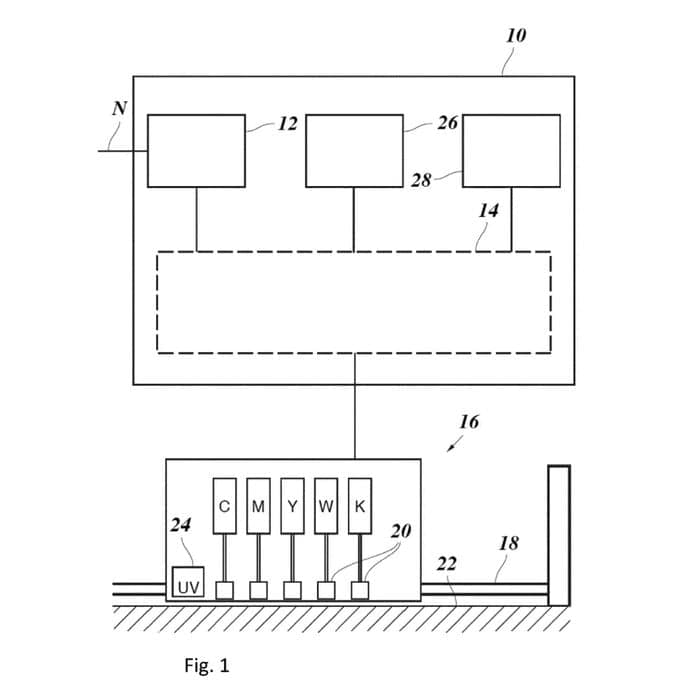
Support removal is one of the ugliest time sinks in high-detail 3D printing, and Canon Production Printing has now filed a European patent application aimed straight at that pain point. The filing, described by Fabbaloo on May 28, 2026, focuses on a different way to remove support material from UV inkjet printed structures, with the goal of making cleanup less destructive and less dependent on hand tools.
The patent covers a printing method, an ink set, an object, and an apparatus configuration for making 2.5D relief structures or full 3D objects. Instead of leaning on geometry alone, the approach uses two different ink compositions and appears designed to improve the interface between the model and the support material at the material level. That is a meaningful shift for a technology family where the real bottleneck is often not printing the part, but freeing it cleanly afterward.
That bottleneck is familiar to anyone who has worked around PolyJet-style machines. Stratasys says PolyJet printing jets and UV-cures thin layers of liquid photopolymer, with support material added for overhangs and complicated geometries. Its support material is intended to be removed carefully after printing to avoid damaging the model, and the company markets options ranging from breakaway support for manual removal to soluble support for hands-free cleanup. In other words, the support is part of the system, but it still demands attention.
The cleanup problem is why post-processing vendors keep circling this part of the workflow. PostProcess Technologies has described PolyJet post-printing as historically messy and inefficient, with support removal heavily dependent on manual labor, picks, brushes, water blasters, and dunk tanks that do not scale well for customer-ready parts. TriMech has said automated PolyJet support removal can reduce roughly 80% to 100% of the labor involved in cleaning parts.

Canon’s filing fits into a longer patent history around multi-fluid inkjet printing. Google Patents records show US8142860B2 describing a 3D-inkjet method using two or more fluids with different compositions, while JP6592572B2 covers a direct inkjet printing system with separate ink and support material print heads. The common thread is simple: the industry keeps looking for ways to make support release less of a gamble.
For smaller-format machines, the appeal is easy to understand. If easier support removal moves down the stack, delicate miniatures, cosmetic parts, and other fragile prints could become less risky to finish. In high-end inkjet printing, support release is not just a cleanup step. It is throughput, yield, and whether a part survives the last mile from printer to bench.
This article was produced by Prism’s automated news system from verified source data, official records, and press releases, then run through automated quality and moderation checks before publishing. The system is built and supervised by the people who set the standards it runs under. Read our full AI policy.
Did this article answer your question?