China's 3D Printer Exports Hit 5 Million Units, Up 33% in 2025
China shipped 5.03 million 3D printers in 2025, up 33% year-over-year, with nearly 2 million units landing in the US alone.
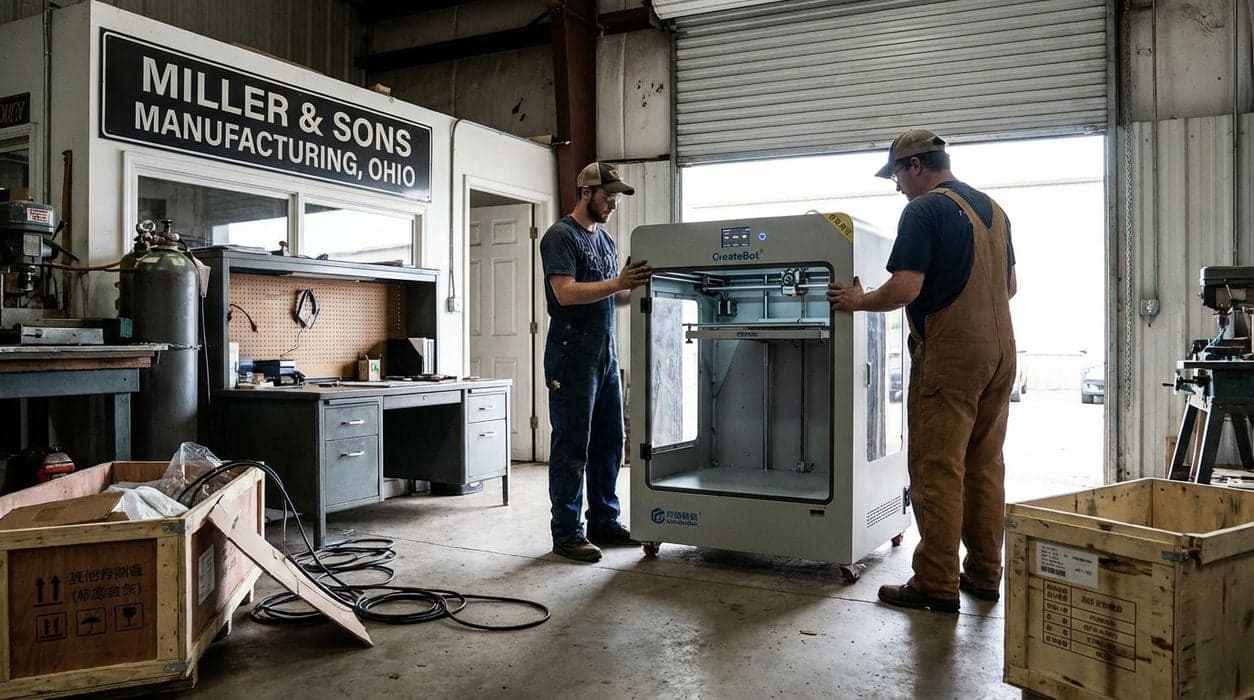
The desktop printer sitting on your workbench is part of a nine-year supply chain story that just hit a new milestone: China shipped 5.03 million 3D printers in 2025, a 33% jump in unit volume over the prior year, with export value climbing 39.1% to 11.36 billion RMB, roughly $1.6 billion.
The figures come from China's General Administration of Customs, with analysis from ChiTu Systems and Chinese trade outlet Nanjixiong. To put the trajectory in perspective, ChiTu Systems' data shows China exported approximately 535,000 units in 2017. That number crossed five million last year, nearly a tenfold increase in eight years.
The United States absorbed the largest share of that volume, receiving approximately 1.95 million units, nearly 39% of total exports. Germany ranked second at around one million units. Brazil, the United Kingdom, Canada, Australia, the Netherlands, Poland, Japan, and India rounded out the top ten destinations, a geographic spread that traces the global expansion of the desktop maker community.
What's driving the numbers matters as much as the numbers themselves. As ChiTu Systems' analysis notes, "the vast majority of these exports are desktop and consumer 3D printers, especially plastic-based systems." This is not a story about Chinese foundries flooding the market with industrial metal powder-bed systems. It's about FDM and resin machines hitting homes, schools, and maker spaces at a scale that would have seemed improbable a decade ago.
The growth curve has not been linear. Exports surged through 2020 and 2021, then pulled back in 2022 before rebounding in 2023 and continuing upward through 2025. That pattern mirrors broader consumer electronics cycles, with pandemic-era demand spikes followed by correction and then a sustained climb as the technology matured and price floors dropped further.
When a single country ships five million desktop printers in twelve months, filament manufacturers, aftermarket parts suppliers, and third-party firmware developers gain real commercial incentive to expand their catalogs. Toolhead compatibility, nozzle standards, and build plate accessories tend to proliferate when the installed base is large enough to support them. The numbers from 2025 suggest that base is now very large indeed.
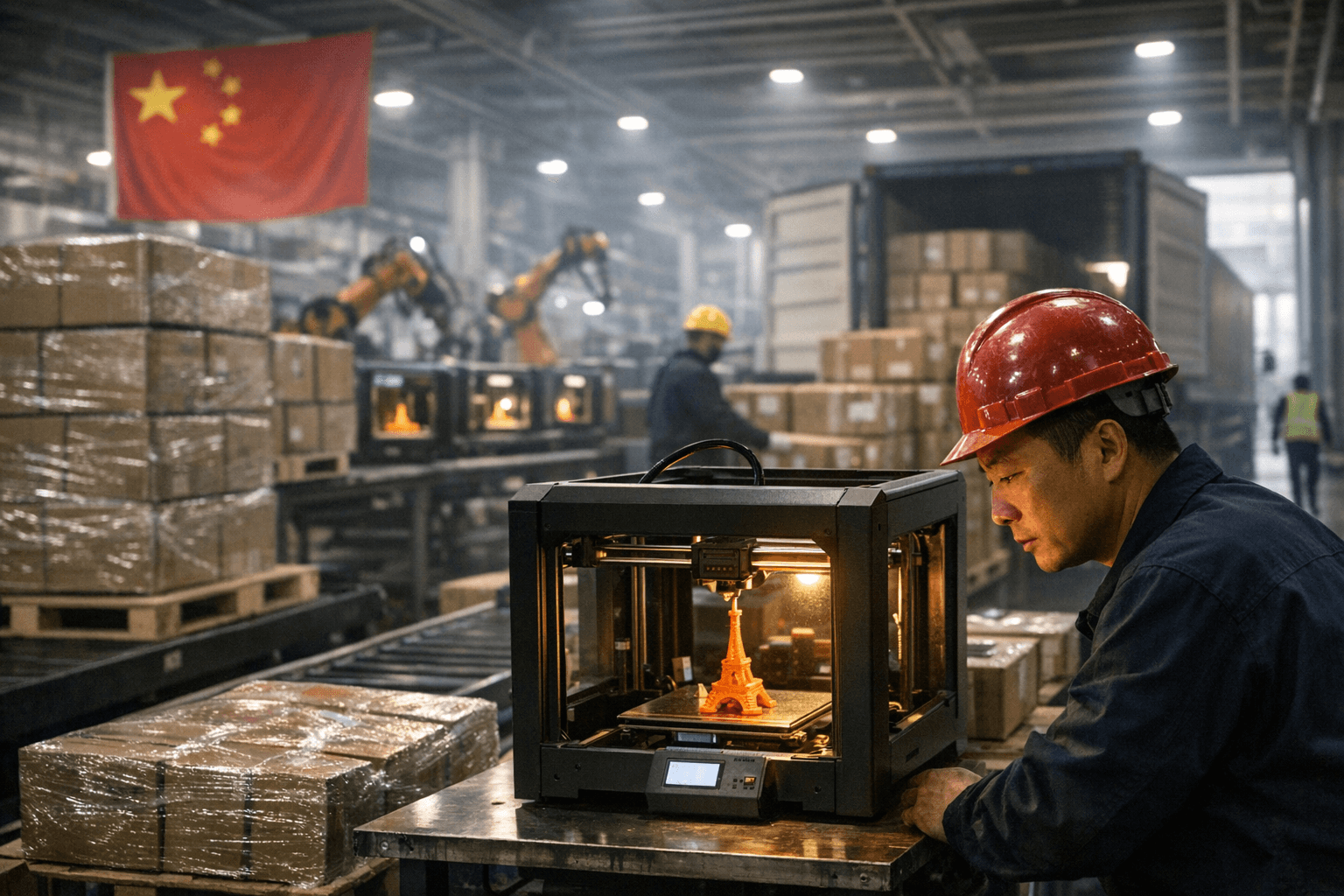
The flip side of that scale is product churn. When export volume grows 33% in a year, it typically means new SKUs, new brands, and new firmware stacks entering the market faster than communities can evaluate them. The questions that matter when buying into a fast-moving market remain constant: Is the firmware actively maintained? Are spare parts stocked outside the manufacturer's home country? Does the brand have a support structure that survives the next product generation?
Those concerns are not hypothetical. Several brands that contributed to the 2020-21 surge faded before their machines reached the end of their useful hardware life, leaving owners hunting for replacement hotends or bed thermistors without manufacturer backing. A larger installed base in 2025 expands the odds that community-sourced documentation and compatible third-party parts will exist, but it doesn't guarantee the original manufacturer will still be reachable in two years.
The concentration of volume in plastic desktop systems also clarifies where growth is actually happening in additive manufacturing. Industrial metal AM remains expensive, specialized, and largely divorced from the consumer market. The five-million-unit figure confirms that the real expansion of 3D printing as a widespread technology is occurring at the FDM and resin tier, in classrooms, garages, and small shops rather than aerospace facilities.
For the maker community, the headline number carries weight beyond market statistics. A world with five million more desktop printers shipped in a single year is a world where more people are learning to slice files, troubleshoot first layers, and share print profiles. That community surface area tends to compound: more printers mean more teardown videos, more forum threads on bed leveling, and more open-source profiles for specific materials. ChiTu Systems' trajectory data suggests that surface area is only going to keep expanding.
This article was produced by Prism’s automated news system from verified source data, official records, and press releases, then run through automated quality and moderation checks before publishing. The system is built and supervised by the people who set the standards it runs under. Read our full AI policy.
Did this article answer your question?