Colossal 3D-prints shell-less egg system, hatches 26 live chicks
Colossal said 26 chicks hatched from a shell-less 3D-printed egg system that ran in normal air, without supplemental oxygen.
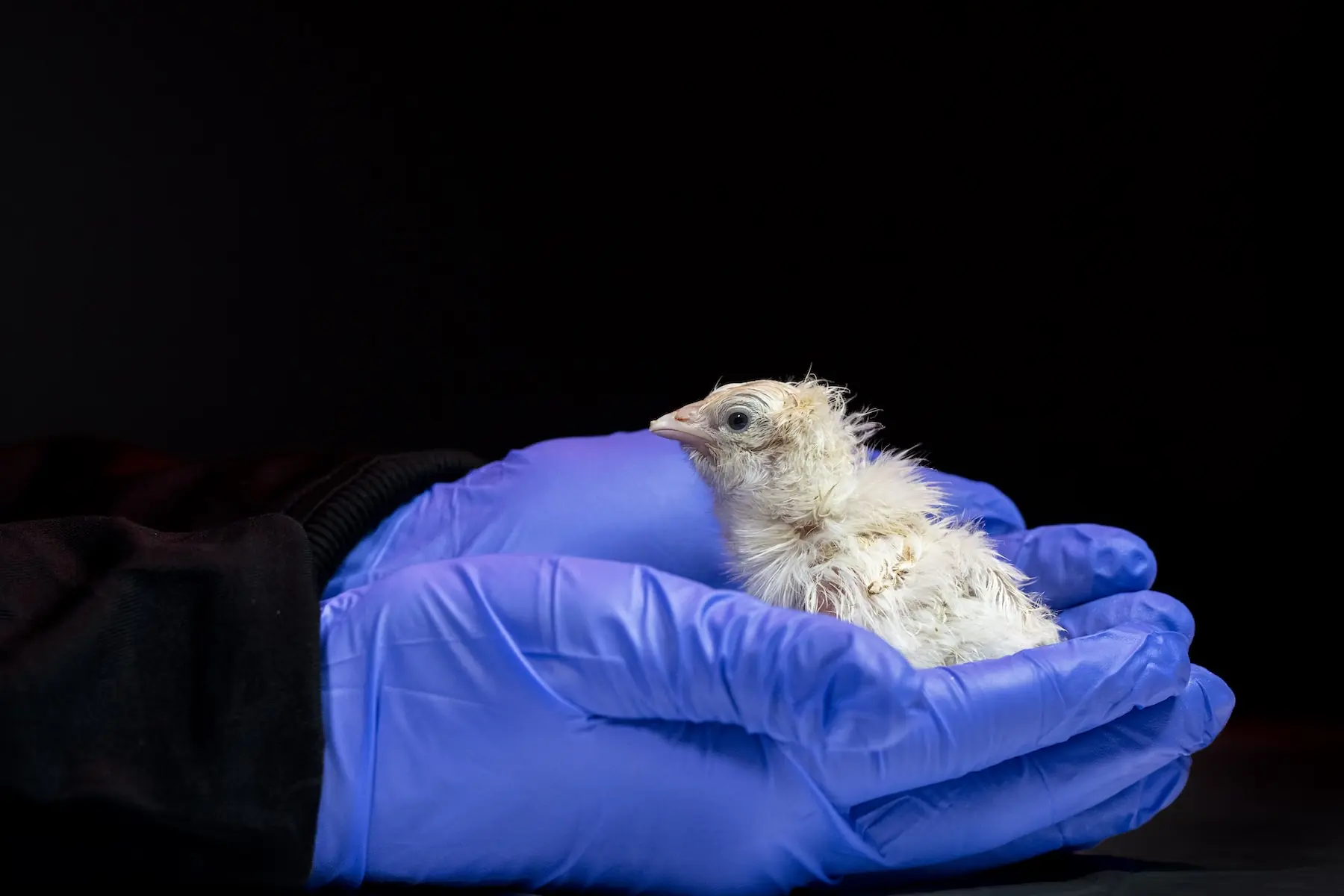
Colossal Biosciences said it had pulled off a milestone that sits at the edge of additive manufacturing and bioresearch: 26 live chicks hatched from a fully artificial egg system built without shells or hens. The Dallas company announced the result on May 19, 2026, and described it as the first shell-less incubation platform to carry an avian embryo all the way from early development to hatch.
The system is built around a 3D-printed lattice, or hexagonal support structure, paired with a novel silicone-based membrane that lets oxygen transfer under normal atmospheric conditions. That detail matters. Colossal said earlier shell-less avian culture attempts from the 1980s needed large volumes of pure oxygen, while its version was designed to work in standard commercial incubators without supplemental oxygen. For 3D printing, that turns the headline from novelty into a materials-and-fluidics problem: hold the embryo, manage gas exchange, and keep the structure stable enough to behave like an egg.
Colossal said fertilized chicken eggs were transferred into the artificial shells 36 to 40 hours after laying. The company also added calcium to replace what chicks would normally absorb from a real shell. About 18 days later, the chicks began pecking their way out and emerging. The hatchlings were later set to be moved to a farm, closing a development cycle that Colossal says could one day be scaled for larger birds.
The company is pitching the platform as more than a one-off chicken experiment. It says the artificial egg is an enabling technology for its avian work, including its South Island giant moa program. The moa was a flightless bird that lived in New Zealand and went extinct roughly 600 to 750 years ago, and Colossal says its eggs were about 80 times the volume of a chicken egg and eight times the volume of an emu egg. Colossal argues that makes a surrogate bird impractical and pushes the engineering challenge toward a manufacturable, adaptable incubation system.

That is also where the skepticism begins. Colossal’s CEO, Ben Lamm, said the company was trying to make nature’s egg system “better and scalable and even more efficient,” while chief biology officer Andrew Pask said watching the chicks move inside the artificial eggs was “absolutely mind blowing.” But evolutionary biologist Vincent Lynch of the University at Buffalo said the technology may help produce a genetically modified bird, without being the same as bringing back a moa. Scientists quoted in coverage also questioned whether the system truly counts as a full artificial egg, since Colossal did not recreate some key biological components of a real egg.
MIT Technology Review said Colossal was founded in 2021 and has raised $620 million. The company says it plans to test the system with emu and ostrich embryos next, and for now the image that lingers is simple: 26 chicks, no shell, and a 3D-printed structure doing work that used to belong only to nature.
This article was produced by Prism’s automated news system from verified source data, official records, and press releases, then run through automated quality and moderation checks before publishing. The system is built and supervised by the people who set the standards it runs under. Read our full AI policy.
Did this article answer your question?