Creality files Hong Kong IPO as consumer 3D printing matures
Creality’s Hong Kong IPO filing shows a former budget leader under margin pressure as Bambu Lab outpaces it in speed and volume. The fight has moved from cheap machines to software, support, and ecosystem lock-in.
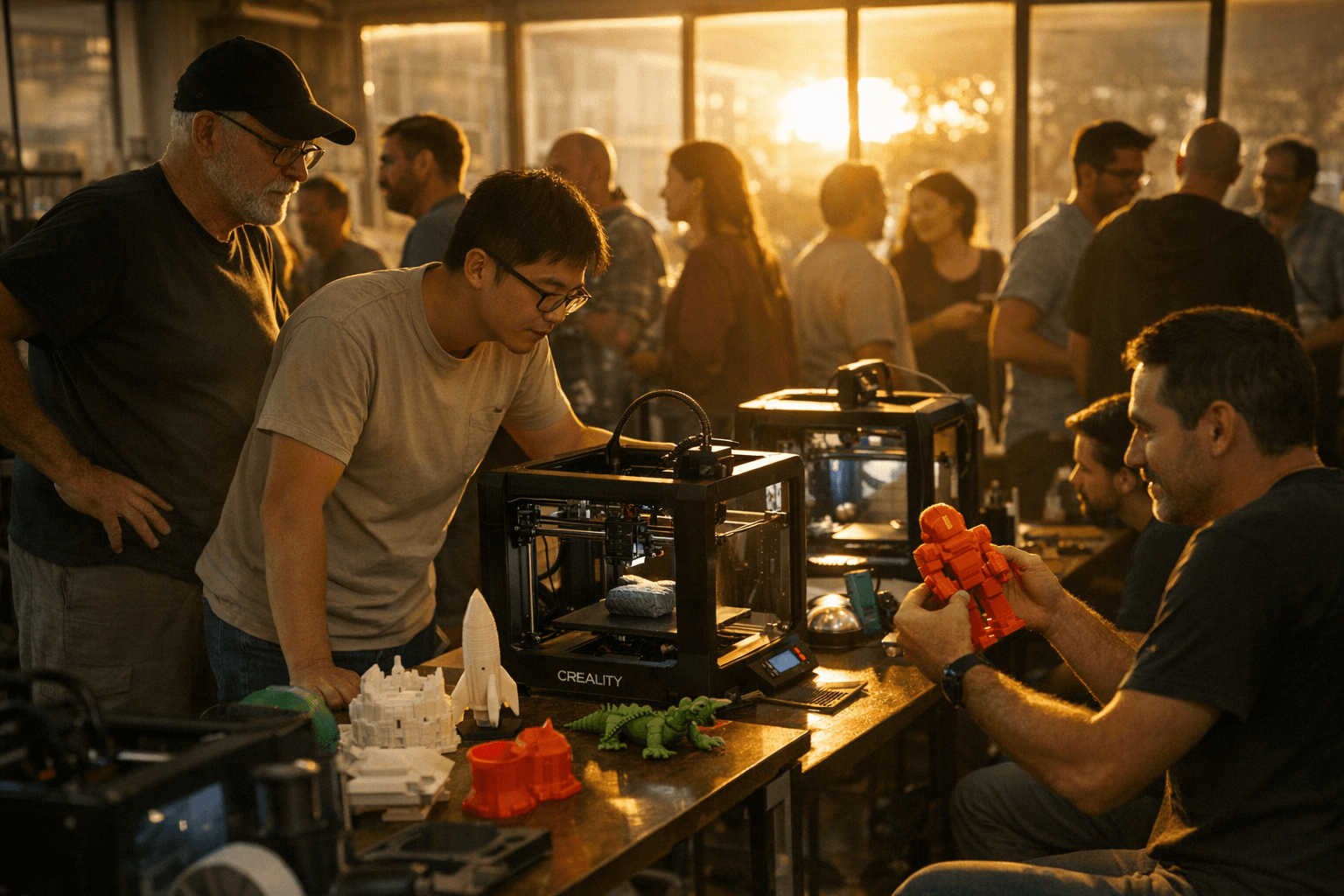
Creality’s Hong Kong listing attempt reads like a status report on a hobby market growing up fast. The Shenzhen printer maker filed an Application Proof with the Hong Kong Stock Exchange for a main board listing, a draft that does not guarantee an offering, but if it goes through it would make Creality the first consumer 3D printing firm to trade in Hong Kong. China International Capital Corporation is the sole sponsor.
The filing points to a market that is still expanding, but no longer forgiving. Creality’s revenue rose from RMB 1.35 billion in 2022 to RMB 3.13 billion in 2025, yet the company’s printer sales fell even as average prices climbed. Gross margin held near 31 percent, but the company swung to a net loss of RMB 182.4 million in 2025 from a profit of RMB 88.7 million in 2024, and operating cash flow turned negative as R&D and marketing spending surged. Printer revenue grew more on price than volume, with average selling price rising from RMB 1,306 to RMB 2,404 between 2022 and 2025 while unit sales slipped from 842,000 to 742,000.

That matters because Creality has long been one of the brands that set the floor for mainstream FDM pricing. The company says it was founded in 2014 in Shenzhen by four college graduates who met at a 3D-printing exhibition, and it now says it has sold 6.1 million printers, employs more than 1,800 people, holds more than 800 patented technologies, and sells in more than 100 countries. Its Ender-3 helped define the open-source, beginner-friendly desktop printer for a generation of users, while the April 2023 launch of the K1 and K1 Max showed Creality trying to move beyond the cheap-box playbook into the high-speed enclosed category.
The competitive picture explains why that shift is urgent. CONTEXT said Creality led entry-level shipments in the fourth quarter of 2024 with a 40 percent share, but unit shipments still fell 25 percent year over year. In the first quarter of 2025, entry-level shipments rebounded 15 percent year over year, with Creality at 39 percent share and Bambu Lab growing shipments 64 percent. Another comparison in 2024 put Bambu Lab at about 1.2 million printers shipped, versus roughly 700,000 for Creality.
The pressure is no longer just on hardware. In October 2025, MakerWorld said it had documented unauthorized reuploads involving Creality Cloud, Nexprint, and MakerOnline and had begun legal steps. That kind of dispute shows where the race is headed: software, content, and creator trust now sit beside print speed and bed size. Creality’s filing suggests the bargain-basement era is fading, replaced by a platform fight in which pricing, release cadence, and support may matter as much as the machine itself.
This article was produced by Prism’s automated news system from verified source data, official records, and press releases, then run through automated quality and moderation checks before publishing. The system is built and supervised by the people who set the standards it runs under. Read our full AI policy.
Did this article answer your question?