EPFL unveils holographic 3D printing engine, boosting efficiency 70-fold
EPFL’s holographic light engine prints tissue-like forms in seconds, using phase-only beams to keep soft, cell-filled structures sharp as size and scattering rise.
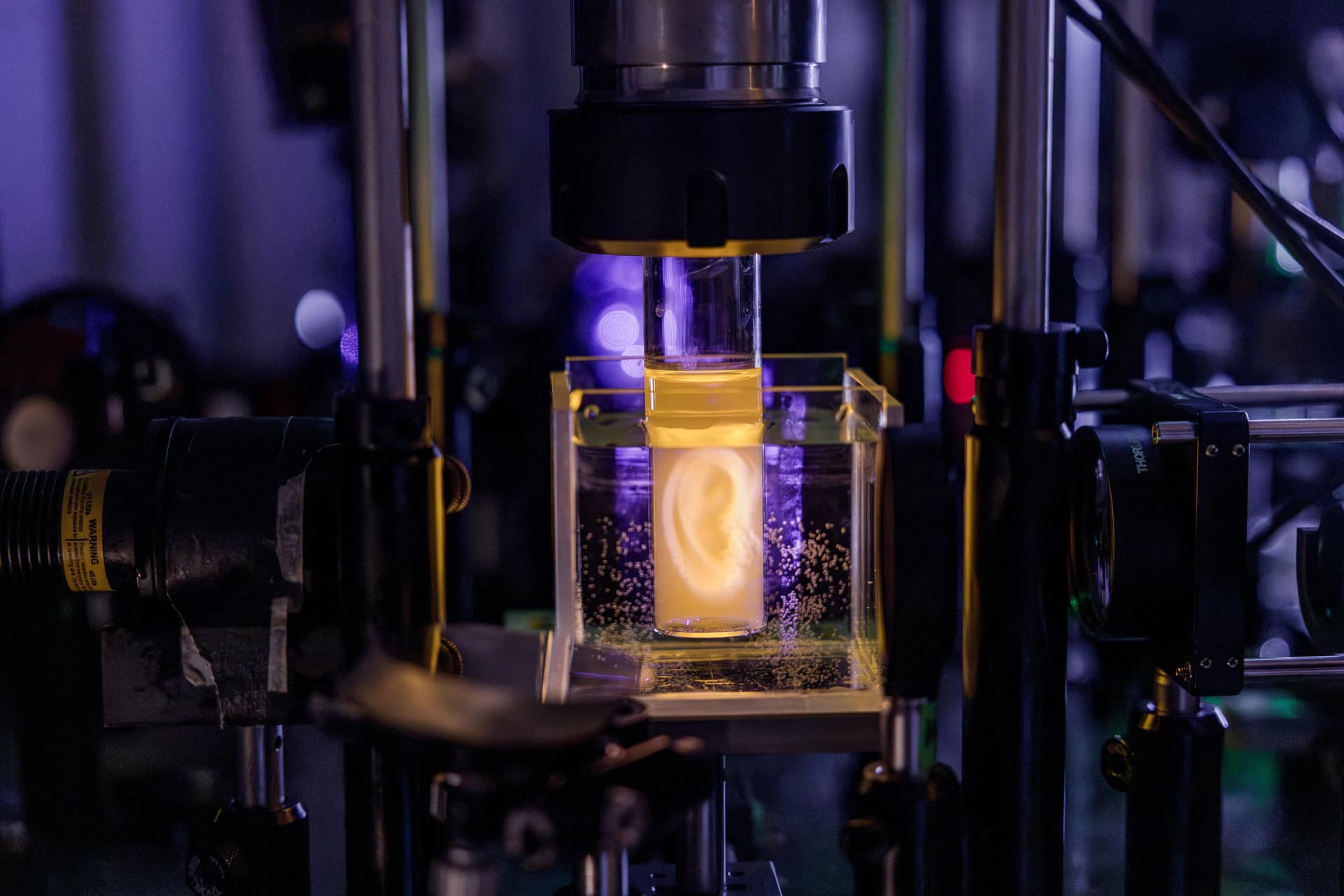
EPFL’s latest holographic 3D printing engine does not just chase a bigger speed number. It changes what can be printed cleanly when geometry gets tricky, letting millimeter-scale parts harden in seconds and centimeter-scale forms in minutes while cutting the waste and blur that usually come with light-scattering, cell-rich materials.
The system, called high-efficiency multi-scale holographic volumetric 3D printing with a phase light modulator, was unveiled by researchers at the École Polytechnique Fédérale de Lausanne’s Laboratory of Applied Photonic Devices in the School of Engineering. The paper, published May 20-21, 2026 in Light: Science & Applications, credits Maria Isabel Álvarez-Castaño, Riccardo Rizzo, Viola Sgarminato, Ye Pu and Christophe Moser. EPFL says the method is 70 times more efficient than previous techniques.
That efficiency matters because it translates into practical throughput, not just laboratory bragging rights. Using a 150-mW laser diode, the team printed a life-sized human ear and showed that a 64-mm³ construct containing cells remained viable after six days and had formed organized networks. In the soft-materials and bioprinting world, that combination of speed, scale and cell compatibility is the whole point: fewer support structures, less distortion, and more usable shapes in media that scatter light.
The new engine builds on EPFL’s 2025 tomographic volumetric additive manufacturing work, which already pushed holographic printing beyond simple brightness-based control. That earlier approach used holograms to encode shapes through the phase of light rather than its amplitude, improving light projection efficiency by at least 20 times over amplitude coding. In that work, the team printed millimetric objects, including negative features as small as 31 micrometers, in less than a minute with a 40-mW light source, and demonstrated soft cell-laden hydrogels at about 0.5 million cells per mL.
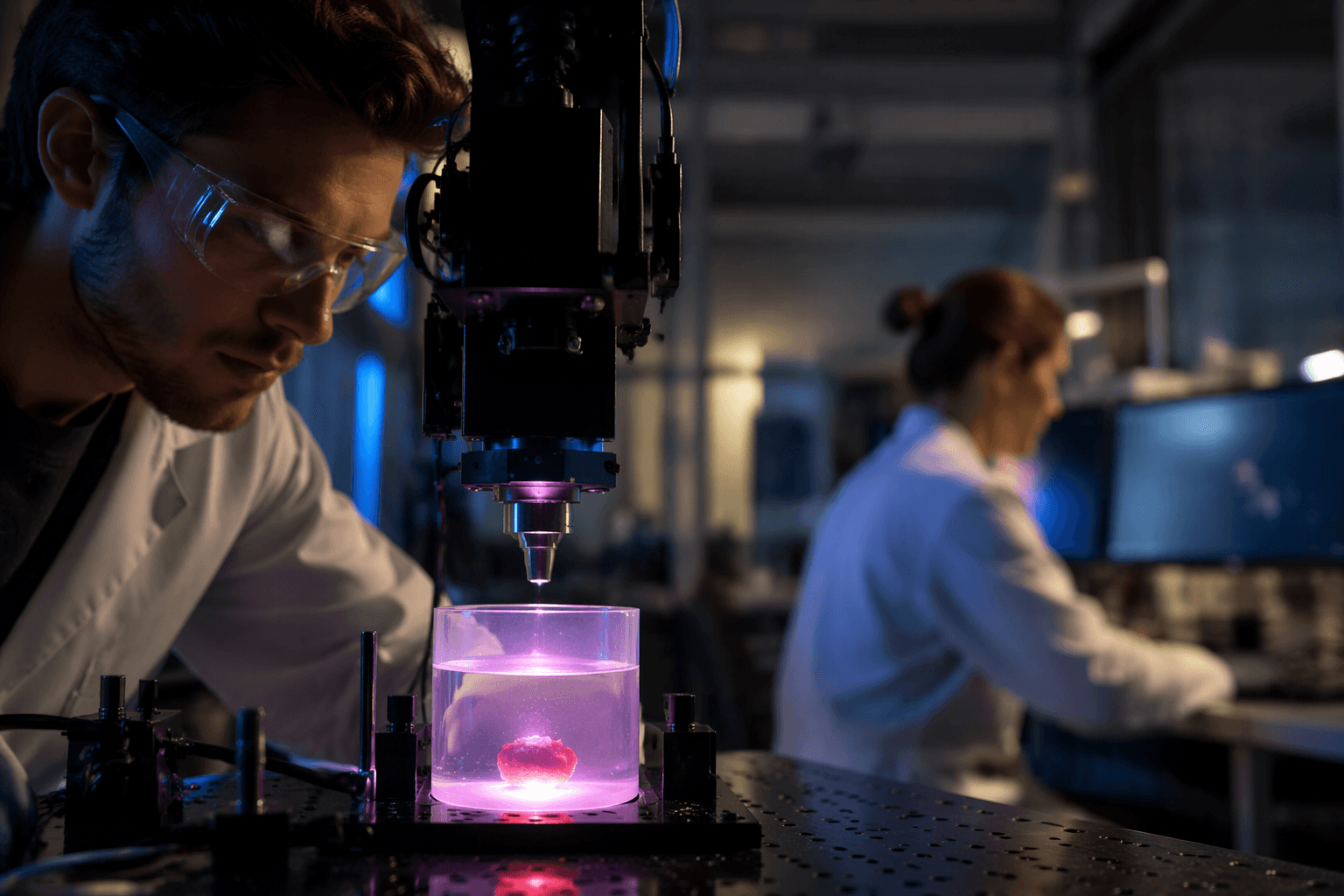
Christophe Moser said the newer phase-only approach and self-healing beams reduce speckle and the effects of scattering, which become more severe in biologically relevant materials. The group is now focused on projection fidelity and beam-shaping limits at higher cell densities, while EPFL also says it is developing ways to print directly onto or around existing objects, and even to fabricate parts from a stationary vial without rotation.
For resin printers and hobbyists used to watching a vat cure layer by layer, the takeaway is less about replacing every machine tomorrow and more about the direction of travel: faster volumetric printing, finer control over light in messy materials, and a future where speed no longer has to collapse under difficult geometry.
This article was produced by Prism’s automated news system from verified source data, official records, and press releases, then run through automated quality and moderation checks before publishing. The system is built and supervised by the people who set the standards it runs under. Read our full AI policy.
Did this article answer your question?