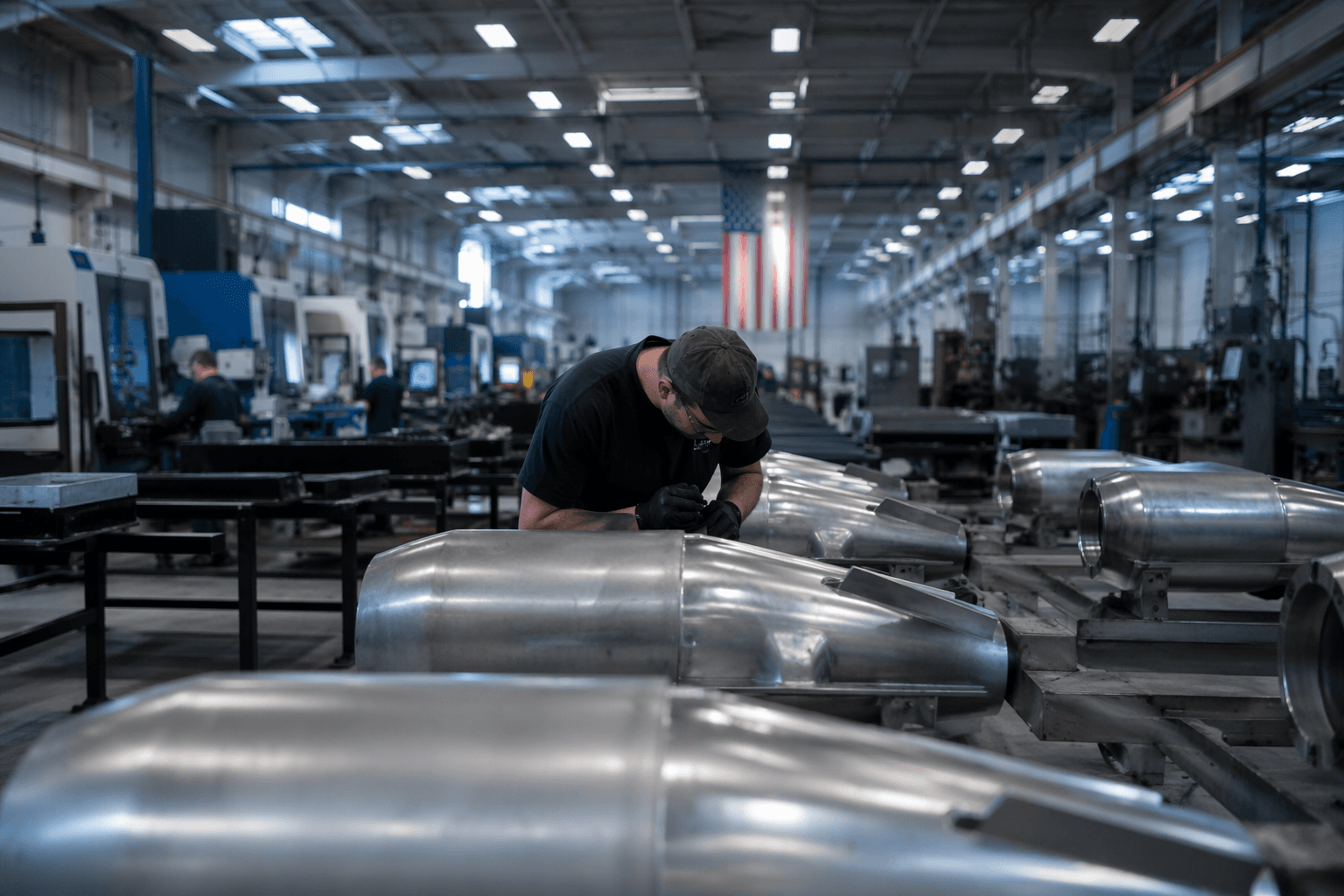
ErectorBot and Aibuild aim to simplify large-format 3D printing
ErectorBot’s Aibuild integration targets the hardest part of big printing: turning giant gantry systems into a workflow that feels manageable, not risky.
The real promise of large-format 3D printing is not just bigger parts; it is a workflow that stops feeling like a gamble. ErectorBot is betting that Aibuild software can help do exactly that by reducing the setup friction, slicing complexity, and failure risk that make industrial-scale printing intimidating compared with a desktop machine.
Big parts, familiar headaches
Anyone who has spent time with a desktop printer knows the pain points: a tricky first layer, a bad toolpath, a failed job hours into the run, or a material issue that wastes both time and money. Scale those same problems up to a gantry system covering hundreds or thousands of square feet, and the consequences get serious fast. That is why the value in this story is not the machine size itself, but the idea that software can make large-format printing more approachable and less dependent on a specialized additive team.
ErectorBot’s pitch is aimed at that exact problem. The company says it was founded out of necessity, built on decades of experience in composites, rapid prototyping, and the demanding transportation and design industries. It also says it has more than 40 years of experience crafting complex forms, which helps explain why it is framing large-format printing as a production workflow rather than a novelty machine.
What ErectorBot is bringing to the table
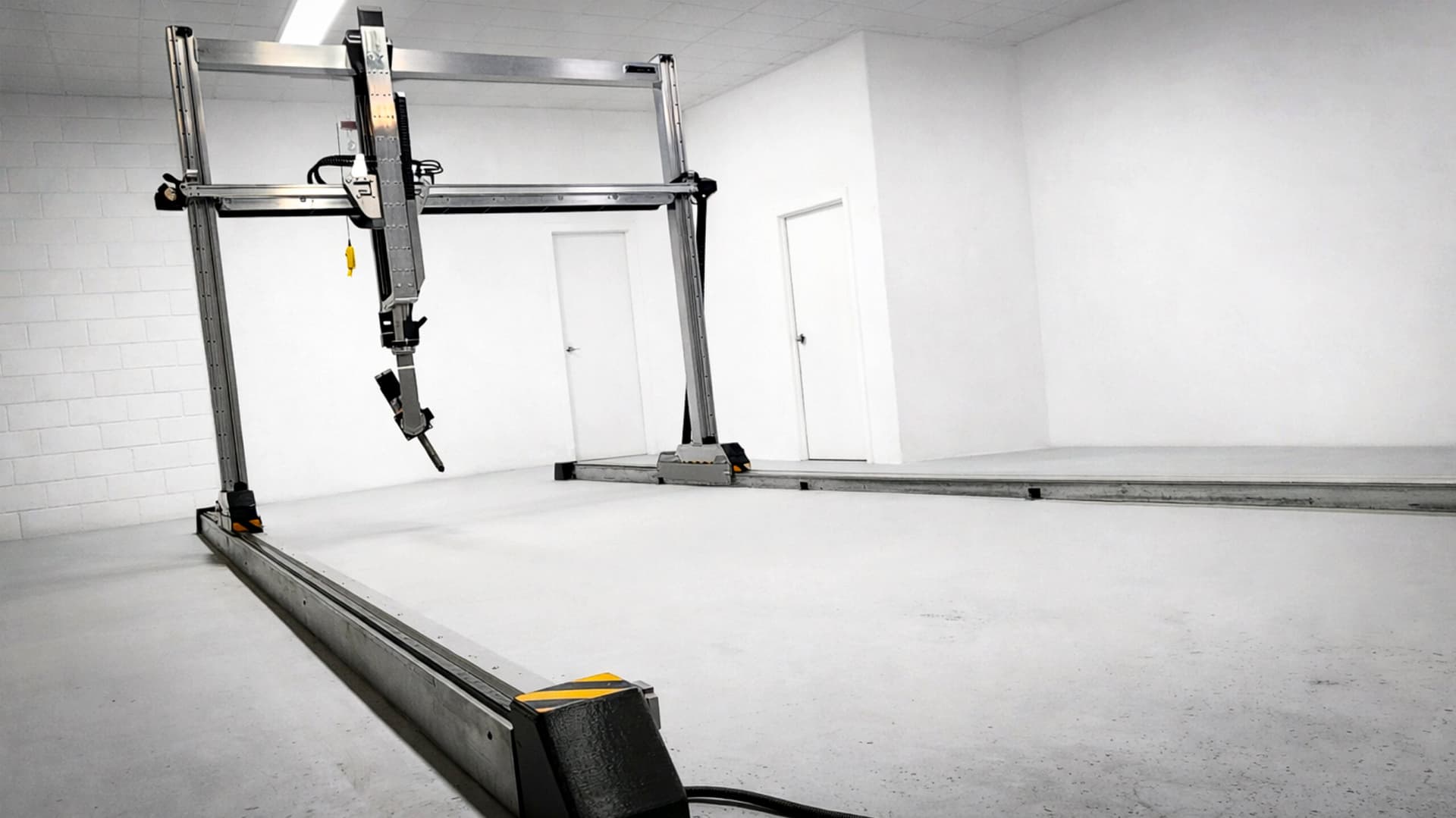
ErectorBot’s machine lineup shows how far into the industrial end of the market it sits. Its EB864HD is listed at $39,264 and offers an 8 ft by 6 ft by 4 ft build size, or 48 square feet of print area. The machine is described as a multi-process fabrication system with 9-axis capable motion, which puts it far beyond a simple extrusion-only setup.
At the other end of the range is the EB404012IND, listed at $425,000 and described as a 40 ft by 40 ft by 12 ft concrete 3D printing system. ErectorBot also says its scalable, reconfigurable gantry systems can be configured for different workflows and, in custom builds, can reach up to 6,000 square feet of print area coverage. That is the kind of footprint that moves the conversation away from hobby hardware and toward serious manufacturing, construction, tooling, and special-purpose production.
The company is also trying to package the hardware as a supportable system, not just a big machine. It offers remote support, HD camera monitoring, and financing options, which matters when the real cost of adoption includes operator time, training, and the risk of a costly failed build. ErectorBot also markets its systems as multi-process platforms that can handle routing, cutting, welding, and other fabrication tasks, reinforcing the idea that large-format printers are becoming hybrid production cells rather than single-function tools.
What Aibuild changes
Aibuild is the software half of the equation, and that is where the desktop-user comparison starts to make sense. Aibuild describes itself as an AI-powered platform built specifically for large-format additive manufacturing, with toolpath generation for robotic and gantry-based systems across polymer extrusion, metal DED, WAAM, cold spray, concrete, and paste extrusion. In plain terms, it is trying to tame the planning and execution layer that often separates a successful run from an expensive mistake.
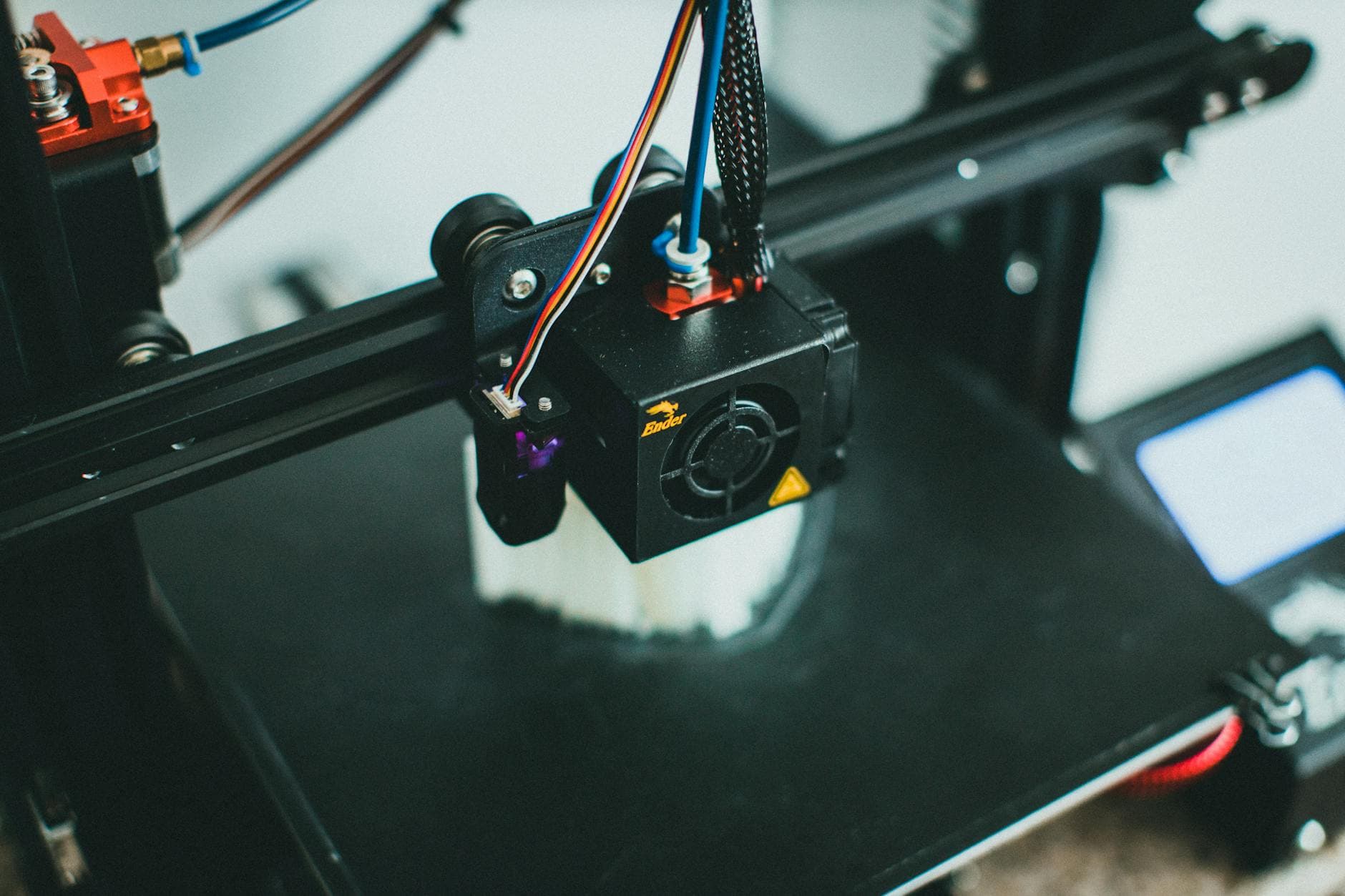
The platform also says it brings slicing, optimization, real-time control, monitoring, and additive-subtractive workflows into a single UI. That is important because the hardest part of large-format work is rarely just pushing material through a nozzle. It is coordinating the whole job, from file prep and path planning to live oversight and process changes when the build is already underway.
Aibuild has also been pushing this idea aggressively. It launched Aibuild 2.0 in June 2024 with strategic partnerships aimed at large-format 3D printing, and later introduced Aibuild OS, which it describes as an agentic AI operating system for automating CAD-to-CAM workflows. That combination points to a broader industry shift: the software stack is becoming as strategically important as bed size, gantry span, or extrusion rate.
Why the desktop workflow lens matters
For smaller shops, print farms, and manufacturers that want to bring big-part production in-house, the real barrier is not always capital equipment alone. It is the cognitive burden of learning a complicated process well enough to trust it. If a platform can reduce manual steps, cut down operator training, and lower the odds of a catastrophic failure on an expensive print, then large-format printing becomes a much more realistic option for teams that do not have a dedicated additive engineering department.
That is why the ErectorBot and Aibuild pairing matters. The promise is not that a 40-foot concrete printer suddenly behaves like a desktop machine. The promise is that it can be managed with a more familiar kind of logic, where setup, monitoring, and recovery are standardized enough to feel routine. In the language of the desktop world, that means fewer surprises, fewer all-night rescues, and a better shot at repeatable results.
The research trail behind the technology
This is not an entirely new story, either. UC Berkeley’s printFARM used an ErectorBot large-format printer in architectural research led by professor Ronald Rael, exploring building fabrication, bio-plastics, controlled g-code, cladding systems, and other large-scale applications. That history matters because it shows the platform has already been used as more than a demo machine. It has been part of serious research into how printed structures and materials could be built, controlled, and deployed at scale.
That background makes the current software push feel like a logical next step. The hardware proved that large-format printing could be done. The new challenge is making it easier to operate, easier to trust, and easier to deploy without building a specialist team from scratch.
The industry does not need another giant machine for its own sake. It needs big-format systems that feel less like a leap of faith and more like a repeatable process. That is the real bet behind ErectorBot and Aibuild, and it is why the future of large-format printing may be decided by workflow as much as by scale.
This article was produced by Prism’s automated news system from verified source data, official records, and press releases, then run through automated quality and moderation checks before publishing. The system is built and supervised by the people who set the standards it runs under. Read our full AI policy.
Did this article answer your question?