Flashforge patent uses force sensors to time resin layer stabilization
Flashforge’s resin patent watches peel forces between layers, aiming to replace fixed wait times with sensor-driven timing that could cut failed jobs.
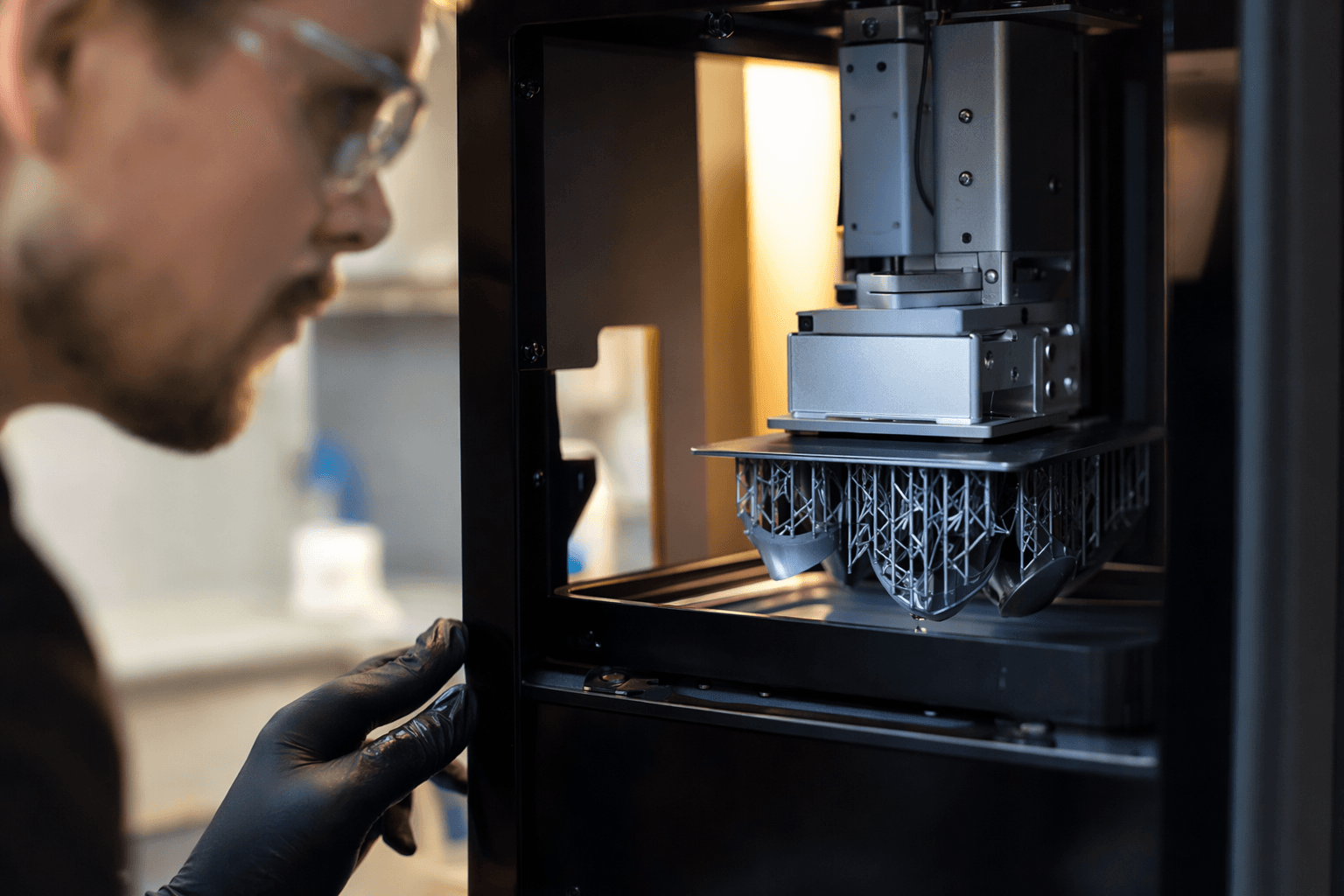
Flashforge’s latest resin patent goes straight at a failure point resin users know too well: the split-second between curing a layer and peeling it free. Instead of relying on fixed wait times and fixed lift distances, the filing, CN121871109A, uses force-sensor data to decide when the printer is actually ready to move on.
That matters because resin printing is never as uniform as a timer assumes. A small part, a hollow shell, a dense support block, and a tall flat surface can all create different peel behavior, suction loads, and refill needs. Flashforge is trying to make the machine respond to what is happening in the vat in real time, not just follow the same delay on every job. The company says it was founded in 2011 and has accumulated 134 national patents and 36 software copyrights, which places this filing inside a broader R&D push rather than a one-off concept.

The proposed sequence is simple in concept but more adaptive than today’s usual motion logic. The build platform returns to its original position and the printer watches the force data to see whether resin reflow has settled. If the readings look stable, the exposure module cures the layer. After that, the machine watches another force window to judge whether the stress from curing has relaxed enough to begin peeling. A third check looks for clean separation before the layer is marked complete. In practical terms, that is an attempt to time the most delicate part of the cycle with feedback instead of assumptions.
For resin users, the promise is obvious. Peel forces are one of the main reasons prints delaminate, supports fail, or layers tear loose at the worst possible moment. They also limit how aggressively a machine can lift between layers, which affects print time and reliability. High separation force and longer resin refilling time remain two of the biggest obstacles to faster vat photopolymerization, even though the process is prized for high dimensional accuracy and excellent surface finish.
The big question is whether Flashforge turns the patent into a shipping feature that actually improves day-to-day printing. Real-time force monitoring is already showing up in research, including DLP interface work that measured separation force with a load sensor mounted on the build platform at National Taiwan University of Science and Technology in Taipei, Taiwan. That points to where the industry is headed: closed-loop resin printing that reacts to layer mechanics instead of guessing at them.
This article was produced by Prism’s automated news system from verified source data, official records, and press releases, then run through automated quality and moderation checks before publishing. The system is built and supervised by the people who set the standards it runs under. Read our full AI policy.
Did this article answer your question?