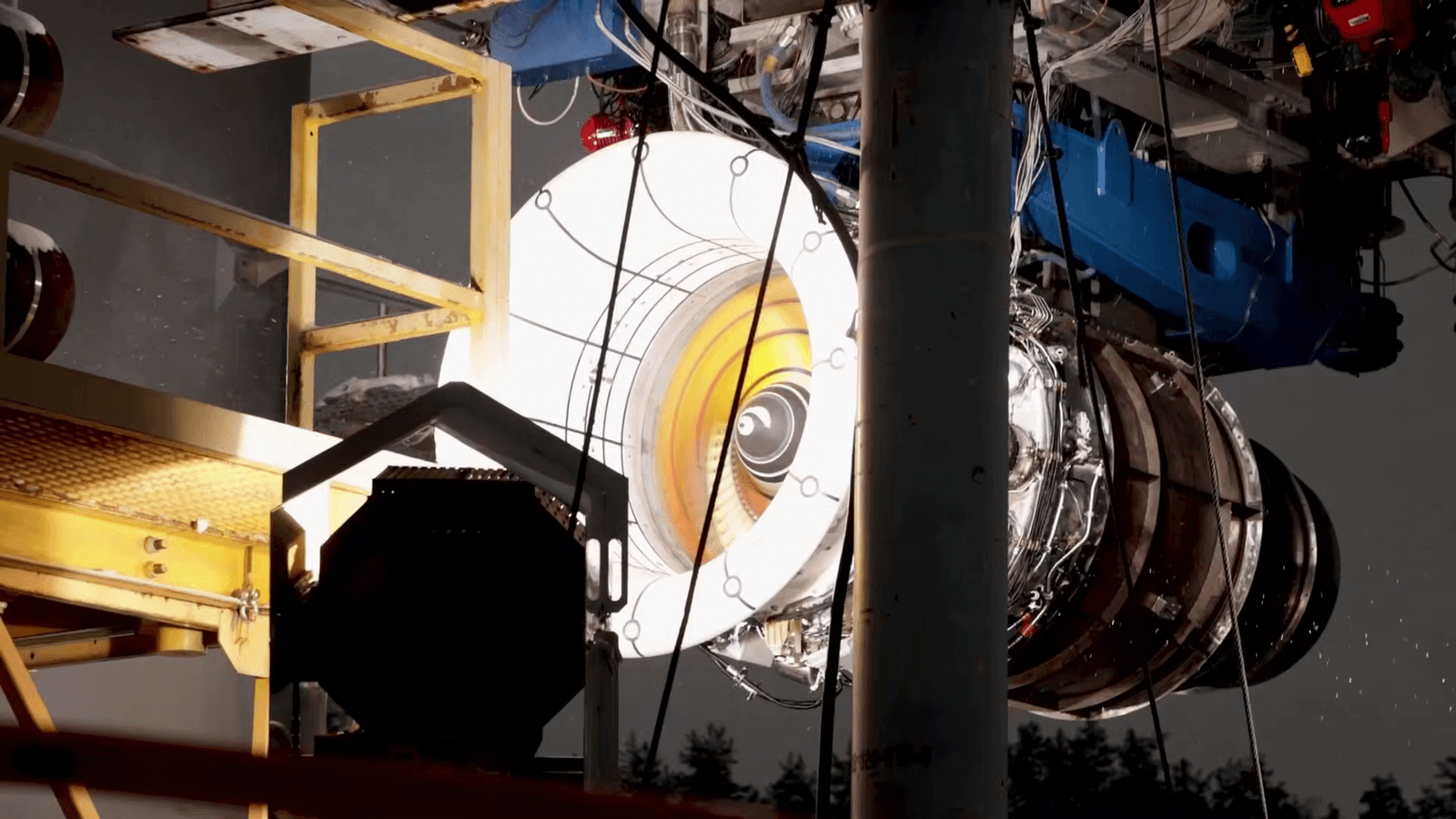
Gaudí’s geometry offers 3D printing lessons for support-free designs
Gaudí’s arches are more than beautiful shapes: they show how to route load, cut supports, and print cleaner parts with less post-processing.

On June 23, Protolabs applications engineering manager Eric Utley used Antoni Gaudí’s geometry in All3DP Pro to show why support-free printing starts in the model, not the slicer. Gaudí’s centenary has put his structural logic back in the spotlight.
Why Gaudí matters to a print bed
2026 is being marked as the hundredth anniversary of Antoni Gaudí’s death, and the commemoration has moved well beyond museum language. The Government of Catalonia added the Gaudí centenary to its official 2026 calendar on July 8, 2025, and the Spanish government declared it an Event of Exceptional Public Interest on July 9, 2025. The official Gaudí Year inauguration followed on November 8 in Reus and Riudoms, with Salvador Illa, Sònia Hernández, and commemoration commissioner Galdric Santana among the attendees.
Gaudí’s buildings are built on a simple structural idea: shape can carry load. Catenary arches, hyperbolic surfaces, and other nature-inspired curves move forces through compression instead of asking material to fight gravity in awkward spans. In 3D printing, the same bad geometry that makes a building want buttresses can make a print demand supports, sag at overhangs, or leave ugly cleanup scars.
The key geometry: catenaries, ruled surfaces, and clean load paths
A catenary arch is closely related to a parabolic arch, and a ruled curved surface is generated by a straight line moving through space. Those two ideas are especially useful for printing because they describe forms that can be reasoned about, repeated, and translated into CAD.
Gaudí began studying architecture in Barcelona in 1873 and earned his degree in 1878. He took over the Sagrada Família project in 1883, then stopped taking other work in 1914 so he could focus exclusively on the basilica. Light and nature were his main sources of inspiration, which is why so many of his structures feel organic while still behaving like load-bearing systems.
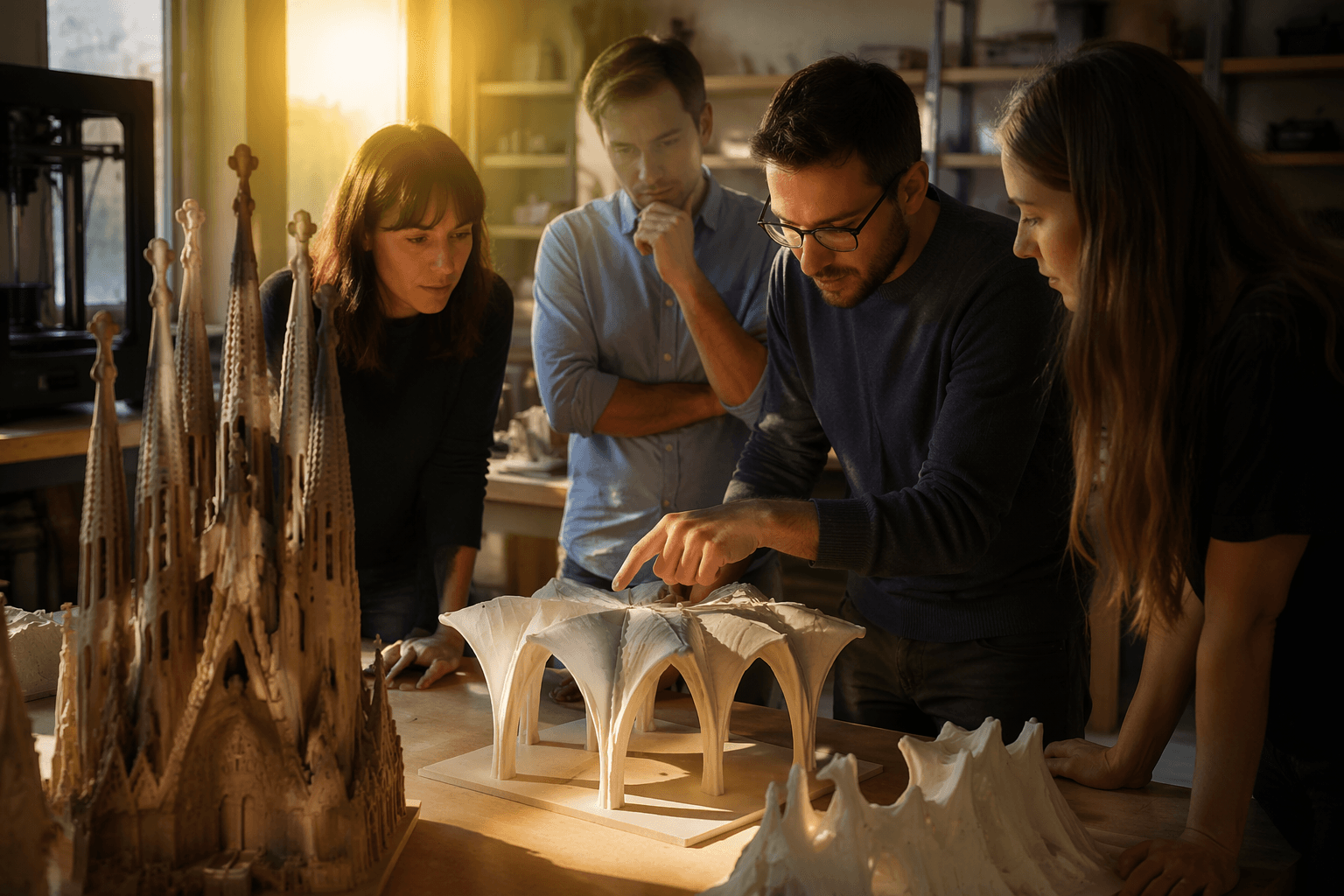
For a printer, the lesson is direct:
- Let curves do structural work instead of forcing flat spans to bridge too far.
- Shape parts so the load path is gradual, not abrupt, especially near overhangs.
- Favor surfaces that can be generated cleanly from a straight line or a consistent sweep when you want reproducible, support-light geometry.
- Think about the final orientation early, because the best orientation often comes from the part’s own force path.
What this means for support-free FDM
Support-free printing is rarely a slicer trick alone. It usually starts with the geometry you choose before the file ever hits the build plate. If an overhang is too aggressive, or if a feature hangs out in space without a natural transition, the printer has to improvise with sacrificial material, and that usually means more cleanup, more risk of scarred surfaces, and more chances to damage a fragile part during removal.
Gaudí’s work shows how to design for compression rather than brute force. When a curve carries the load naturally, the form can be both elegant and mechanically efficient. On a printer, that translates into fewer supports, less wasted plastic, shorter finishing time, and a higher chance that the part comes off the bed looking like the model you intended.
That is especially relevant for FDM users, where every unnecessary support adds plastic, time, and post-processing. If a bracket, housing, or decorative-but-functional shell can be reworked into a catenary-like profile, a vaulted underside, or a self-supporting sweep, the print often becomes simpler to produce and easier to trust on the first attempt.
What NASA adds from the metal-printing side
NASA’s additive-manufacturing guidance reinforces the same point from a different corner of the industry. In that guidance, support structures are commonly used for 3D metal-printed components to address deformation in overhangs, but those supports usually have to be removed afterward with mechanical tools. With bad geometry, the machine may finish the build, but the part is still not done.
NASA’s guidance also includes contact-free support approaches for overhang geometries in electron-beam additive manufacturing, where un-melted powder can act as a thermal bridge to reduce severe thermal gradients.
A practical design mindset for makers
The practical lesson is to use Gaudí’s instincts when you sketch parts: build with compression in mind, keep transitions smooth, and avoid shapes that rely on support material to make up for weak geometry.
That mindset pays off most when you are designing functional parts that need clean undersides, fewer scars, and less waste.
This article was produced by Prism’s automated news system from verified source data, official records, and press releases, then run through automated quality and moderation checks before publishing. The system is built and supervised by the people who set the standards it runs under. Read our full AI policy.
Did this article answer your question?