How 3D printing is helping fans celebrate the 2026 World Cup
The biggest World Cup yet is also a maker showcase, with support-free wearables, print-in-place decor, and fast color-swap builds fans can use now.
The 2026 World Cup is turning 3D printing into part of match-day culture, not just workshop culture. With 48 teams, 104 matches, and games spread across 16 host cities in Canada, Mexico, and the United States, the tournament is built for personalization, and the crowds are already proving it. Mexico City Stadium hosted the opening match on June 11, and FIFA said attendance hit a single-day record of 281,223 fans across four matches on June 16.
Why this tournament is such a good fit for makers
The scale matters because it changes what fans want to make. FIFA confirmed 1,248 players representing 48 nations after final squad lists were submitted on June 2, which means more flags, more crests, more rivalries, and more reasons to print something that feels specific to the team you follow. After six days, total tournament attendance had already reached 1,309,652, averaging 65,483 per match, so the appetite for visual fan gear is not theoretical. It is happening in packed stands, crowded watch parties, and across a tournament that runs through July 19.
That geographic spread also makes 3D printing unusually useful. A World Cup staged across three countries and 16 cities gives you a huge menu of local and team-specific objects, from table signs to wearable pieces that work in a living room, a bar, or a stadium-adjacent tailgate. Mexico hosting men’s World Cup matches for the third time, after 1970 and 1986, adds another layer of commemorative appeal, especially for prints that lean into national color and event branding instead of generic sports graphics.
Wearable fan gear that prints fast and wears well
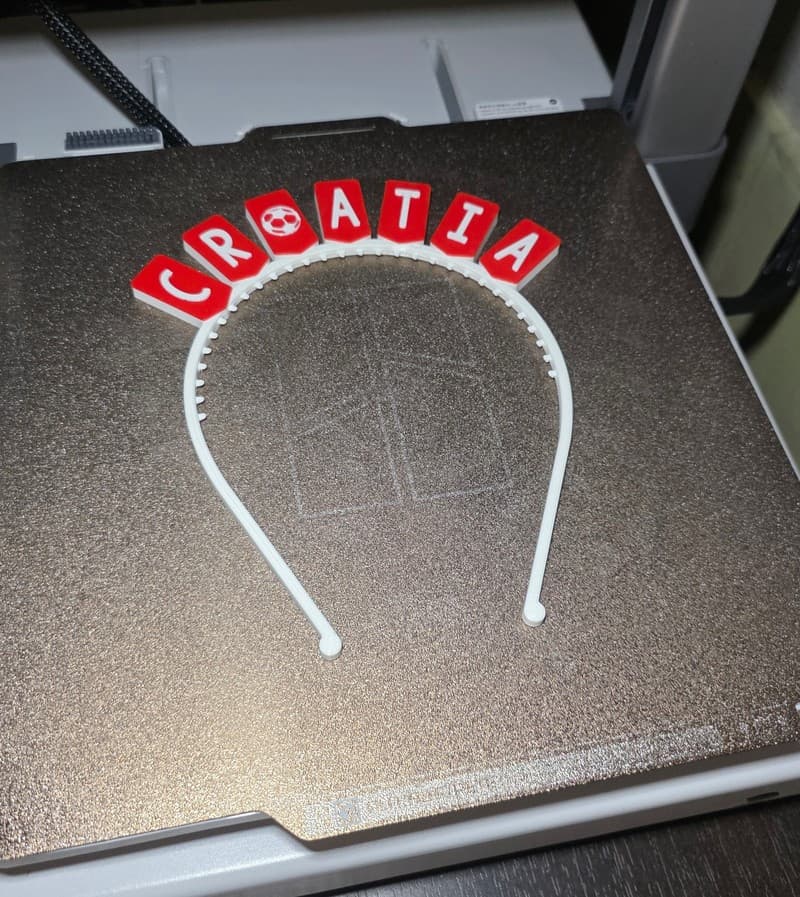
One of the clearest quick wins is a Croatia fan tiara design that is beginner-friendly, support-free, and sized for 0.20 mm layers with 10 to 15 percent infill. That combination keeps the print light and easy to finish, which is exactly what you want when the goal is a wearable that can be made before kickoff instead of sitting in post-processing limbo. The design also uses two colors, with the lettering separated by height, so it works either on a multicolor printer or with a simple filament change.
That kind of build is the difference between a useful fan accessory and a gimmick. The tiara works because the color break is part of the geometry, not an afterthought, and because it avoids supports that would slow the print or leave cleanup marks on a piece meant to sit on your head. If you are making wearable gear for an event, the same logic applies: keep the silhouette readable, the weight low, and the surface clean enough that it survives being handed around before the match starts.
Team displays, signs, and simple home decor
If you want something that lives on a table, shelf, or mailbox instead of on your head, the national team logo emblems from Thingiverse are an easy place to start. They can be adapted into badges or mailbox flags, which makes them useful for watch-party entries, desk displays, or quick front-door team signals. That is also where 3D printing starts to look less like novelty and more like practical fan signage, because a flat emblem scales more cleanly than a complicated mascot or a multi-piece sculpture.
For stadium decor or home display pieces, the best projects are usually the ones that read from a distance. A strong crest, a bold team silhouette, or a simplified shield shape will work better than a cluttered model with tiny text and fragile add-ons. If you want to turn a crest into a cookie cutter, the same rule applies: keep the outline clear, avoid delicate interior details, and favor a shape that can press cleanly instead of one that needs a lot of cleanup.
Watch-party accessories with real function
The logo-based fidget clickers from MyMiniFactory show another useful direction: objects that are not just decorative, but tactile. These models use keyboard-style switches and come with pre-configured 3MF files, so they can be sliced and printed without much setup. That makes them ideal as desk toys, keychain accessories, or conversation pieces at a watch party, because they give you team branding and a physical function in the same build.
That function matters. A print that clicks, spins, or moves earns a place on a table in a way a flat ornament often does not, especially during a long match or a full day of games. If you are trying to decide between a static badge and a more interactive accessory, the clicker has the stronger staying power because it gives fans something to do between goals, not just something to look at.

Print-in-place builds for fast turnaround
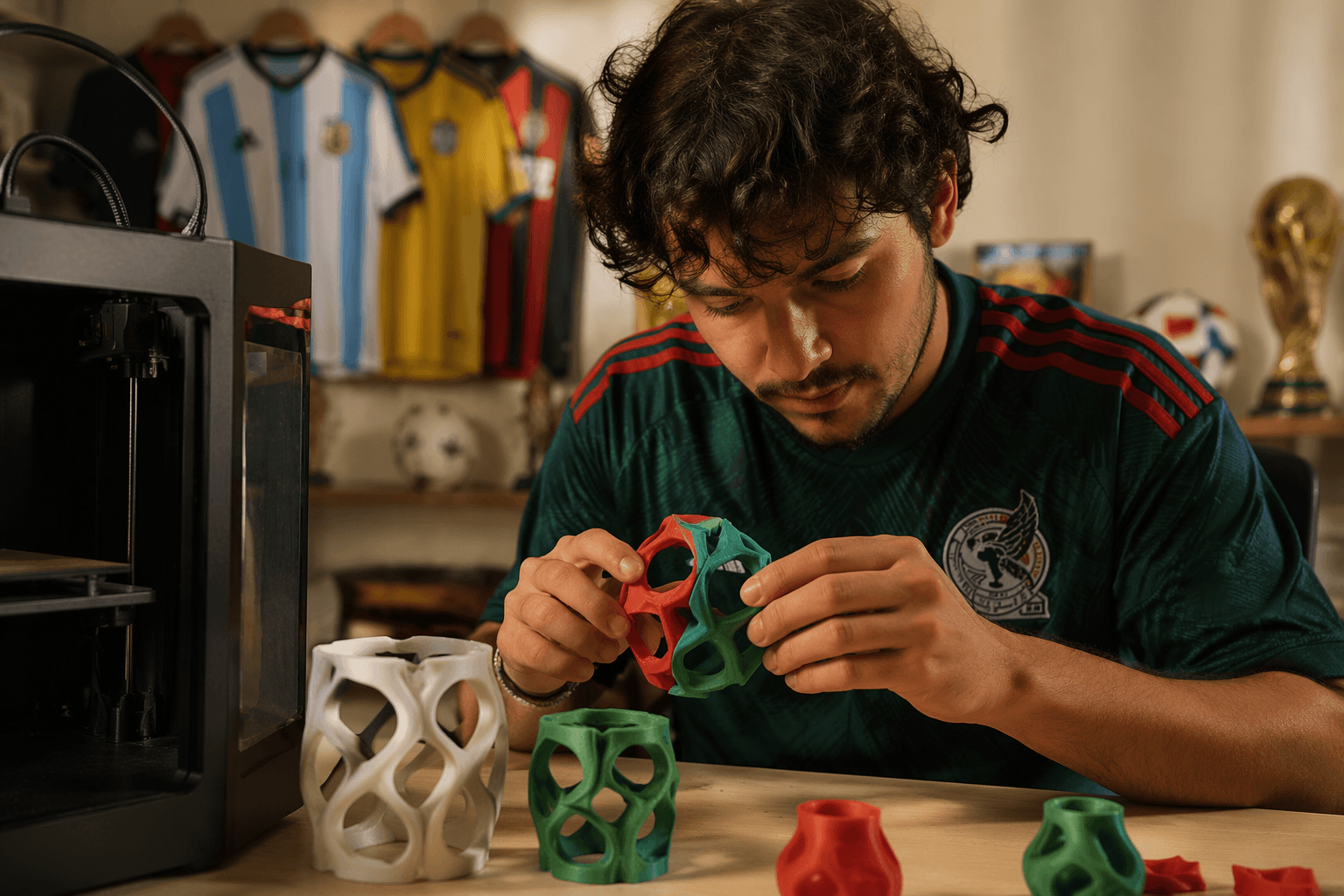
The spiral World Cup model from Thingiverse is the opposite of a fussy assembly project. It is a print-in-place design, so it requires no assembly, and it can benefit from a brim if your printer needs a little extra help with tall parts. That makes it especially attractive for event printing, where you want a finished object that can go straight from bed to shelf or hand to hand.
Print-in-place designs are useful because they remove a whole category of failure. There are fewer loose pieces to lose, fewer joints to align, and less chance that a match-day print turns into a bench-side repair job. For a tournament that is already breaking attendance records, that simplicity is part of the appeal: you can make something that moves, rotates, or spins without having to build it twice.
What separates a quick win from a gimmick
The most useful World Cup prints share the same traits across categories. They are support-free or nearly support-free, they use color changes in the geometry instead of after-the-fact decoration, and they stay legible at the size you actually want to wear or display. The Croatia tiara, the logo emblems, the keyboard-switch clickers, and the spiral print-in-place model all point in that direction.
That is also the right way to think about safety and durability for event use. Keep wearable pieces light enough for long viewing sessions, avoid sharp or fragile edges, and favor parts that can be handled by a crowd without snapping. If you are making signs, cookie cutters, team displays, or watch-party accessories, build for repeated use, not one photo moment. The prints that will last through this World Cup are the ones that match the tournament’s pace: fast to make, easy to read, and sturdy enough to survive the celebration.
This article was produced by Prism’s automated news system from verified source data, official records, and press releases, then run through automated quality and moderation checks before publishing. The system is built and supervised by the people who set the standards it runs under. Read our full AI policy.
Did this article answer your question?