India deploys first 3D-printed artificial reefs off Rameswaram
Six 1-tonne 3D-printed reef modules went into the sea off Rameswaram, using creviced, iron-free geometries to test how form changes marine habitat performance.
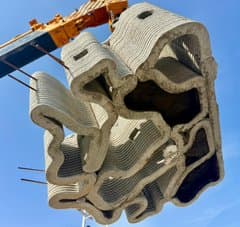
India deployed its first 3D-printed artificial reef modules off the Ramanathapuram coast near Rameswaram, putting six newly developed designs into coastal waters about two nautical miles offshore. The pilot, under the second phase of the Pradhan Mantri Matsya Sampada Yojana, will test whether additive manufacturing can create complex, site-specific shapes that change how marine life settles, hides and grows.
Each module weighs about 1 tonne and was built by Chennai-based startup Tvasta, an IIT Madras-incubated company, in collaboration with the Visakhapatnam Regional Centre of the ICAR-Central Marine Fisheries Research Institute. Dr Joe K Kizhakudan, principal scientist and head at the centre, is leading the work. The reef units use folds, crevices and attachment surfaces that are difficult to produce with standard cast concrete, and they were made without iron reinforcement to increase porosity and create better substrates for corals, sponges and other reef-associated fauna.
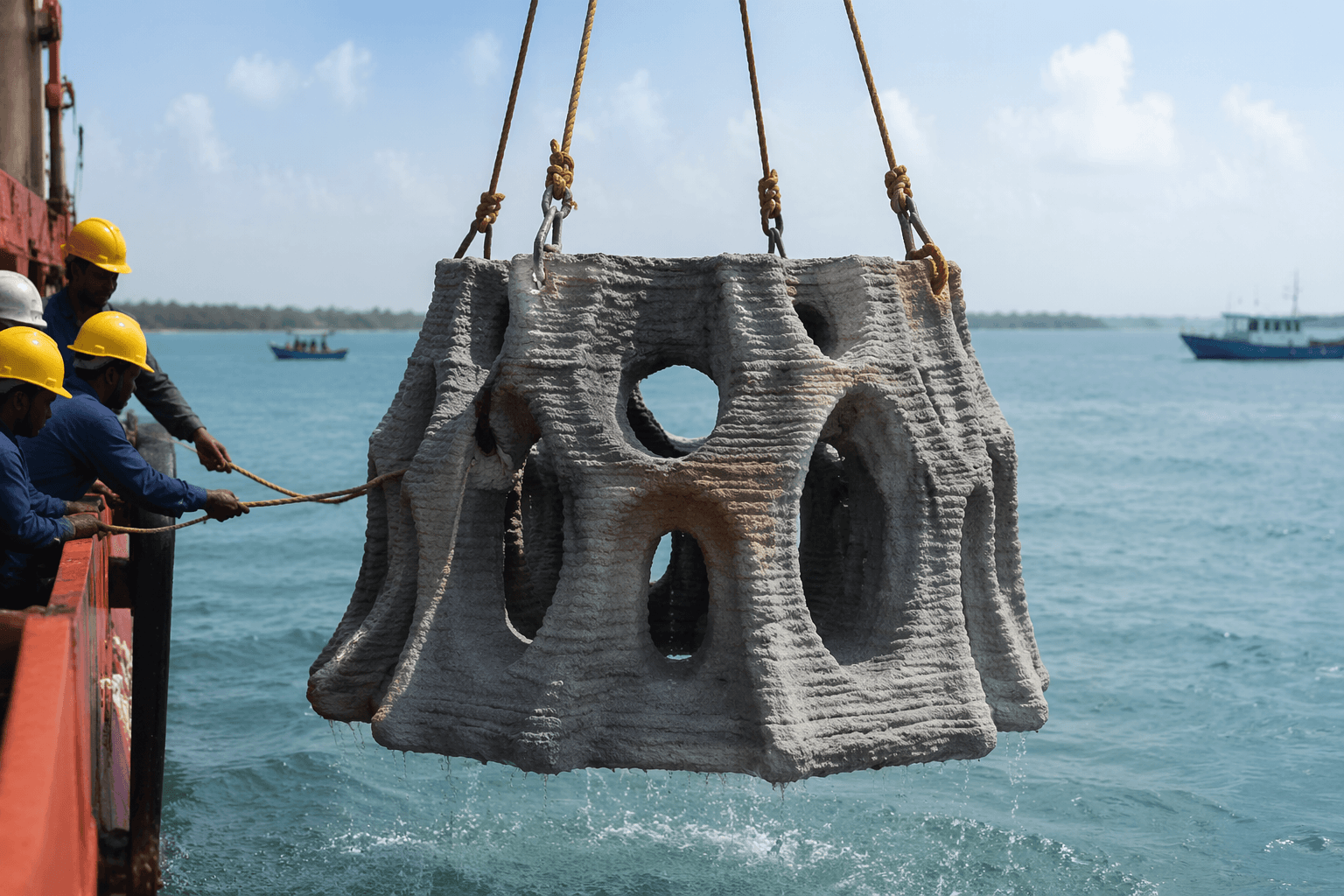
The project is part of a wider fisheries rollout in Tamil Nadu. Traditional fishing communities in Ramanathapuram, Tiruvarur, Thanjavur and Pudukkottai are involved in the programme, which aims to support fish stocks over time as marine ecosystems improve. In March 2026, the Tamil Nadu fisheries department began deploying about 26,000 artificial reef units across 145 locations in 29 coastal villages in Ramanathapuram district in a Rs 43 crore state-funded project aimed at improving fish breeding and marine resources.
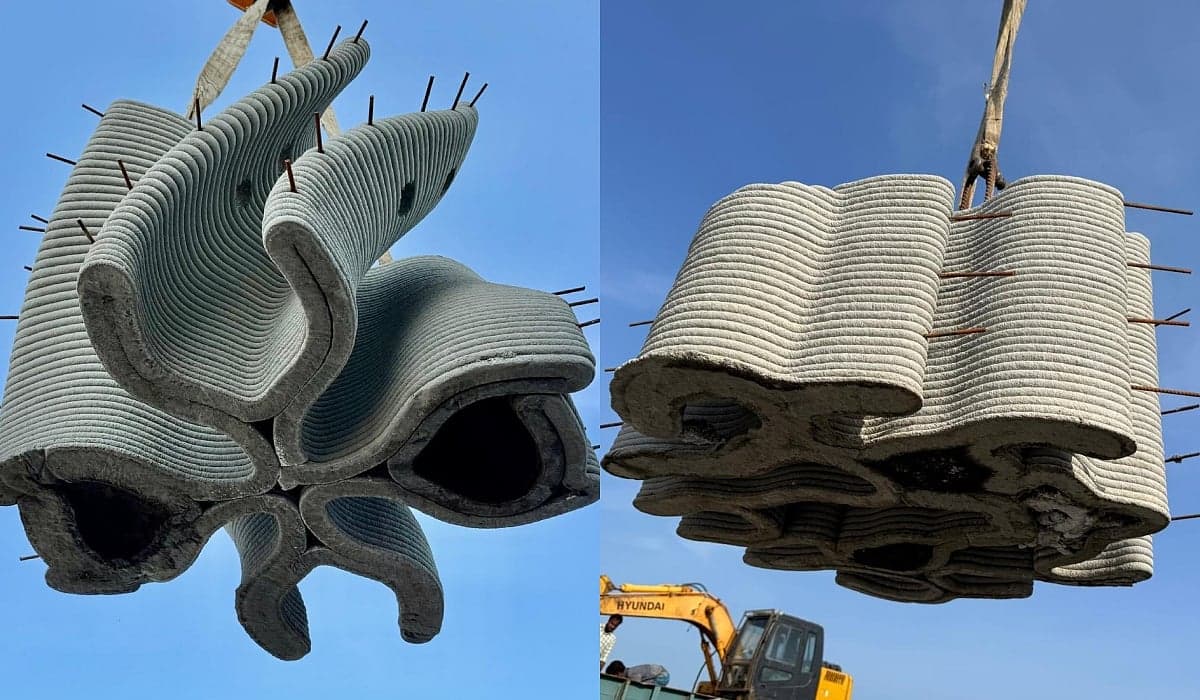
CMFRI has already used artificial reefs experimentally in Tamil Nadu, Andhra Pradesh, Gujarat and Kerala, and a 2023 government release put the institute’s deployments at 132 locations across India, covering 3.7 lakh square metres.
This article was produced by Prism’s automated news system from verified source data, official records, and press releases, then run through automated quality and moderation checks before publishing. The system is built and supervised by the people who set the standards it runs under. Read our full AI policy.
Did this article answer your question?