Interpretable AI predicts FFF print time and filament use
A clearer FFF predictor could tell you the two numbers that matter most before slicing: print time and filament, with better planning for quotes, queues, and material buys.
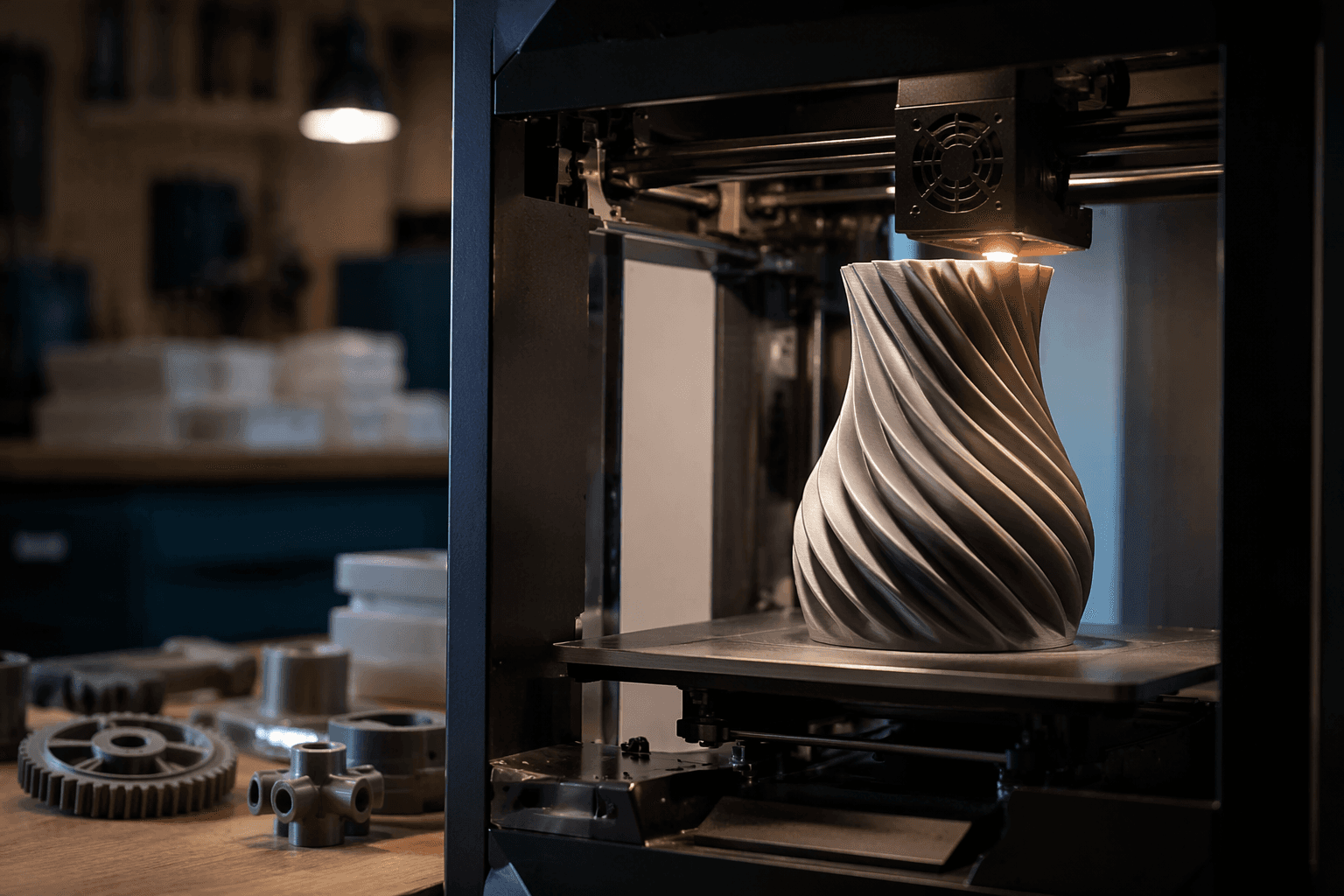
Before you press slice, the same two questions decide whether a job feels routine or expensive: how long will this take, and how much filament am I about to burn? A new interpretable machine-learning approach for FFF is aimed squarely at those answers, turning prediction into a pre-slice planning tool that can sharpen quotes, schedules, and material decisions without hiding behind a black box.
Why this matters before a job ever starts
The appeal here is not flashy automation. It is the ability to make a better decision before a machine is tied up for hours, a spool is half gone, or a customer quote turns out to be optimistic. In the 3D printing world, that means less guesswork for home printers, makerspaces, and small print farms, where every hour on the gantry and every meter of filament can affect the next job in line.
That is also why the word “interpretable” matters so much. Plenty of AI claims in additive manufacturing promise accuracy but leave you with no useful explanation for why a part is predicted to take longer, or why material usage jumps so sharply. An interpretable model is trying to give a clearer sense of the drivers behind the estimate, so the result is easier to trust when the next step is loading a machine, ordering material, or deciding whether a design should be resliced with different settings.
What the model is trying to do
The practical goal is simple: predict print time and filament use before the print begins, then use those numbers as a planning layer in front of the slicer. That makes this more of a decision aid than a replacement for CAD or slicing software. The useful part is not that it changes the geometry, but that it helps you decide whether the current settings make sense for the machine, the queue, and the budget.
That is especially valuable for jobs that look harmless in CAD but become expensive in execution. A part with heavy infill, a slow layer strategy, or a long build height can quietly turn into a machine-day instead of an afternoon print. With a pre-slice estimator in the loop, the user gets a chance to catch that mismatch early and shift the job to a faster printer, a different material setup, or a more efficient slicer profile.
The earlier research shows the problem is already measurable
This is not the first time researchers have tried to estimate FFF build time. A 2019 Materials paper proposed a build-time estimation method based on average printing speed, tested it on three desktop FFF printers, and reported a maximum relative error below 8.5%. That matters because it shows even a compact model can get close enough to be useful for practical planning.
The next wave of work pushes the idea beyond time alone. An ASME 2024 study looked at the relationships among infill density, infill pattern, material type, print time, filament usage, and mechanical properties in FDM and FFF. In the cases studied, grid and gyroid patterns offered better tensile strength than cross and triangle patterns, but gyroid and cross also required at least 15% more time than grid and triangle.
That tradeoff is the heart of the planning problem. A model that can estimate only duration is useful, but a model that links time and filament consumption to the print setup gives you a real lever for decision-making. If a part needs strength, you may accept the extra time. If the job is a prototype or a queue filler, the model can help you spot where a lighter or faster configuration makes more sense.
Where the biggest savings are likely to show up
The most obvious wins are in the places where prints pile up and mistakes compound.
- Print farms: Queue management gets cleaner when each job comes with a more reliable time and material estimate. That makes it easier to balance the queue, avoid bottlenecks, and keep machines busy without overcommitting them.
- Customer quotes: If you are quoting parts for someone else, a better pre-slice estimate reduces the risk of underpricing a long or filament-hungry job. It also makes it easier to explain why one configuration is a better fit than another.
- Material purchasing: Filament use predictions help with spool planning and inventory, especially when you are splitting a batch across multiple machines or material colors. Fewer surprises mean fewer emergency purchases.
- Design iteration: When a part comes in heavier or slower than expected, an estimator can flag it before the job starts, giving you a chance to reslice with different infill, orientation, or machine choice.
- Small shops and makerspaces: These environments live or die by access and turnaround. A tool that improves scheduling and reduces half-finished jobs can save real time, even if the improvement on any single print looks modest.
How this fits into the current push toward AI in FFF
The broader research direction is clear. A 2025 Springer paper on AI-powered digital twins and high-fidelity simulations used an exhaustive dataset to train six machine learning models, and those models were built to predict four critical responses: deflection, residual stress, print time, and shape tolerance. That places print-time prediction inside a larger effort to use data-driven tools before the job starts, not just to inspect quality after the fact.
Put together, the research points to a practical shift in FFF software: less reactive troubleshooting, more front-loaded planning. The goal is not to replace slicers or material judgment, but to make the decision before the first layer stick a lot smarter.
That is what makes this kind of interpretable AI worth watching. The best result is not a flashy prediction dashboard, but a quieter one: fewer bad assumptions, fewer wasted spools, and fewer printers sitting locked up on jobs that should have been rethought before slicing ever began.
This article was produced by Prism’s automated news system from verified source data, official records, and press releases, then run through automated quality and moderation checks before publishing. The system is built and supervised by the people who set the standards it runs under. Read our full AI policy.
Know something we missed? Have a correction or additional information?
Submit a Tip