Kai Parthy’s hollow filament could carry conductive cores for 3D printing
Kai Parthy’s hollow filament could let a normal FFF printer carry conductive cores, wires, or fibers inside the feed itself, making smarter parts easier to build.
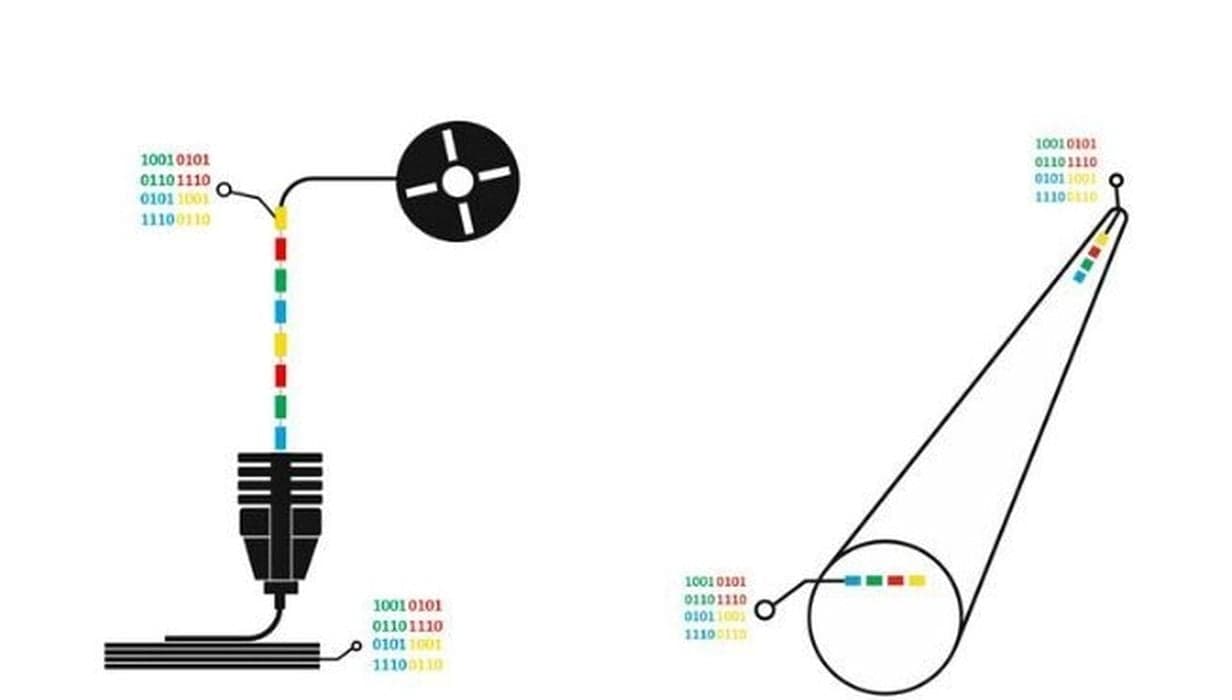
A hollow filament that carries something useful inside the plastic tube sounds simple, but it points at a much bigger shift in 3D printing. Instead of asking the polymer itself to do everything, Kai Parthy’s concept treats the filament as a transport system for conductive material, continuous fiber, or another functional payload. For makers, that could mean cleaner cable routing, embedded sensor paths, and printed parts that do more than just sit there as shells.
What the hollow-filament idea changes
Parthy’s proposal is different from the composite filaments most people already know, such as PETG-CF. In those materials, chopped carbon fiber is mixed through the polymer to stiffen it, so the filler is dispersed throughout the plastic. In Parthy’s concept, the center of the filament is hollowed out and used as a carrier for something else, which means the functional material does not have to be blended into the plastic at all.
That shift matters because it changes how the material behaves inside the printer and inside the finished part. The filament itself would still travel through a standard FFF hot end, but it would do so while carrying a payload in its core. That makes the idea feel less like a gimmick and more like an attempt to turn filament into a delivery system for functionality.
Parthy’s name carries weight here for a reason. He is widely associated with Lay Filaments and with specialty materials such as LayWood, LayBrick, Moldlay, BendLay, and LayCeramic. So when he puts forward a concept like this, it reads less like a random experiment and more like another push to stretch what standard filament can be.
Why makers care about conductive paths
The immediate appeal is electrical. Current conductive filaments are still limited because the conductive particles are spread through a nonconductive polymer matrix, which makes them far from ideal for reliable traces. A recent materials study found that conductive performance in FDM parts is strongly influenced by filler distribution, voids, adhesion, layer orientation, and other print parameters, all of which help explain why conductivity can be so inconsistent from part to part.
A hollow core could change the equation by concentrating the conductive ingredient instead of diluting it. If the conductive material is far less dispersed, the odds of getting a useful electrical pathway should improve. That does not automatically make printed circuits easy, but it does point toward more practical embedded electrical functions in the kinds of parts hobbyists already print.
The uses are easy to picture:
- clean cable routing inside printed housings
- sensor integration without drilling or gluing after the fact
- printable circuit traces that are closer to a real path than a scattered conductive fill
- hybrid parts that carry wire-like or fiber-like functions inside the filament itself
That is the maker payoff in plain terms. A part could become more than a shape. It could become a housing, a channel, and a functional carrier all at once.
How this differs from other hollow-filament ideas
Hollow filament is not an entirely new idea in additive manufacturing, but Parthy’s version is aimed at ordinary FFF hardware. That distinction matters. The filament is not just an odd tube meant to exist off to the side; it is supposed to enter the hot end and be printed in the usual way while carrying its internal material along for the ride.
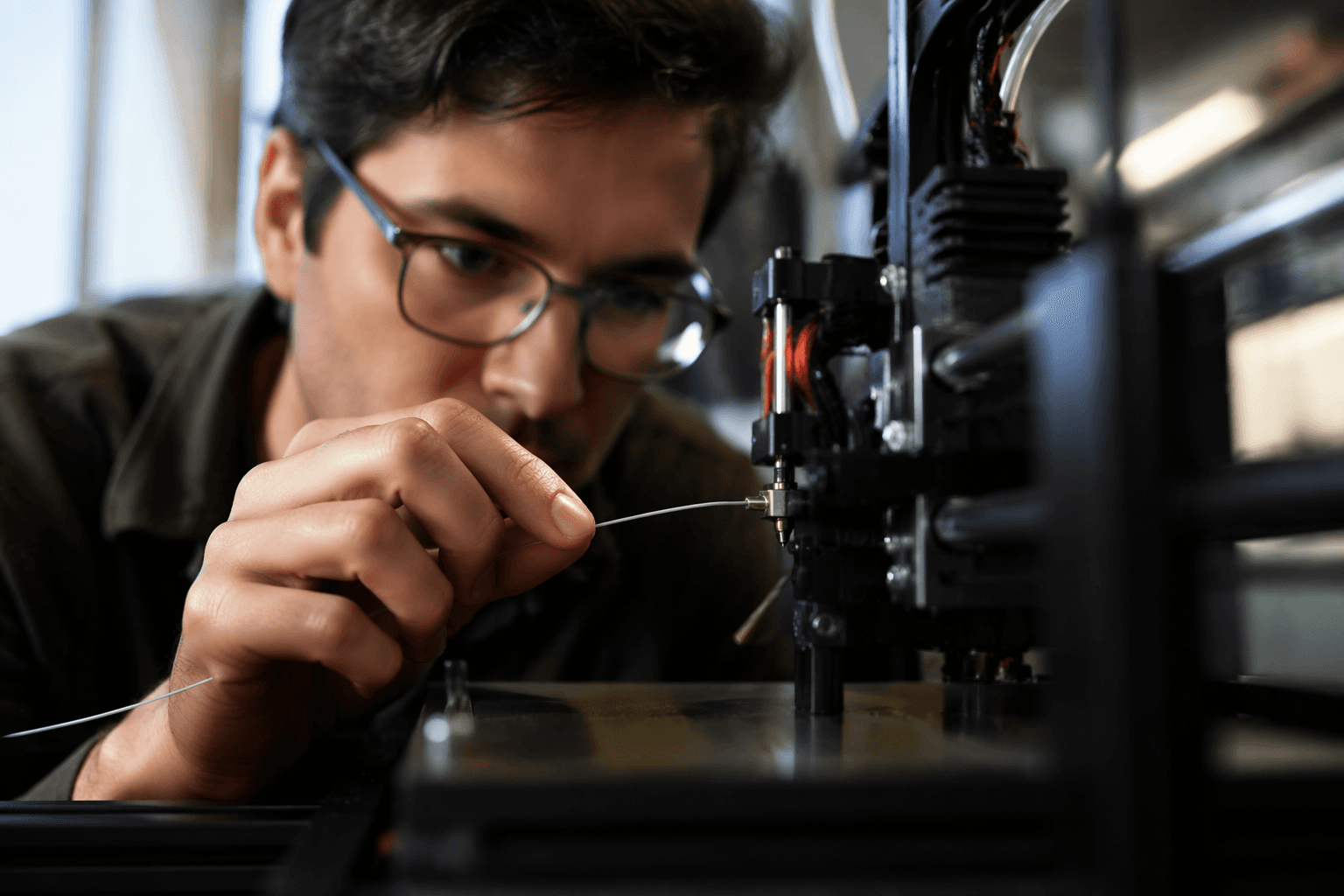
That is different from Filament2’s hollow tube concept, which the article specifically separates from Parthy’s approach. The practical difference is that Parthy’s idea is built around standard printing behavior, not a separate workflow that lives outside the normal extrusion path. If it works, it has a better chance of reaching the broad FFF community instead of remaining a novelty for specialized machines.
The hard part is not the concept, it is the engineering
The biggest challenge is reliability. Hollow filament still has to feed consistently, survive the bend and push of a printer’s filament path, and preserve enough structure to make extrusion dependable. Once you start adding a payload inside the core, the system becomes more delicate, not less.
Continuous fibers make the problem even more interesting. Parthy’s concept could potentially carry glass, carbon, or copper wire, but those materials do not melt like thermoplastics. That means the printer would need to cut the filament at exactly the right time if the goal is to handle a continuous element cleanly. At that point, the machine is not just extruding plastic. It is coordinating a composite feedstock with timing that has to be right every time.
That is also where strength questions start to matter. A hollowed filament changes the cross-section of the feedstock, so the tradeoff between functionality and robustness becomes central. Even if the print itself gains a conductive or fibrous core, the system still has to feed smoothly and keep enough structural integrity to work in the wild across different printers and settings.
Why the research context makes this more than a stunt
The broader research landscape helps explain why the idea is drawing attention now. A 2024 paper proposed filling hollow filaments with composite powder to construct parts directly, using the hollow geometry as a composite-printing strategy. That shows the field is already exploring hollow filaments as a way to bypass conventional compounding and extrusion steps.
A separate review on electrically conductive additive manufacturing materials points to the same theme from another angle: the field has real promise, but it also has clear limitations, challenges, and open questions. Meanwhile, the MDPI study on commercial carbon black-filled conductive PLA showed how sensitive conductive performance can be to printing temperature, printing speed, layer height, repeatability, and time-dependent drift. In other words, conductivity is already hard to control even before you add a hollow-core feed system into the mix.
That is what makes Parthy’s idea compelling. It attacks a known weakness in conductive printing by trying to move the conductive path out of the crowded polymer matrix and into the center of the filament itself.
Where this could go next
A separate recent report describes the concept as documented in a patent, which suggests the idea is being treated seriously even if it is still at the proposal stage. That does not make it a finished product, but it does place it in the same category as other filament ideas that started as wild, then slowly became part of the normal conversation.
For now, the promise is clear: a filament that does more than feed plastic could let ordinary FFF printers produce parts with embedded function, not just embedded form. The real test is whether hollow filament can deliver that promise without falling apart in the feed path, because the moment a plain-looking spool starts carrying conductivity or fiber inside it, the whole logic of 3D printing gets a little more interesting.
This article was produced by Prism’s automated news system from verified source data, official records, and press releases, then run through automated quality and moderation checks before publishing. The system is built and supervised by the people who set the standards it runs under. Read our full AI policy.
Did this article answer your question?