Loughborough University Adopts Freemelt EBM Platform for Advanced Alloy Research
Professor Moataz Attallah's lab at Loughborough added Freemelt ONE EBM to tackle tungsten and copper, metals that defeat laser powder-bed fusion.
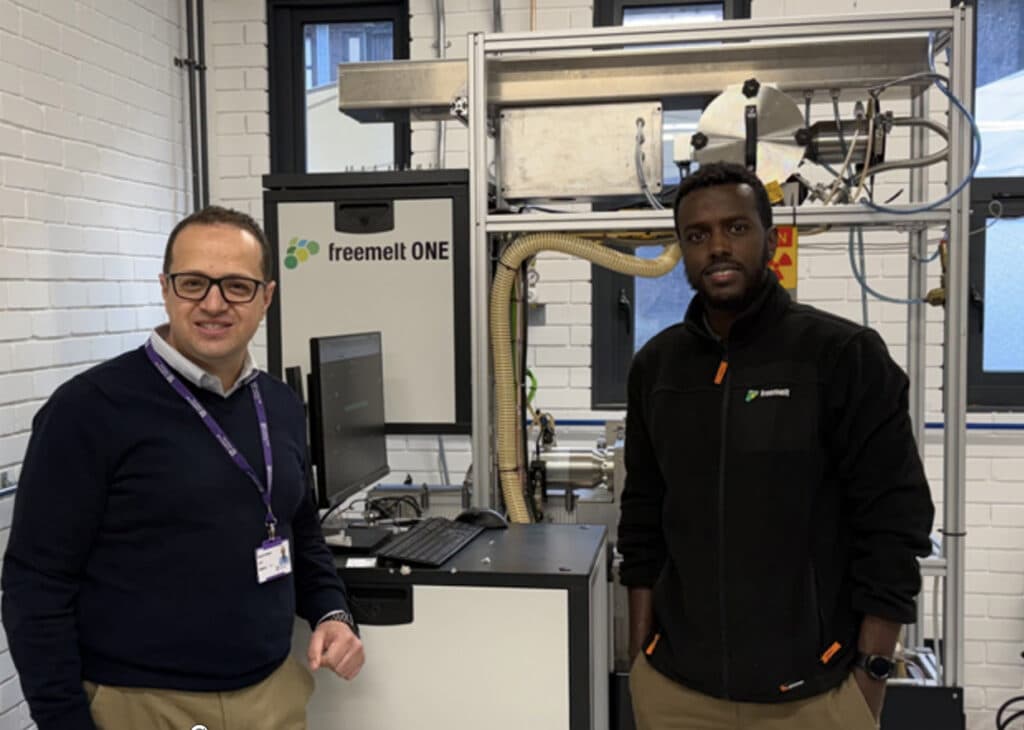
Loughborough University has integrated Freemelt's electron beam melting platform into its materials and engineering labs, giving researchers their first structured access to an open-architecture system capable of processing metals that have long defeated laser powder-bed fusion: tungsten, molybdenum, niobium, tantalum, and copper.
The move, confirmed April 3, centres on the Freemelt ONE, a research-grade EBM machine built by the Swedish metal AM company around the principle that parameter access, not parameter restriction, is what drives genuine alloy innovation. Where closed industrial laser systems routinely lock process variables to protect IP or prevent user-driven variability, the Freemelt ONE exposes those controls to researchers, letting them tune beam power, scan strategies, and thermal profiles from the ground up.
Leading the work at Loughborough is Professor Moataz Attallah, Dean of the School of Aeronautical, Automotive, Chemical and Materials Engineering. Attallah brings more than 15 years of experience with laser-based additive manufacturing to the project, which means he knows precisely where conventional laser systems hit their ceiling. On why the lab chose the Freemelt platform, Attallah said it "stands out by being open, flexible, and accessible for researchers."
That openness is more than a positioning statement. EBM operates inside a vacuum chamber, which immediately changes the chemistry of what you can process. Oxygen-sensitive refractory metals and highly reflective alloys that absorb laser energy unevenly, or not at all in a laser-based system, become workable targets under an electron beam in a controlled vacuum environment. Copper, for instance, reflects infrared laser light so aggressively that laser powder-bed fusion machines require extreme power thresholds just to initiate melting, often with inconsistent results. In an EBM system, that reflectivity becomes irrelevant; the electron beam couples with the material regardless of its optical properties.
The Loughborough integration reflects a wider tension that has been building across university and national-lab AM programs for several years. Production-oriented platforms from major industrial vendors are highly capable, but that capability comes packaged with restricted parameter sets designed to ensure repeatable, certified outputs for specific alloys. For a research lab trying to characterise new compositions or alloys designed from scratch for additive processing rather than adapted from cast or wrought metallurgy, that restriction is a hard stop. Freemelt's counter-model, which also includes offering free sample parts to prospective research users, positions the ONE as a tool for exploration rather than production.
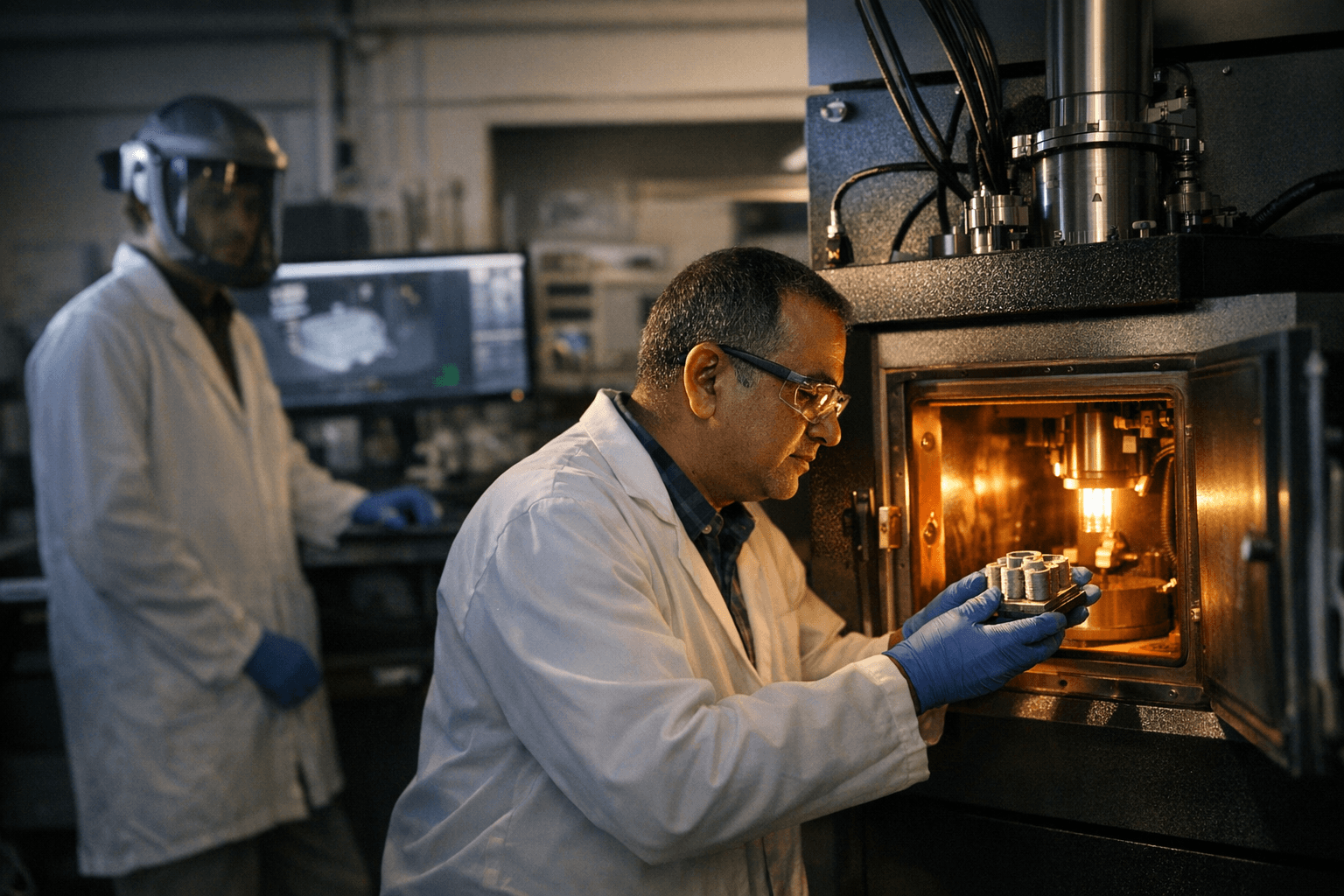
That distinction matters beyond academia. The metals Attallah's team will be working with, including molybdenum and niobium, are not fringe materials. They appear in high-temperature aerospace components, fusion reactor applications, and advanced electronics. When researchers develop reliable AM process windows for these alloys on open platforms like the Freemelt ONE, those parameters can eventually inform commercial machine profiles, and the materials themselves become more viable candidates for broader adoption. It is the same pipeline that brought titanium Ti-6Al-4V from aerospace labs into desktop metal systems over roughly a decade.
For anyone tracking where printable metal powders and profiles are heading, this kind of university-level work is a leading indicator. New alloys don't appear on vendor material menus because a company decided to support them; they get there because researchers built the process knowledge first, usually on exactly this kind of open-architecture equipment. Loughborough running systematic experiments on copper, tungsten, and their refractory cousins on the Freemelt ONE is, in that sense, directly upstream of whatever next-generation metal AM material becomes commercially accessible in the years ahead.
The partnership also reinforces Freemelt's standing in the competitive metal AM landscape. The Swedish company has built its reputation almost entirely within research institutions rather than production facilities, and landing a programme led by a dean with Attallah's track record in laser AM signals that the open-platform EBM argument is resonating with precisely the researchers it was designed to reach. Results from open-parameter EBM research have a way of travelling quickly through the academic AM network, and Loughborough's work is unlikely to stay contained to a single lab.
This article was produced by Prism’s automated news system from verified source data, official records, and press releases, then run through automated quality and moderation checks before publishing. The system is built and supervised by the people who set the standards it runs under. Read our full AI policy.
Did this article answer your question?