Maker turns Jimmy Neutron’s Goddard into a life-size 3D print
A game asset became a full-size animatronic Goddard, showing how printed parts, embedded wiring, and a packed head can turn fandom into a working character build.

A beloved robot dog did not stay trapped in nostalgia. Kiara turned Goddard from Jimmy Neutron into a life-size 3D printed build, using ripped GameCube game files as the starting point and pushing the character all the way into an animatronic, costume-style project.
What makes the build stand out is not just the subject, but the way it was fabricated. The head is 3D printed and houses the electronics inside, which means the shell, mechanism, and control system are all part of one integrated character rather than separate layers bolted together at the end.
From game asset to full-scale character
The cleanest lesson from this project is that the digital source mattered as much as the printer. Instead of guessing at the shape of Goddard from screenshots and rebuilding him as a loose approximation, Kiara started from files ripped from a Jimmy Neutron GameCube game, then designed the character digitally before printing it at full scale.
That workflow is exactly why 3D printing has become so important in cosplay and prop work. A game asset gives you a reference that is already shaped like the character, and CAD lets you refine that geometry into printable pieces that can actually hold hardware, move parts, and survive handling. For a build like this, the printer is not just making a shell. It is translating a digital model into a physical body with structure, fit, and function.
The result is a far stronger foundation than a foam build or a hand-shaped sheet-material approach would usually offer. Foam and resin can still be great options for props, but a full-scale character with moving features benefits from printed parts that can be repeated, fitted, reinforced, and integrated around electronics from the start.
Why the head design matters
The head is where this build becomes more than a static display. By printing the head as a housing for the electronics, Kiara turned one of the most recognizable parts of the character into the core of the machine. That choice keeps the electronics hidden inside the visible shell, which preserves the look of Goddard while also protecting the hardware.
That kind of packaging matters in any character build. If the head is the focal point, it has to do several jobs at once: hold its shape, leave room for movement, contain wiring, and still look like the character when the mechanism is inactive. Printing the head as a single integrated assembly makes that easier to manage than trying to add hardware after the fact.
It also points to a useful strategy for anyone adapting this type of project. Build the outer shell and the internal clearance together. When the visible surface and the electronics envelope are designed as one unit, the final assembly is much less likely to turn into a constant fight for space.
The motion system turns it into animatronics
The reason this Goddard build reads as an animatronic rather than just a big print is the combination of servos, embedded wiring, and control electronics. Those components give the character motion and behavior, which changes the project from a printed figure into something that feels alive on display.
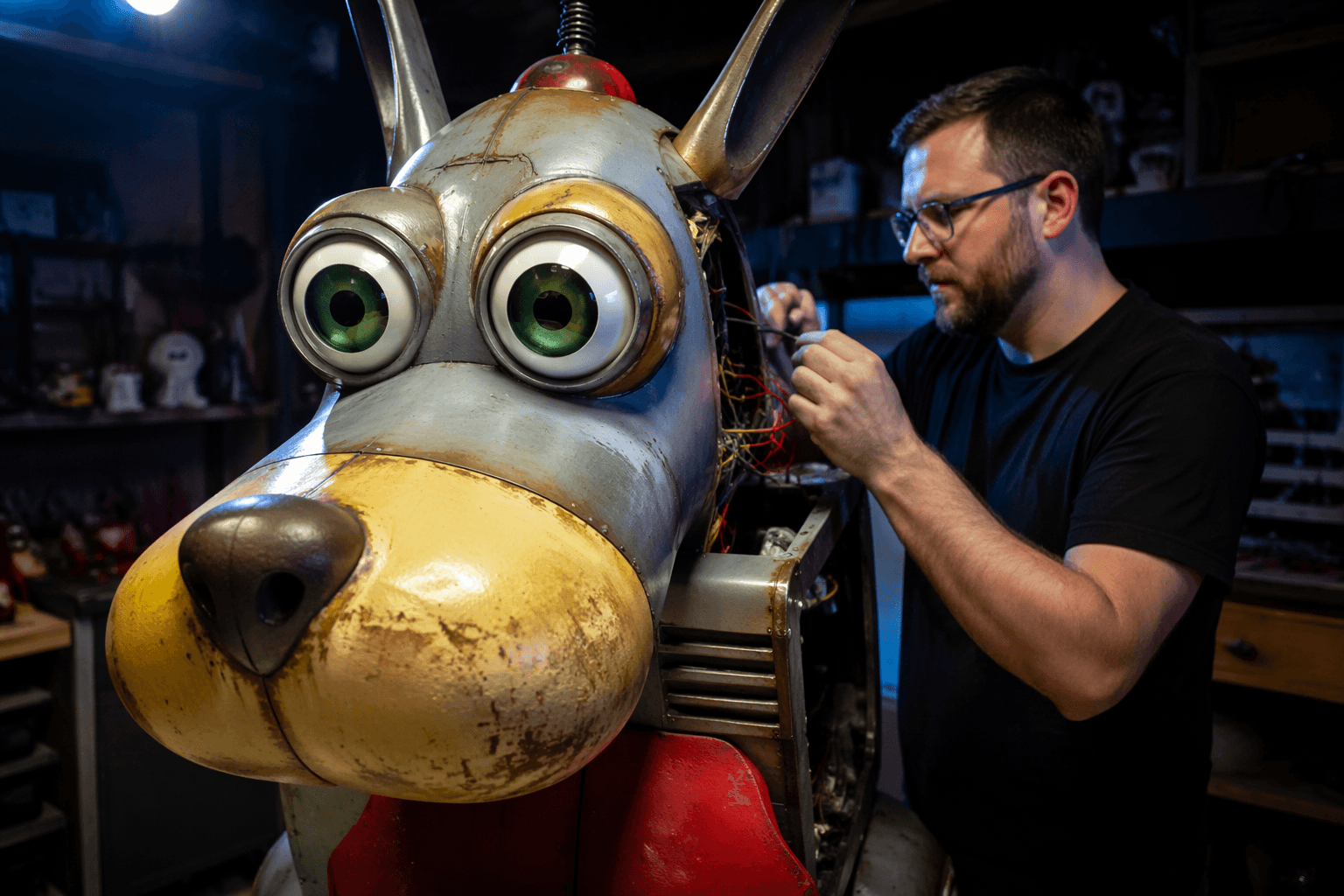
That matters because motion changes expectations. A static print can hide a lot of compromises, but a moving character exposes every design decision in the joints, wiring routes, and internal support structure. The printed shell has to clear the moving parts, the mechanism has to stay accessible, and the control system has to live somewhere inside the build without making the head bulky or fragile.
For other makers, that is the key take-away: the mechanical system should be planned as part of the character from the beginning. Printed parts are doing more than cosmetic work here. They are providing the backbone that lets the servos and electronics make the build feel like Goddard instead of just a dog-shaped object.
What makes the build so practical for makers
The most useful thing about this project is how clearly it shows the handoff between digital and physical work. The character began as a game asset, moved through CAD, and ended up as printed parts that could support a complete animatronic assembly. That is the same pipeline many hobbyists are chasing when they want to turn a favorite character into a physical centerpiece.
A few practical takeaways stand out:
- Start from the cleanest digital source you can get, because the quality of the model will shape everything that follows.
- Treat the printed shell as structure, not decoration, especially if the build needs to carry servos or wiring.
- Design the head or other major enclosure around the electronics instead of trying to cram electronics into a finished form.
- Expect the mechanism and the cosmetic surface to affect each other, because an animatronic build only works when both are designed together.
That approach is what makes the project useful beyond the novelty of the character. It shows a repeatable way to build a recognizable figure with 3D printing as the backbone, not the afterthought.
A pop-culture build with real fabrication value
The reason this Goddard project lands so well in the maker world is that it connects fandom to fabrication without losing the technical substance. The charm comes from the character, but the real achievement is the way printed parts, embedded electronics, and motion hardware were brought together into a single life-size build.
That combination is what makes the story worth studying. It is playful, but it is also a clean example of how a recognizable pop-culture design can become a serious character project when the model, the mechanism, and the print strategy all line up. In the end, the appeal is the same as the opening idea that sparked the build: a robot dog on screen becomes a real object in the room, and 3D printing is what makes that leap possible.
This article was produced by Prism’s automated news system from verified source data, official records, and press releases, then run through automated quality and moderation checks before publishing. The system is built and supervised by the people who set the standards it runs under. Read our full AI policy.
Did this article answer your question?