Markforged launches Onyx GF for color-coded industrial parts
Markforged’s Onyx GF puts six-color, glass-filled nylon on the FX10 and FX20, aimed at factory-floor parts that need to signal as well as perform.
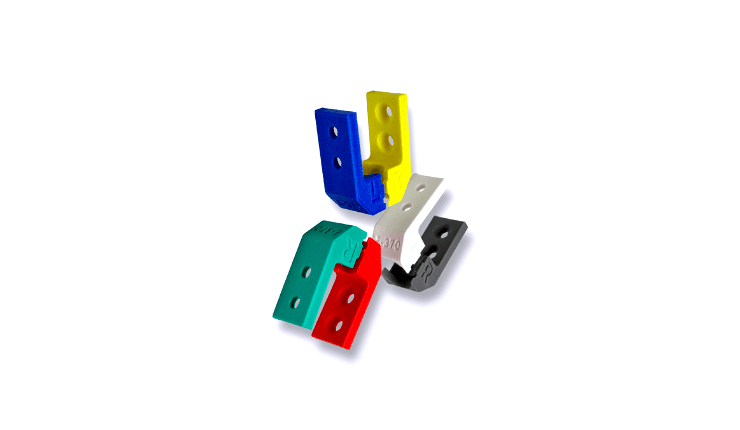
Markforged rolled out Onyx GF from Waltham, Massachusetts, as a factory-floor material first and a color story second. The new chopped glass fiber-filled nylon arrives for the FX10 and FX20 in red, yellow, blue, green, gray and white, with Markforged positioning it for color-coded tooling, error-proofing fixtures, safety indicators and visual management where the part itself needs to carry the message.
The company’s pitch is simple: build functional color into the material instead of adding paint or labels after the fact. That matters on production lines where workers need to identify revisions, workflows or process-specific tools at a glance, and where secondary finishing can add labor, inconsistency and delay. Markforged says Onyx GF keeps the Onyx family’s tensile strength, stiffness, surface finish, dimensional accuracy and print reliability, while also serving aerospace and automotive users looking at foreign-object-debris prevention and electrical-isolation applications because the material is naturally non-conductive.

Onyx GF is sold in 800 cc standard spools, and Markforged says printing it on the FX10 and FX20 requires a new hardened plastic nozzle because the glass fibers are abrasive. The material can also be reinforced with Carbon Fiber through Markforged’s Continuous Fiber Reinforcement process, which gives it a path toward higher structural demand rather than leaving it as a purely cosmetic upgrade. Markforged also says the FX20, its largest and most precise machine, brings an 84L heated build chamber into that same workflow.
The material slot is interesting because it sits between plain nylon convenience and the more specialized carbon-filled composite lane. Compared with plain nylon, chopped glass-filled nylon usually pushes harder on stiffness and dimensional stability, but it also asks more from the nozzle and handling chain. Compared with carbon-filled options, Onyx GF gives shops something carbon-heavy materials often do not: visible color across the part itself, which is exactly what 5S systems, visual-management setups and color-coded fixtures need. The tradeoff is that the glass-filled route is about practical signaling and durable utility, not chasing the most extreme composite spec on the chart.
That is why Onyx GF feels less like a novelty filament than another step in the migration of factory-grade composites into more accessible extrusion systems. Markforged is not just selling brighter parts; it is trying to make the printer part of the process control system, with color embedded where operators can use it and the Onyx performance envelope still intact.
This article was produced by Prism’s automated news system from verified source data, official records, and press releases, then run through automated quality and moderation checks before publishing. The system is built and supervised by the people who set the standards it runs under. Read our full AI policy.
Did this article answer your question?