Massivit opens Europe service center as 3D printing advances grow
Massivit opened its first Europe-based service center in Barcelona for RapidWings tooling. nScrypt, Titan America and Empa also pushed paste, concrete and steel printing ahead.
Massivit 3D Printing Technologies opened its first Europe-based service center in Barcelona, Spain, giving its RapidWings on-demand tooling platform a local base for aerospace and defense composites work. The company listed the announcement on its press-release page with a Sept. 9, 2025 date, and later described the Barcelona site as its first service center in Europe.
For makers, the immediate takeaway is not a new desktop machine but better access to industrial-format tooling support. Massivit has been building toward that position for years, first with the Massivit 5000 industrial 3D printer and later with an affordable large-format printer it showed at drupa 2024 in Germany. The Barcelona center fits that strategy by bringing service and application support closer to customers who need large parts, molds and fixtures rather than small hobby prints.
The most directly maker-relevant materials news came from nScrypt. Its research arm, Sciperio, was awarded a new U.S. patent for high-viscosity dispensing technology, extending a platform the Orlando, Florida company already markets around an unusually wide material range. nScrypt says its micro-dispensing systems work from 1 cP nanoparticle inks to more than 1 million cP flake-loaded pastes, and the patent background says the valve can mix and dispense both low- and high-viscosity materials, including particle-loaded formulations, with clean starts and stops. That is the kind of capability that matters for ceramic slurries, silicone, conductive pastes and other materials that clog or string in less capable systems.
Titan America moved the material conversation in a different direction with xForm3D, which it launched in a June 22, 2026 release from Norfolk, Virginia. Titan calls xForm3D a patented 3D-printable concrete technology for commercial, residential, infrastructure and coastal applications. The company says the ready-mixed concrete is highly pumpable and extrudable, holds shape quickly, and meets and exceeds ASTM C94/C94M. It also paired the system with Axion HR/3D Set Accelerator and Axion NCA/3D Superplasticizer, a sign that printable concrete is increasingly about chemistry and process control, not just nozzle size.
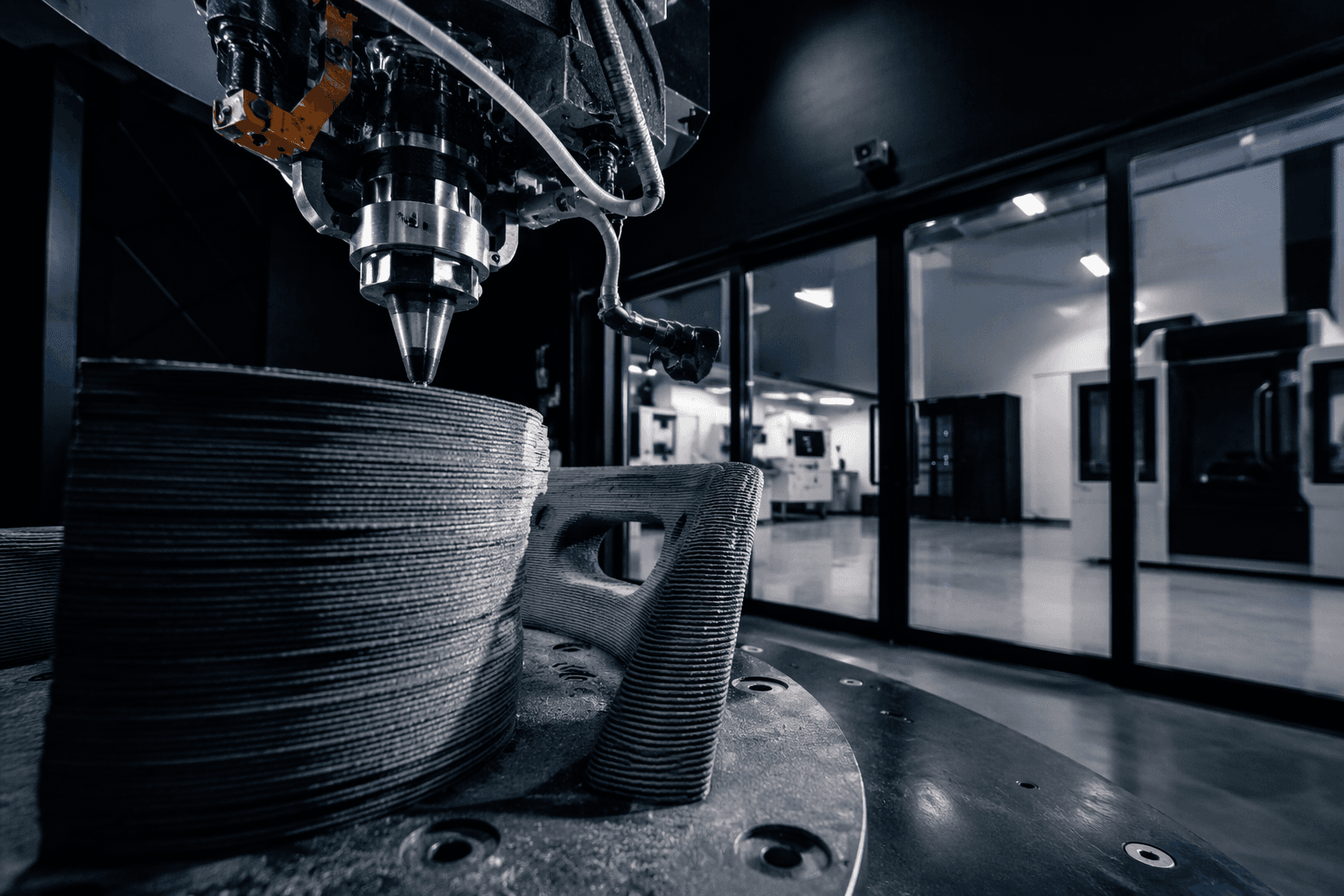
Empa, the Swiss federal materials lab, pushed the same theme into metal with its WAAM work on aging steel structures. Its June 2026 coverage framed the project as “Bridges get stitches,” focusing on repair and redesign for bridges, support structures and industrial steel constructions where fatigue cracks can make replacement too costly or impractical. That is still far from a garage printer, but it shows wire-arc additive manufacturing moving from part making toward structural repair.
Taken together, the batch splits cleanly between near-term workshop relevance and heavier industrial R&D. Massivit’s Barcelona move matters first because support infrastructure usually lands before broader adoption, while the nScrypt patent, Titan’s printable concrete and Empa’s WAAM repair work sketch the materials frontier that hobbyists will keep watching next.
This article was produced by Prism’s automated news system from verified source data, official records, and press releases, then run through automated quality and moderation checks before publishing. The system is built and supervised by the people who set the standards it runs under. Read our full AI policy.
Did this article answer your question?