MIT 3D prints low-cost nozzles for drug-delivery particles
MIT researchers turned a cleanroom-only nozzle into a resin-printable part, making microscopic droplet generators faster to prototype and far cheaper to iterate.
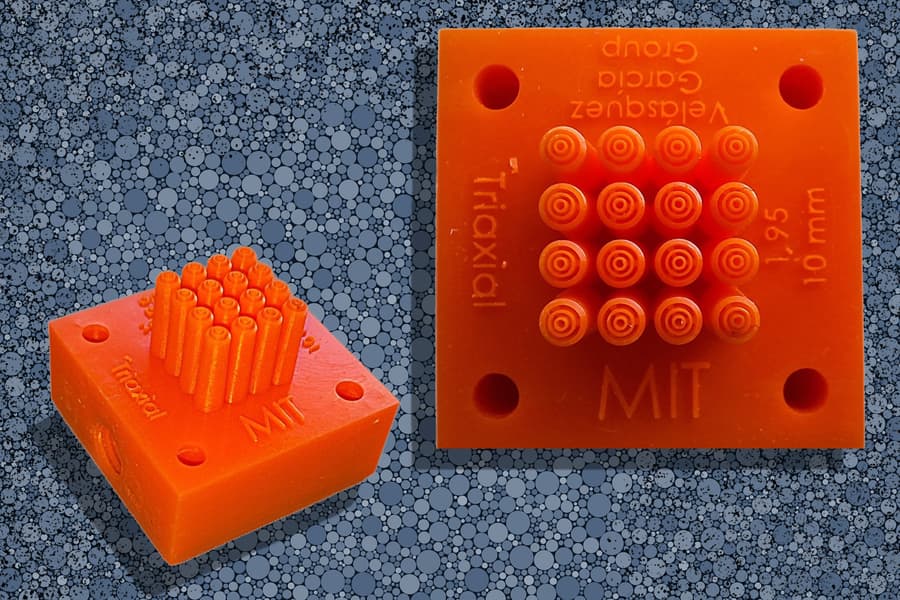
Researchers at MIT have shown that a microscopic nozzle once tied to semiconductor cleanrooms can now be made in a matter of hours with 3D printing. The part is a triaxial electrospray emitter, and the real breakthrough is not just that it prints, but that it prints through a relatively inexpensive resin workflow instead of a costly microfabrication line.
The access story behind the hardware
This is the kind of 3D printing win that matters far beyond the final part. For years, complex nozzle arrays like these sat behind the gatekeeping of cleanroom access, where tooling, scheduling, and fabrication costs made every design change expensive. MIT’s approach shifts that bottleneck away from facility access and toward iteration, which is exactly where additive manufacturing tends to shine.
That distinction matters because the value here is not simply “we made a small thing.” It is that the team demonstrated a cheaper manufacturing route for a class of hardware that normally belongs to specialist semiconductor-style infrastructure. In practical terms, the printer becomes a fast test bench for microfluidic and electrospray ideas, not just a machine for producing end-use parts.
Why triaxial electrospray emitters are worth printing
The nozzles are used to generate microscopic droplets, which then become the building blocks for layered drug-delivery particles and related applications. That makes the geometry unusually important: if the nozzle shape changes, the droplet behavior changes, and the downstream particle structure changes with it. In this space, precision is not a luxury feature; it is the whole game.
That is also why this story lands differently from a typical “3D printed part” headline. The hardware sits at the interface between fluid control and particle engineering, where tiny variations in channel design can affect how droplets form and how consistently they are produced. For labs working on drug delivery, microfluidics, or any process that depends on tightly controlled droplet generation, getting to test multiple nozzle designs quickly can matter as much as the final device itself.
What additive manufacturing unlocks here
The biggest production implication is speed. A resin printer can turn an idea into a physical nozzle array in hours, which means teams can evaluate design changes without waiting for a cleanroom slot or paying for a full semiconductor-style fabrication cycle. That shortens the loop between concept, print, test, and revise, and it makes experimentation feasible for groups that might otherwise be shut out by cost or access.

That is the deeper value of additive manufacturing in this case: it lowers the cost of trying. The report’s framing makes clear that 3D printing is not replacing all cleanroom microfabrication, and it does not need to. It is creating a lower-cost route for a specific class of nozzles, which is often the difference between a project that stays theoretical and one that moves into repeated testing.
- Faster iteration on nozzle geometry
- Lower entry cost than cleanroom fabrication
- More access for labs without semiconductor infrastructure
- A practical route for testing droplet-generation behavior
Why this matters for drug delivery and beyond
The immediate application is layered drug-delivery particles, where microscopic droplets are the starting point for structured materials. But the same manufacturing logic extends to any workflow that depends on controlled droplet formation, including self-healing material manufacturing and other microfluidic applications. Wherever the droplet is the product, the nozzle becomes a critical piece of process hardware.

That is why this story fits the broader arc of 3D printing right now. The technology is not only moving faster on large consumer parts or multicolor systems for hobby printers, it is also pushing down-scale into components that used to be considered too delicate, too specialized, or too expensive for additive production. Resin printers, in particular, are increasingly acting like serious fabrication tools for geometries that would have been out of reach not long ago.
A small part with a big workflow effect
The real lesson from MIT’s nozzle work is that 3D printing creates its biggest value when it unlocks experimentation. Printing the final part is useful; printing the part that used to require a cleanroom, and doing it fast enough to change the design again tomorrow, is transformative. In that sense, the breakthrough is less about a nozzle and more about access: access to iteration, access to testing, and access to a class of hardware that no longer has to wait at the cleanroom door.
This article was produced by Prism’s automated news system from verified source data, official records, and press releases, then run through automated quality and moderation checks before publishing. The system is built and supervised by the people who set the standards it runs under. Read our full AI policy.
Did this article answer your question?