MIT 3D prints Y-zipper that turns soft materials rigid
MIT’s 3D-printed Y-zipper can flex like soft material, then lock into a rigid form, pointing to deployable prints and shape-changing parts.
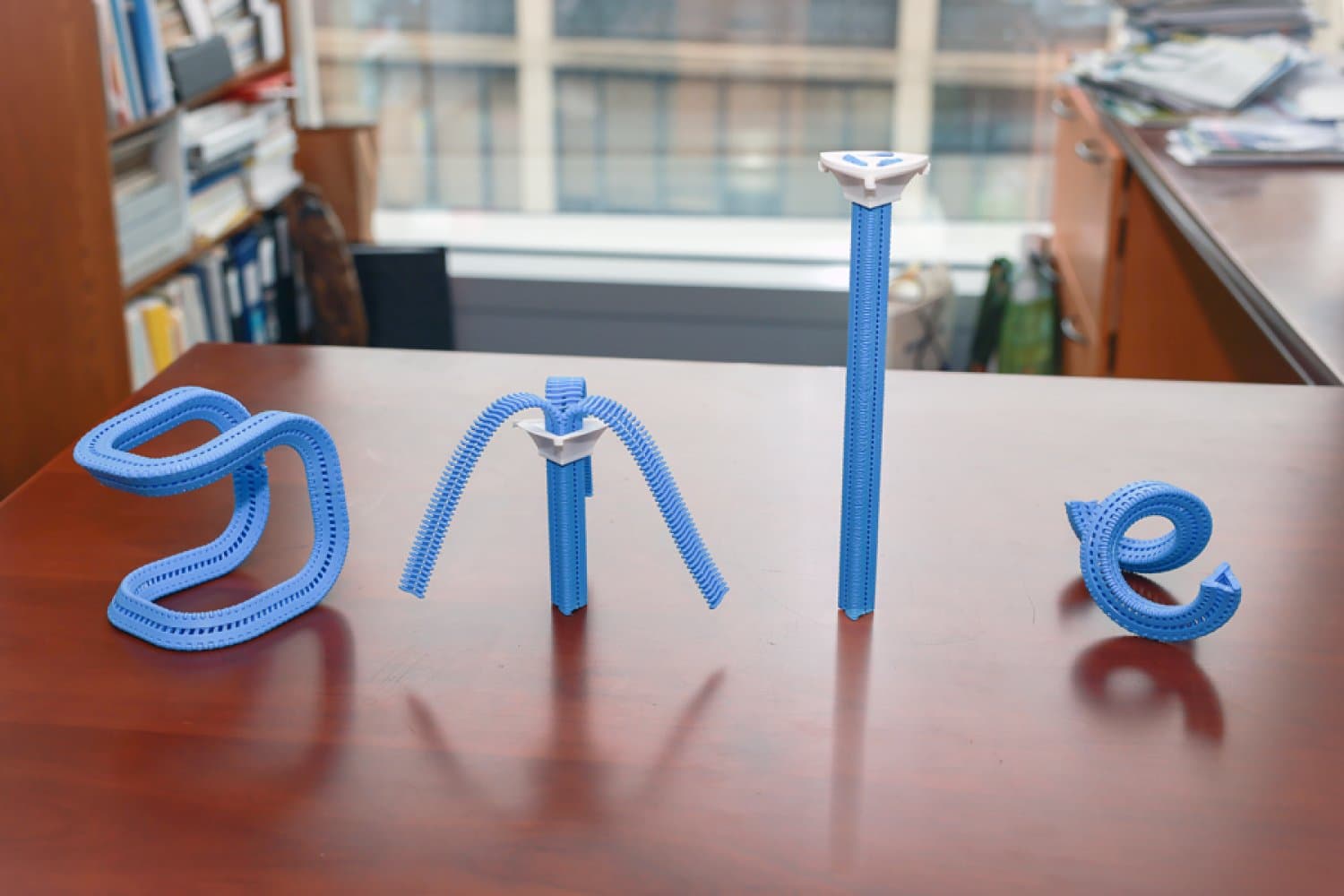
MIT researchers have 3D-printed a three-sided Y-zipper that turns soft materials into rigid, shape-locking structures, reviving a 40-year-old idea with current fabrication tools. The mechanism is aimed at parts that bend, twist, and then hold form, with possible uses in deployable tents, medical devices, robots, and art installations.
The design traces back to 1985, when William Freeman, then an electrical engineer at Polaroid and now an MIT professor, responded to an Innovative Design Fund advertisement in Scientific American that offered up to $10,000 for prototypes in clothing, home decor, and textiles. Freeman sketched a three-sided zipper concept, later patented a prototype with wooden teeth and a triangular form, and eventually put the idea in his garage after it was rejected. Four decades later, MIT’s Computer Science and Artificial Intelligence Laboratory brought the concept back with 3D printing.
What makes the new version especially relevant for fabrication work is the workflow around it. MIT CSAIL built an automated design tool that lets users specify zipper length, bend direction, and bend angle, then choose from four motion primitives: straight, bent, coiled, and twisted. The fastener can be attached to or embedded in camping equipment, medical gear, robots, and art installations, giving designers a way to switch an object between flexible and rigid states without rebuilding the whole part.
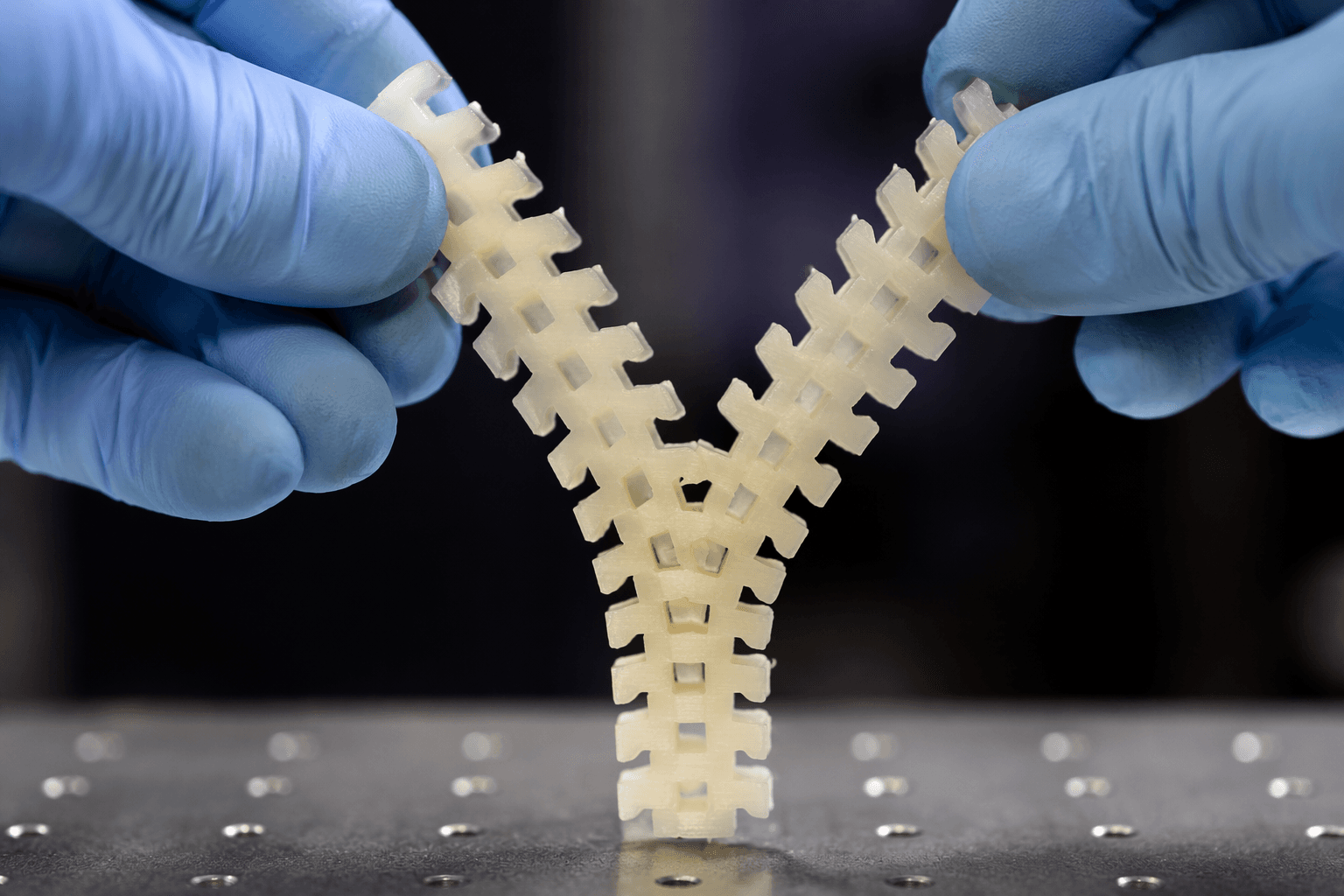
The open-access paper, titled Y-zipper: 3D Printing Flexible-Rigid Transition Mechanism for Rapid and Reversible Assembly, was presented at CHI 2026. The author list on MIT’s publications page includes Jiaji Li, Xiang Chang, Mingming Li, Dingning Cao, Maxine Perroni-Scharf, Jeremy Mrzyglocki, Takumi Yamamoto, William Freeman, and Stefanie Mueller. The abstract describes the three-sided printed zipper as a way to interlock three flexible strips into a rigid rod-like form, with manual, dynamic mechanical, and static mechanical actuation.
MIT has also shown the mechanism as a visual trick: unzipped, it can resemble a squid with three tentacles, then collapse into a compact structure when closed. For the 3D-printing community, that is the real hook here, a printable connector that starts soft, then locks into shape when the geometry demands it.
This article was produced by Prism’s automated news system from verified source data, official records, and press releases, then run through automated quality and moderation checks before publishing. The system is built and supervised by the people who set the standards it runs under. Read our full AI policy.
Did this article answer your question?