NNSA 3D prints Aires Tide test vehicle 15x cheaper and 7x faster
A 3D-printed flight test vehicle was built 15x cheaper and 7x faster, then dropped from 32,000 feet to validate the design.

The National Nuclear Security Administration says it built Aires Tide, a proof-of-concept flight test vehicle, 15 times cheaper and seven times faster than traditional methods by combining AI, high-performance computing and additive manufacturing. The June 24 announcement marks the first tangible demonstration of the Genesis Mission platform, and it puts the build process, not just the vehicle, at the center of the story.
The project pulled in Los Alamos National Laboratory, Lawrence Livermore National Laboratory, Sandia National Laboratories and the Kansas City National Security Campus. NNSA Administrator Brandon Williams called Aires Tide “a remarkable early demonstration” of how the agency is putting Genesis into action, while keeping human judgment “firmly at the center.” That mix of machine-driven design and human review is the headline lesson for anyone tracking how additive is moving from prototypes to tightly engineered flight hardware.

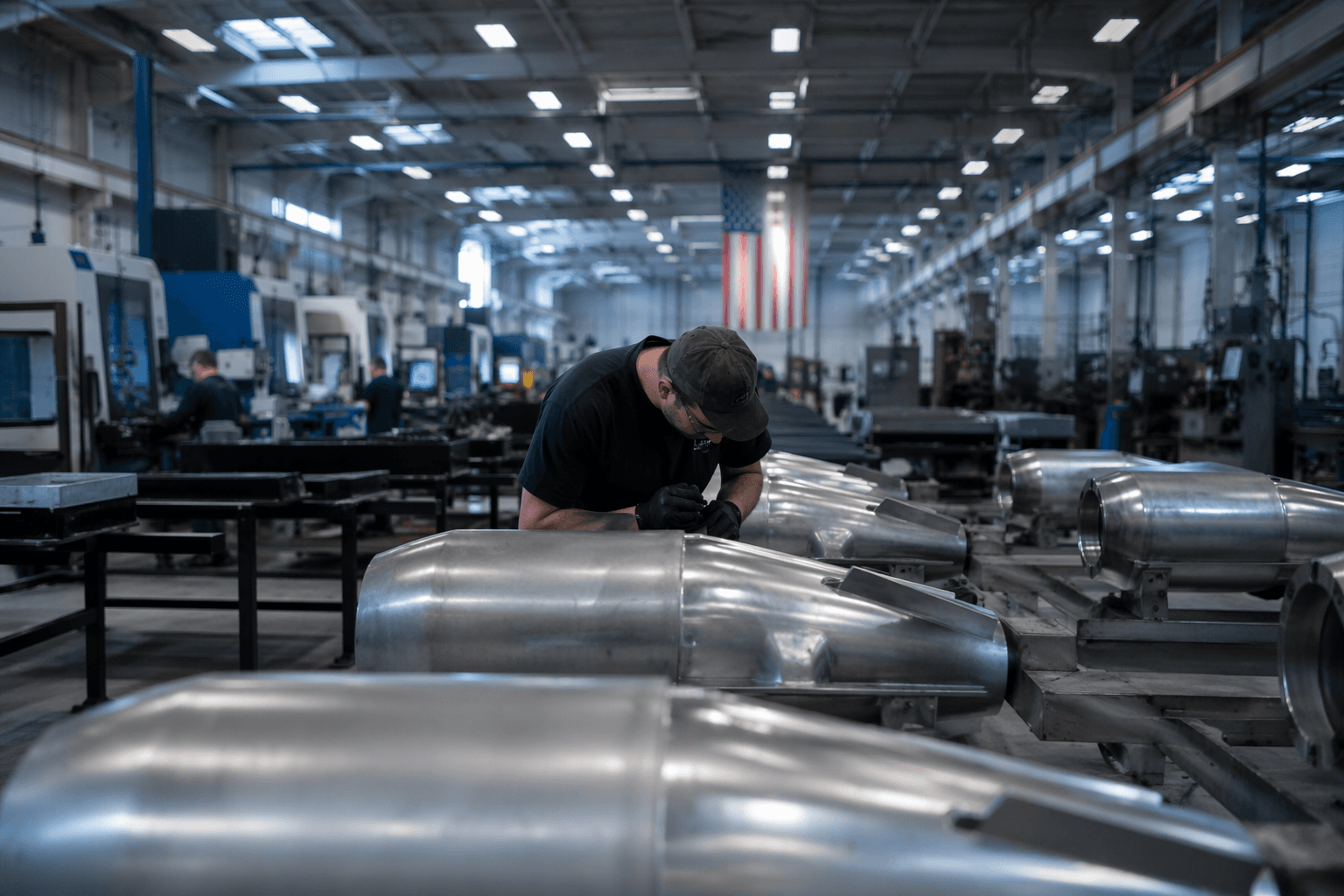
The manufacturing details are where Aires Tide gets interesting. The full-scale vehicle was about 11 feet tall, printed in seven nested pieces on a Velo Sapphire XC laser powder bed fusion machine and made of Inconel. That part breakdown points to a design-for-AM approach built around consolidation and geometry that can be printed, assembled and tested quickly. The design work leaned on two of NNSA’s flagship supercomputers, Venado at Los Alamos and El Capitan at Lawrence Livermore, to move from concept to multiple prototype builds in about five months instead of years.
Validation did not stop at the printer. In May, Nuclear Security Enterprise scientists carried out two successful flight tests, including a drop from 32,000 feet at the U.S. Army’s Dugway Proving Ground in Utah. Lawrence Livermore said a successful May 19 half-scale drop test produced flight data that will be used to assess performance, validate modeling and simulation results, and refine future designs. Earlier design iterations also included smaller test articles and a carbon fiber composite prototype printed in January 2026, showing a workflow that used scale, material changes and repeated drops to compress the feedback loop.

That is the practical takeaway for the 3D printing crowd: Aires Tide was not just made faster because it was printed. It was made faster because the team used additive, simulation and drop-test validation to collapse the usual sequence of design, tooling and rebuilds into a short prototype chain. A full-scale prototype is also set for public display at the Freedom 250 Great American State Fair on the National Mall in Washington, D.C., later this summer, but the manufacturing story is already plain.
This article was produced by Prism’s automated news system from verified source data, official records, and press releases, then run through automated quality and moderation checks before publishing. The system is built and supervised by the people who set the standards it runs under. Read our full AI policy.
Did this article answer your question?