PETG guide helps hobbyists choose tougher filament for practical prints
PETG is the spool to grab when a print needs real-world toughness without ABS-level hassle, but PLA, ABS, or TPU still win in the right job.
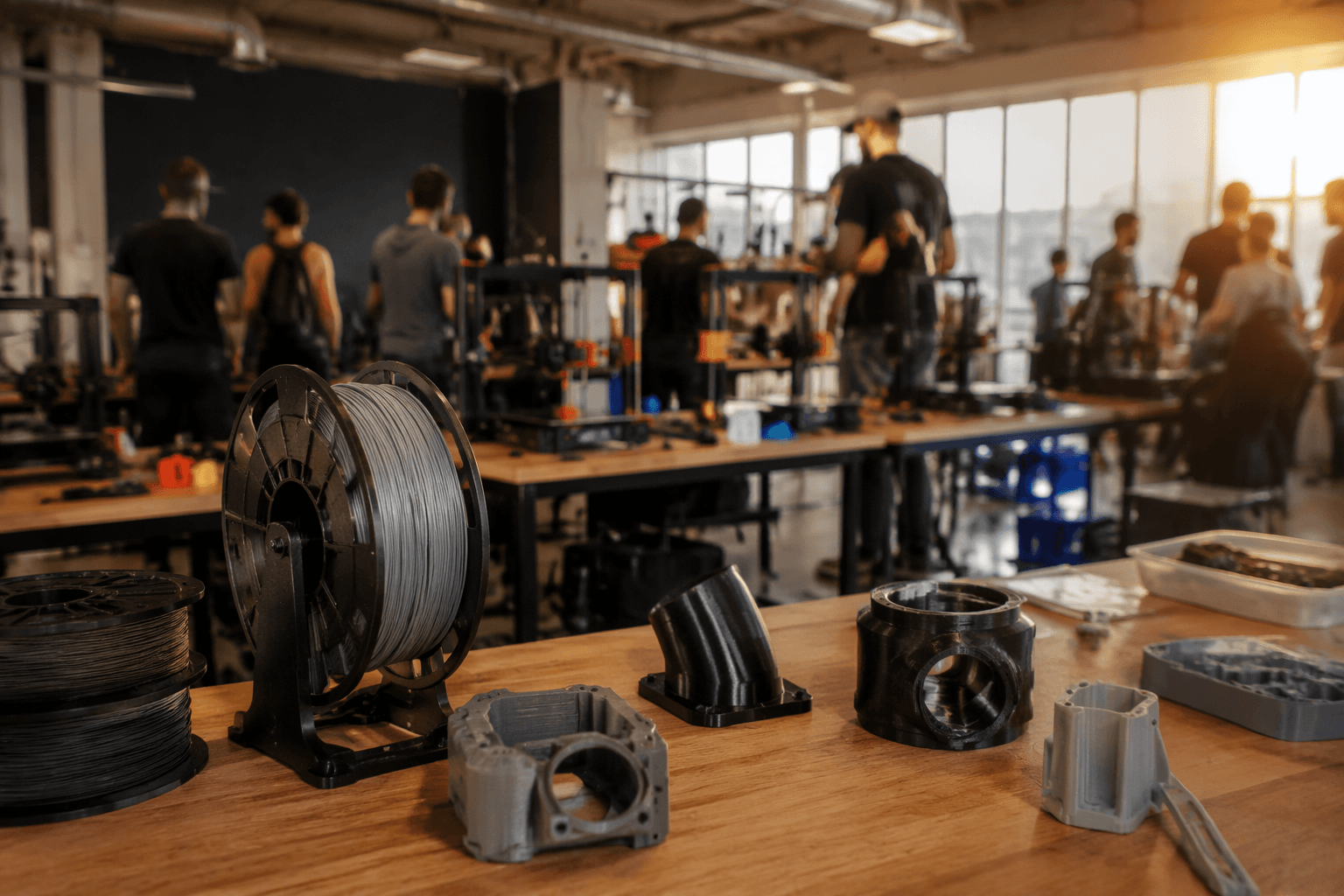
PETG is the filament you reach for when a print has to do something, not just sit there looking good. It sits in the practical gap between easy PLA and more demanding ABS or nylon, giving you more toughness and heat resistance than PLA while still staying printable on a wide range of consumer machines. That middle-ground role is exactly why it keeps showing up in hobby benches, from brackets and organizers to garden parts and enclosures.
Where PETG fits in the hobby shelf
The material has a longer backstory than a lot of desktop printer users realize. PET chemistry is commonly traced to British chemists J. Rex Whinfield and James Tennant Dickson in 1941, and PETG’s rise in hobby printing came much later, when taulman3D released t-glase on 2013-08-06 as an early PETG-like copolyester filament for desktop use. That timeline matters because PETG did not arrive as a flashy novelty; it grew into the default answer for makers who wanted more out of their prints than PLA could comfortably give.
That practical reputation is reinforced across comparison guides. Xometry describes PETG as offering good strength, heat resistance, and chemical resistance, while Simplify3D highlights ease of printability, smooth surface finish, and water resistance. Ultimaker places it squarely between PLA and ABS, which is the real reason it keeps winning slots in filament drawers: it solves a specific gap without demanding a full leap into the deep end.
Use PETG for outdoor parts, brackets, and end-use pieces
If the print is going to live outside, get bumped, or carry a load, PETG often makes sense tonight. It is a strong choice for functional brackets, organizers, enclosures, and garden items because it handles more stress than a decorative PLA part without forcing you into an enclosed industrial setup. That makes it a favorite for the point in the hobby where parts stop being display pieces and start becoming tools.
PETG also earns its keep when a part needs a little chemical resistance or water resistance. That does not make it a miracle material for every harsh environment, but it does give you a more forgiving option than PLA when moisture, splashes, or routine wear are part of the job. If your part is meant to live in the workshop, shed, or garage, PETG is often the first filament that feels like a real upgrade rather than a sideways move.
When PETG is the smarter call for snap-fits and brackets
PETG’s toughness matters most when a print has to flex, hold, or survive repeated use. For snap-fit pieces, mounting tabs, simple clips, and load-bearing brackets, it can deliver the kind of durability PLA often lacks. PLA may print more cleanly, but once a part has to click into place or resist long-term stress, PETG usually becomes the better bet.
That said, PETG is not the same as “stronger in every way.” It can be less rigid than ABS in some structural situations, so if heat and stiffness are the main concerns, ABS or ASA may still be the better material. PETG wins when you need a balanced combination of toughness and ease, not when you need the absolute top of the chart in one property.
When a fast prototype is still better in PLA
PETG is not always the fastest route to a finished print. It can be stringy, sensitive to retraction settings, and less forgiving than PLA on first-layer tuning and cooling. If you are iterating on a design and only need a quick fit check, PLA still has a strong case because it is simpler, cleaner, and usually less fussy.
That matters for anyone chasing overnight progress. PETG can be the right answer for the final version of a bracket or enclosure, but if the goal is rapid prototyping with minimal babysitting, PLA often saves more time. Tom’s 3D-printing guides and reviews capture that tradeoff well: PETG can become a favorite material, but it still needs extra tuning for some jobs.
When clean surface quality matters
PETG has a reputation for smooth finishes, and that is one of the reasons it keeps getting picked for parts people will actually see. Simplify3D’s framing of PET and PETG as materials known for smooth surface finish and water resistance matches the way many hobbyists use them: not for museum-grade detail, but for parts that should look deliberate and finished.
Still, if you want ultra-crisp miniatures or the cleanest fine detail with the least fuss, PLA remains the safer call. PETG’s stringing and cooling sensitivity can soften tiny features, especially when the printer is not dialed in. For a display model, a prototype with delicate text, or a part where edge sharpness matters more than durability, PLA usually gives you a cleaner first pass.
When ABS or TPU is the better answer
PETG is not the universal answer some newcomers hope for. If the part must handle higher heat or more demanding structural use, ABS or ASA may be the better choice. Ultimaker’s comparison of PETG, PLA, and ABS captures that middle ground clearly: PETG is the compromise material, not the ultimate performance material.
TPU lives in a different lane altogether. If the part needs real flexibility, shock absorption, or a rubbery feel, TPU is the smarter pick. PETG can flex a little, but it is not the material for elastic hinges, soft mounts, or parts meant to bend repeatedly like a spring. For those jobs, choosing PETG usually means choosing the wrong behavior.
How to print PETG without fighting it
PETG’s biggest weakness is not that it is hard to use, but that it rewards patience. Manufacturer guidance commonly places nozzle temperatures around 210 to 230 C and bed temperatures around 60 to 90 C, and the real trick is getting retraction, cooling, and first-layer behavior to work together. A profile that prints PLA beautifully can leave PETG with strings, blobs, or a sticky first layer.
The bed is where many users get surprised. PETG can adhere strongly to some build surfaces, including PEI-type plates, which can make it less forgiving than PLA if the first layer is too hot or too compressed. That strong grip can be useful, but it also means you need to think about release and surface protection before you start a long print.
- slowing down enough to let the filament settle cleanly
- tuning retraction to reduce stringing
- watching cooling carefully instead of blasting the part with fan
- checking first-layer height so the part sticks without welding itself to the bed
A practical PETG setup usually means:
Why PETG keeps earning a place in the print queue
PETG remains important because it solves a real hobbyist problem: how to move beyond decorative printing without jumping straight to a printer setup that feels like a project of its own. It gives you a workable path into functional parts, end-use accessories, and tougher household prints while staying accessible on everyday machines. That is why it keeps landing in the “grab this spool tonight” category for the right kind of job.
If the print needs toughness, a bit of heat resistance, and a better shot at surviving real use, PETG is often the answer. If the goal is the fastest prototype, the sharpest miniature, or a flexible part that should bend instead of hold, PLA, ABS, or TPU can still be the smarter move.
This article was produced by Prism’s automated news system from verified source data, official records, and press releases, then run through automated quality and moderation checks before publishing. The system is built and supervised by the people who set the standards it runs under. Read our full AI policy.
Did this article answer your question?