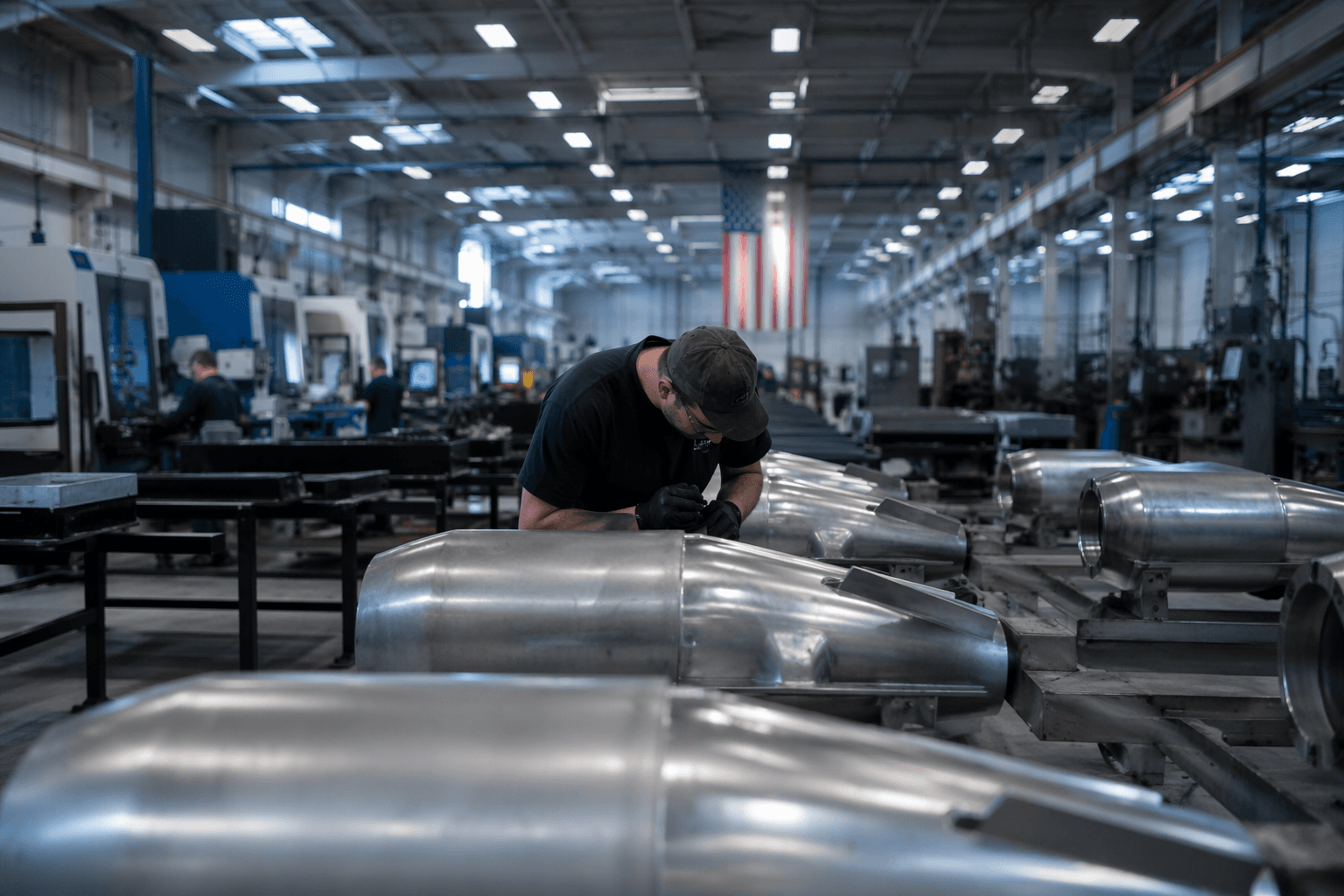
Polysynth’s multimaterial resin printer uses eight vats and spin cleaning
Eight vats and spin cleaning could bring material swapping to resin prints, but the real test is whether Polysynth can tame contamination and cleanup.
What Polysynth is trying to change for resin printing
The real promise here is not spectacle, it is workflow. Polysynth is chasing the same kind of material-swapping freedom that filament users already take for granted, but in resin, where switching materials has been much harder to do without ruining the part, contaminating the vat, or losing surface quality. If it works, the payoff is obvious: rigid and flexible sections in one job, color or transparent effects without extra finishing, and fewer glue-up and paint steps after the print comes off the build plate.
That matters because resin printing has always been excellent at detail, but awkward at combinations. FDM has long had multi-material paths for color, support material, and functional blends, while resin systems have lagged behind. A 2020 paper on multi-material stereolithography described only very few commercial attempts at the time, which is a useful reminder that this is not a solved consumer feature waiting to be packaged, it is a stubborn technical problem that has stayed stubborn for years.
How the P1 is built
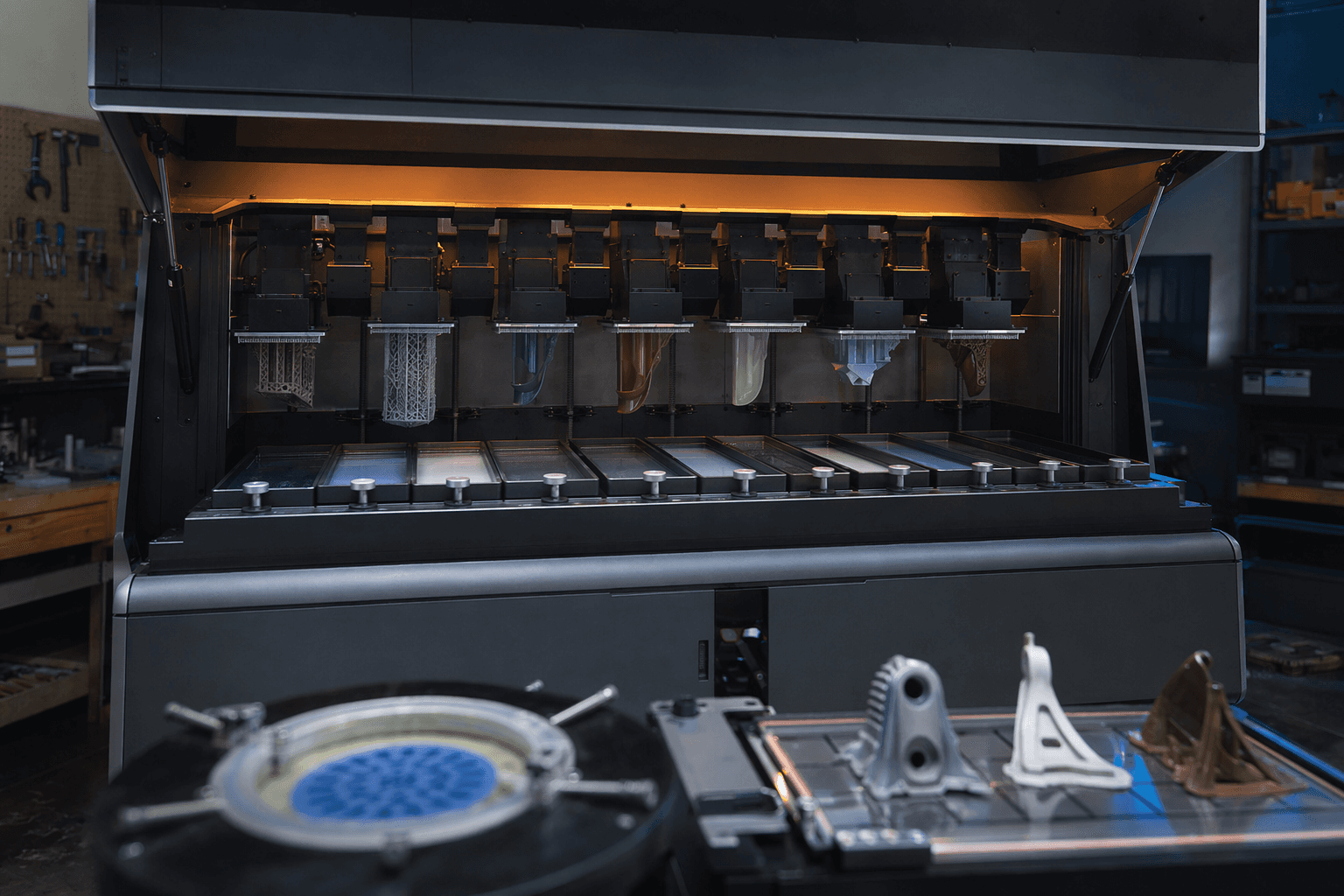
Polysynth’s P1 takes a direct swing at that problem with a carousel of up to eight small resin vats instead of one large tank. The printer can automatically sequence up to 8 materials per print, and the company says its system uses a patent-pending vat cleaning process between layer changes to reset the surface before the next resin is laid down. The starting price is listed at $4,999+, which already tells you where this machine is aimed: not the casual desktop crowd, but shops and specialist users who need capability more than a bargain.
The cleanest way to think about the mechanism is that the machine is trying to isolate each material transition as tightly as possible. Instead of simply dipping back into a shared vat and risking leftover resin from the previous layer, Polysynth is betting on a spin-cleaning approach that uses centrifugal force to throw off uncured residue between dips. That is the machine’s key idea and its key risk, because the whole system depends on whether the spin cycle can leave the part ready for the next material without introducing defects, mess, or alignment issues.
Why cleanup is the entire story
Every multiresin conversation in stereolithography comes back to contamination. A 2024 thesis on multi-material vat photopolymerization made the point plainly: uncured resin must be cleaned away between material changes to prevent cross-contamination. That is easy to say and hard to execute, especially when you want sharp transitions, predictable curing, and surfaces that still look like they came from a single machine rather than a repair bench.
Polysynth is trying to answer that with both hardware and process. The company says its patent-pending vat cleaning system resets between layers for cleaner transitions and higher-fidelity output, which is exactly the sort of claim resin users will want to pressure-test with real prints. The practical questions appear immediately:
- Does resin from one tank cling to the model and contaminate the next material?
- How often does the system need to clean, and how much time does that add to a print?
- What happens when you swap between viscosities, colors, or mechanical properties?
- How much post-processing is left once the print is done?
Those are the questions that separate a compelling prototype from a machine someone can actually build around.
Why the dental lane makes sense
Polysynth is not pitching this as a toy for the home bench. Founders, Inc. lists the company as founded in 2025 by Eric Potempa, and says it is designed and manufactures multi-material resin printers built specifically for dental labs. That choice makes sense, because dentistry already depends heavily on additive manufacturing. A 2026 dental 3D-printing review says the field uses 3D printing for models, crowns, bridges, dentures, surgical guides, orthodontic appliances, and scaffolds.
That is the right environment for a machine like this because dental workflows value precision, material specialization, and repeatability. Polysynth says the P1 is intended for dental-lab workflows and biocompatible resins, and it advertises micron-level precision alongside support for conductive resin and embedded electronics. If those claims hold up in practice, the machine would not just be about making attractive objects, it would be about building parts with different functions in the same print, which is the kind of thing labs and advanced service bureaus can actually use.
What could change for resin hobbyists
Even though the machine is clearly aimed above the hobby tier, the ripple effects could still reach the desktop market. The hobby side of resin printing tends to inherit features after they have been proven in more demanding environments, and this is the next frontier after multicolor filament. If a system like this can prove that multi-material resin transitions are repeatable, cleaner, and manageable, it changes expectations for what a future resin printer should be able to do.
The most exciting use cases are practical, not flashy. Think soft grips printed onto rigid shells, translucent and opaque sections in one part, or conductive paths embedded directly into a resin object. Polysynth’s own roadmap points in that direction, with planned launches for conductive materials stack support, full conductive resin prints, and multi-color resin. That reads less like a gimmick and more like a staged push toward a genuine multimaterial platform.
The barriers that still define the story
The machine’s biggest challenge is that the hard part is not moving vats around, it is making material changes invisible in the finished part. Multi-material MSLA work has already produced a 2025 ASME paper describing a wiper-based add-on meant to facilitate transitions without tank replacement, which shows how many different groups are still searching for a reliable path through the same bottleneck. The fact that researchers are still exploring cleaning mechanisms tells you everything about the state of the field.
For a home user, the immediate concerns are blunt:
- Resin cross-contamination between colors or formulas
- Cleanup complexity after a multi-material job
- The time cost of swapping or refreshing vats
- Whether the machine behaves like a production tool or a lab demonstration
Those questions matter because resin users already live with mess, odor control, washing, and curing as part of the workflow. A printer that adds eight vats and spin cleaning must prove that it reduces friction somewhere else, not just shifts the pain into a more sophisticated form.
Why this release is worth watching
Polysynth is making a clear bet that multimaterial resin printing is ready to move from research curiosity toward a product category. The company’s pitch, its $4,999+ entry point, the eight-vat carousel, and the spin-cleaning approach all point to a machine built for controlled environments where material variety is worth real money. That is why this story matters to the broader 3D printing world: it is not about a novelty print, it is about whether resin can finally catch up to filament in the one area where it has lagged the most.
If Polysynth can make the carousel-and-spin approach dependable, it could reshape what advanced resin users expect from a printer, especially in dental and specialty workflows. And if it cannot, the effort still draws a bright line around the next frontier in resin: not sharper detail, but smarter material switching.
This article was produced by Prism’s automated news system from verified source data, official records, and press releases, then run through automated quality and moderation checks before publishing. The system is built and supervised by the people who set the standards it runs under. Read our full AI policy.
Did this article answer your question?