Prusa unveils Prusament Resin Model+, faster and tougher for hobbyists
Prusa’s Model+ targets the resin headaches that slow prints down: brittle parts, finicky supports, and pigment settling, while promising faster exposure and tougher results.

If your resin prints keep chipping, snapping, or turning into a support-removal slog, Prusa aimed Prusament Resin Model+ at exactly that pain point. The company’s reformulated desktop SLA material was announced on May 28 and is pitched as a tougher, faster version of its Model line, with better impact resistance, more ductility, and less pigment sedimentation for colors like white and grey.
Prusa said the original Model resin had gone through several minor exposure-time adjustments over the years because of inconsistent material reactivity. Model+ was built to clean that up. The company says the new formula keeps the easy-printing behavior hobby users expect, while improving reactivity and mechanical resistance enough to make it useful for tabletop miniatures, display pieces, alignment jigs, prototypes, and small functional parts that need to survive handling instead of just sitting on a shelf.
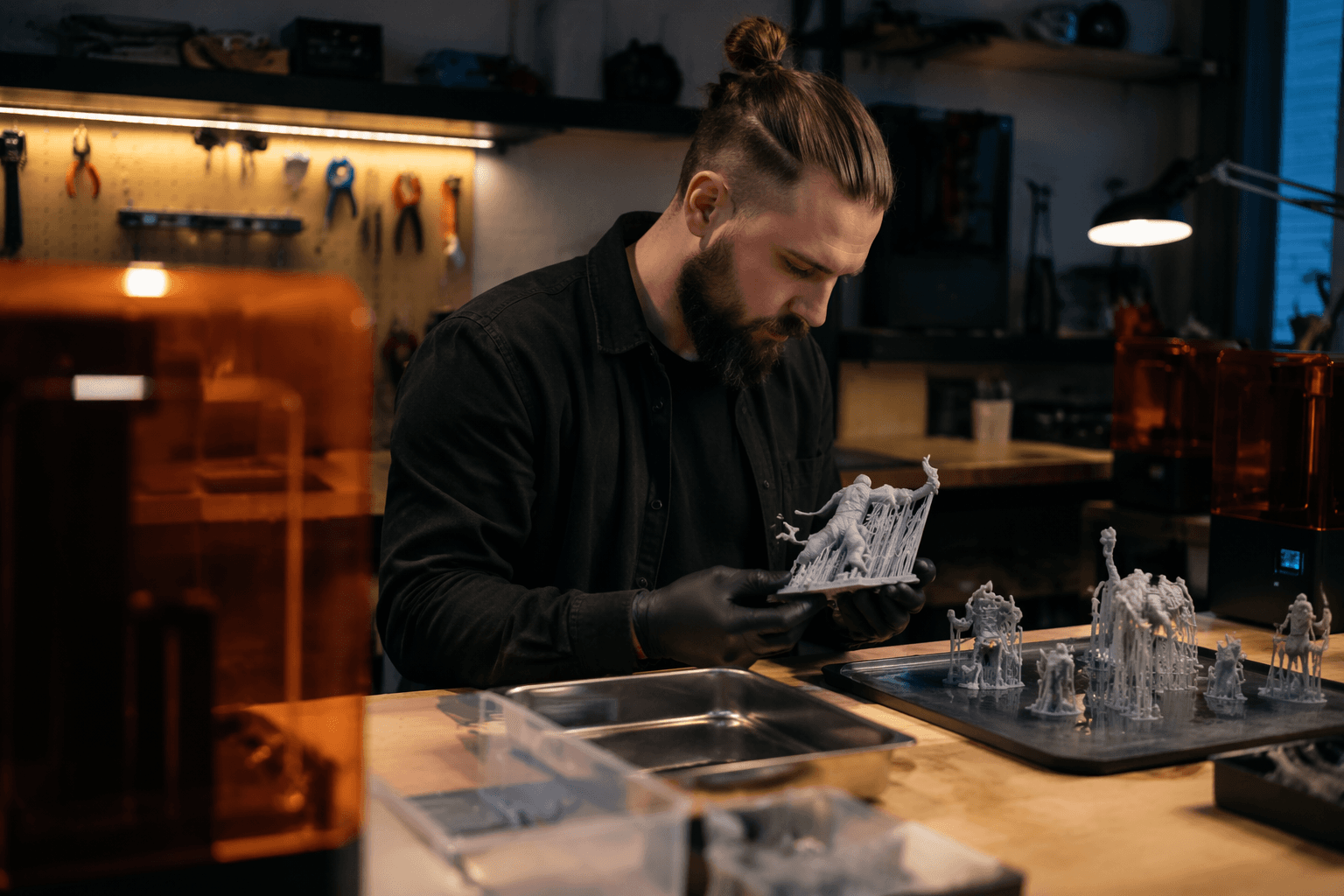
Speed is part of the appeal. Prusa said layer exposure on Model+ can run as fast as 2.0 to 2.6 seconds at 0.05 mm, depending on printer and color. That puts the material close to the 2.2-second exposure time listed on the original 2023 Model datasheet for the SL1S at 0.05 mm, but with a more durable part out of the vat. For regular users, the bigger difference is consistency: the company says Model+ delivers stable print properties over time and across batches, cutting down on the retesting that can eat into a resin workflow.
The tougher chemistry does change the post-processing side. Prusa warned that supports behave differently because the resin is more ductile and impact-resistant, so dense mesh supports with small head diameters are recommended instead of thick, sparse contact points. It also noted that Model+ has lower high-temperature resistance than the previous Model resin, a tradeoff that matters less for visual models than for parts expected to see heat.
Prusa also leaned on the safety and handling message that has defined its resin line since 2021. The company said Model+ has a slight pine scent and claimed the final formulation is safer than the previous Model resin. Its product pages continue to frame the Model line as suitable for hobby printing, education, art, design, industrial prototyping, dental models, and casting molds, with low odor, low shrinkage, and low health hazard for cured parts. Uncured resin remains hazardous and still needs proper disposal.
The pitch is straightforward: this is not just a fresh bottle with a new label. It is Prusa trying to make resin prints less brittle, less messy, and a little more forgiving for the parts that actually get touched.
This article was produced by Prism’s automated news system from verified source data, official records, and press releases, then run through automated quality and moderation checks before publishing. The system is built and supervised by the people who set the standards it runs under. Read our full AI policy.
Did this article answer your question?