Researchers develop recyclable resin that can be printed again and again
A Yokohama team made a resin that could be melted and reprinted more than ten times, tackling one of SLA’s biggest waste problems.
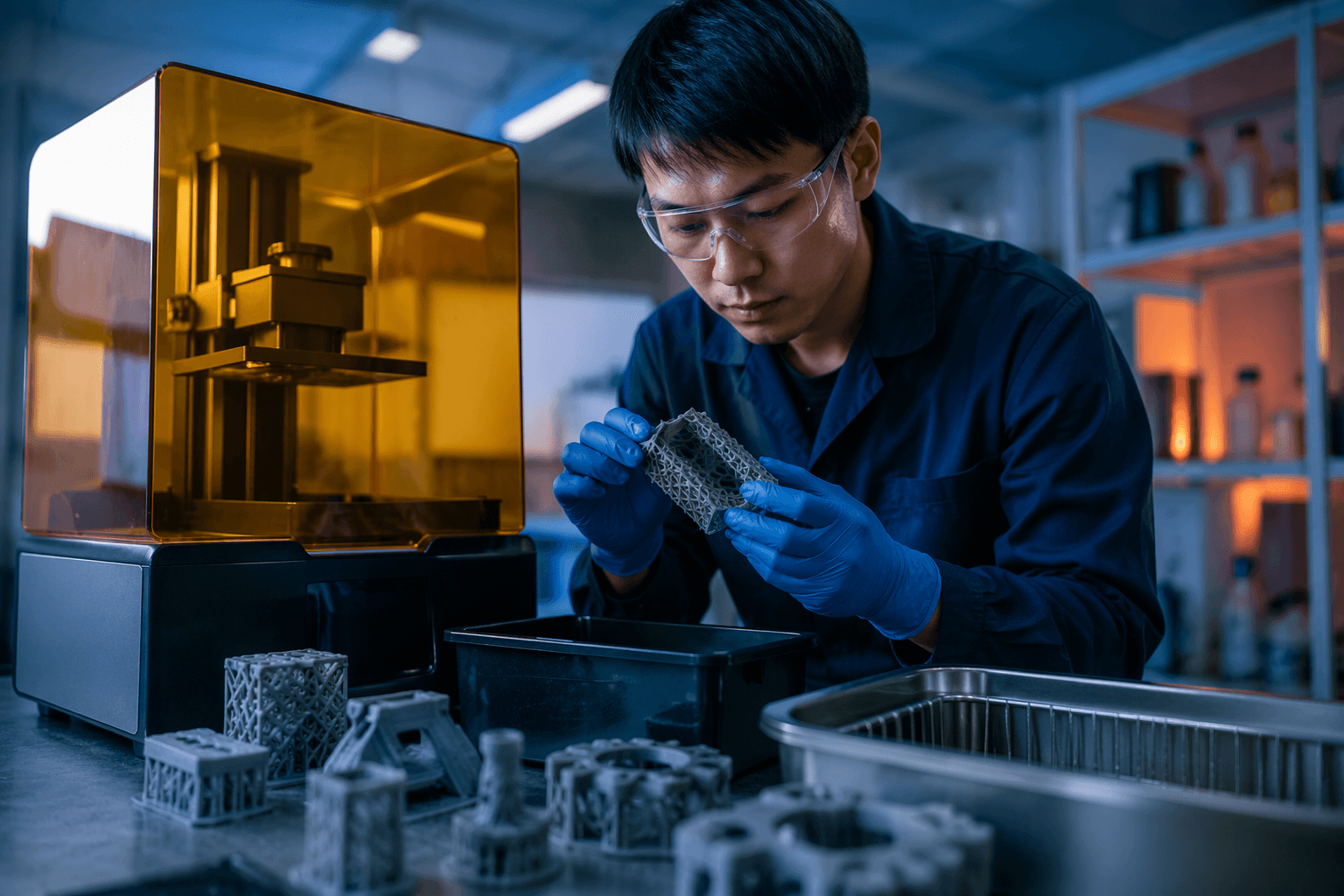
Failed prints, support trees and vat cleanup have always been the ugly side of resin printing, because cured material usually goes straight to the bin. Now researchers at Yokohama National University and Tokyo University of Science in Yokohama, Kanagawa Prefecture, Japan, have shown a photocurable resin that can be printed, melted down and printed again more than ten times, a practical shift for SLA, DLP and two-photon workflows that usually treat waste as permanent.
The material, reported in ACS Omega on February 21, 2026, is anthracene-based and initiator-free. Instead of relying on conventional irreversible cross-linking, it uses reversible photodimerization, so blue light drives the resin into a solid and heat switches it back into a printable liquid. In plain maker terms, the part is not locked into a one-way cure, which matters every time a failed job has to be pulled from a tank or a support-heavy model has to be cleaned up.
That difference showed up in the reuse tests. One report said the resin survived eleven print-and-erase cycles, while another described a printed cube being heated to 150°C for 15 minutes before it was reprinted as a disc. The team demonstrated both single-photon microstereolithography and two-photon lithography, and reported a minimum curing line width of 0.61 micrometers, a reminder that this was not just about recyclability, but about keeping high-resolution performance in the microscopic regime resin printers are known for.
Shoji Maruo said conventional photocured 3D models cannot be recycled because they form irreversible cross-linked networks, which is exactly why the result stands out. Comparable recyclable resins have typically managed only one to three reuse cycles, so a material that can be recovered and used again more than ten times moves the conversation from lab novelty toward something that could actually change shop behavior.
For resin users, the appeal is immediate: less contaminated leftovers, less disposal pressure, and a better chance of recovering expensive material after a failed print. The remaining challenge is scale, and the team’s next step is to adapt the chemistry for larger printing platforms while improving long-term stability. Even so, this is the kind of resin story that matters at the workbench, where every tank cleanup asks the same question: can this waste be saved, or is it gone for good?
This article was produced by Prism’s automated news system from verified source data, official records, and press releases, then run through automated quality and moderation checks before publishing. The system is built and supervised by the people who set the standards it runs under. Read our full AI policy.
Did this article answer your question?