Researchers show 90-degree 3D printing overhangs can work without supports
Open-source slicer work is pushing fused-filament printers toward support-free 90-degree overhangs, but warping still sets the practical limit.

Support-free 90-degree overhangs are moving from a lab claim to something desktop printers can actually try, and the real question is no longer whether the geometry is possible, but how far slicer tuning can push it before print quality collapses. Two open-source threads, arc-overhang and wave-overhangs, are driving that shift by changing the toolpath instead of relying on sacrificial scaffolding.
The arc-overhang repository describes itself as a 3D printer slicing algorithm that lets users print 90-degree overhangs without support material. Its GitHub page shows 472 stars and 82 forks, a sign that the idea struck a nerve in the maker community. Steven McCulloch also noted in February 2023 that he had stopped working on the repo because other community members had taken the idea much further.
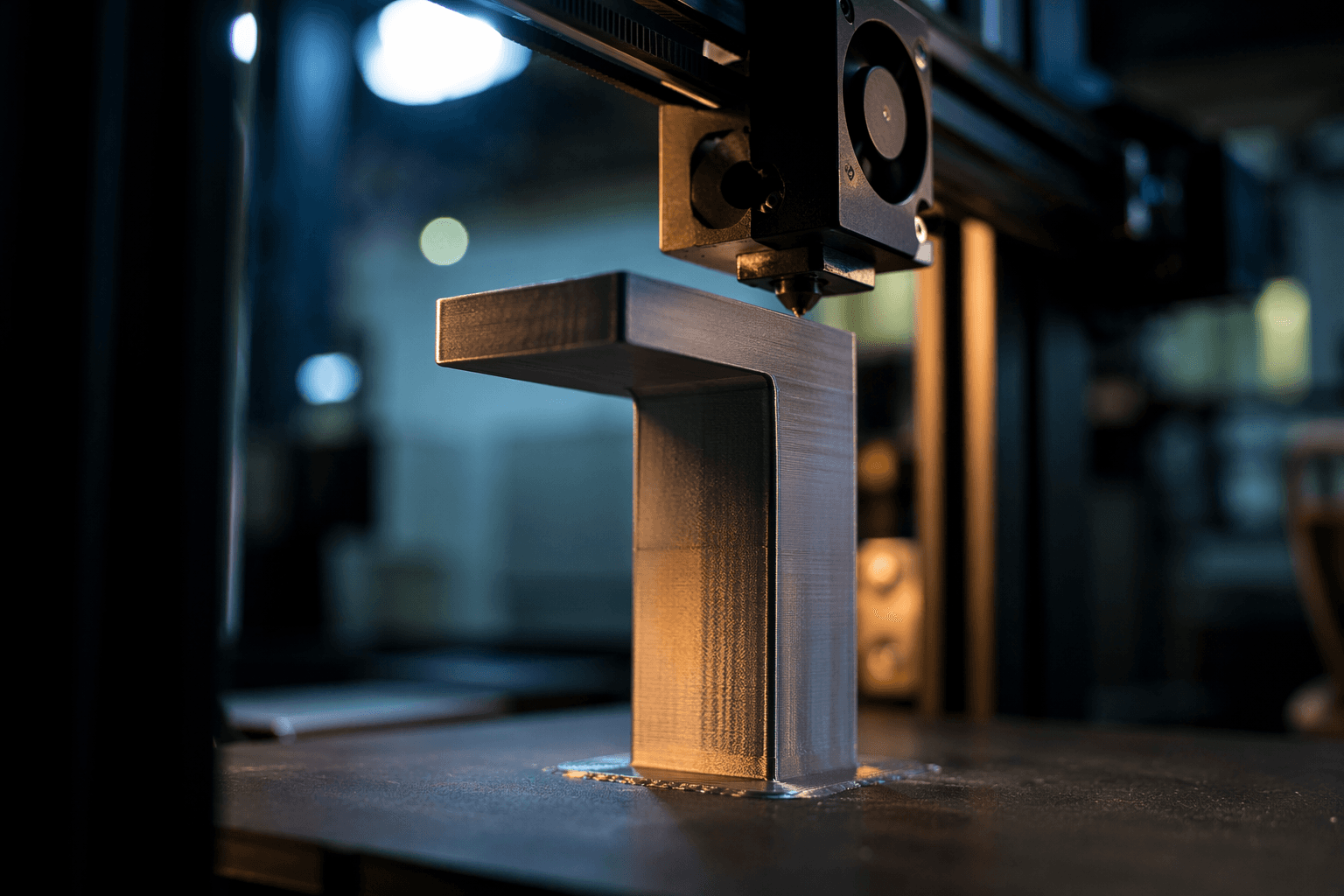
That next step is wave-overhangs, the PrusaSlicer fork credited to Janis A. Andersons, Solemé Sanchez, and Tom Vaneker. The repository says it improves on McCulloch’s arc-overhang method, uses wave propagation theory, and can diffract around corners and holes. It is currently 95 commits ahead of and 64 commits behind PrusaSlicer master, which points to an active experimental branch rather than a finished mainstream feature. In other words, this is still the kind of slicer work that invites hands-on testing, parameter tuning, and printer-specific iteration.
The backdrop for all of this was laid out in a 2014 arXiv paper, A Level Set Based Method for Fixing Overhangs in 3D Printing. That paper argued that strong overhangs could not be printed without suitable support and that support structures add both material and print time. arXiv also flags that its papers are not peer-reviewed, but the baseline idea has held sway for years: steep overhangs usually mean extra plastic and extra cleanup.
What makes the new open-source work worth watching is how directly it attacks that assumption. The promise is less support waste, less post-processing, and faster prints on extreme geometry. The catch is equally practical: the PrusaSlicer wave-overhangs repository warns that warping may become the limiting factor on larger overhangs, which is exactly where desktop fused-filament printing has always been most unforgiving.
This article was produced by Prism’s automated news system from verified source data, official records, and press releases, then run through automated quality and moderation checks before publishing. The system is built and supervised by the people who set the standards it runs under. Read our full AI policy.
Did this article answer your question?