Roboze acquires Dimanex assets to build distributed manufacturing network
Roboze bought key Dimanex assets to tie part-finding, inventory planning and production into one distributed manufacturing system.
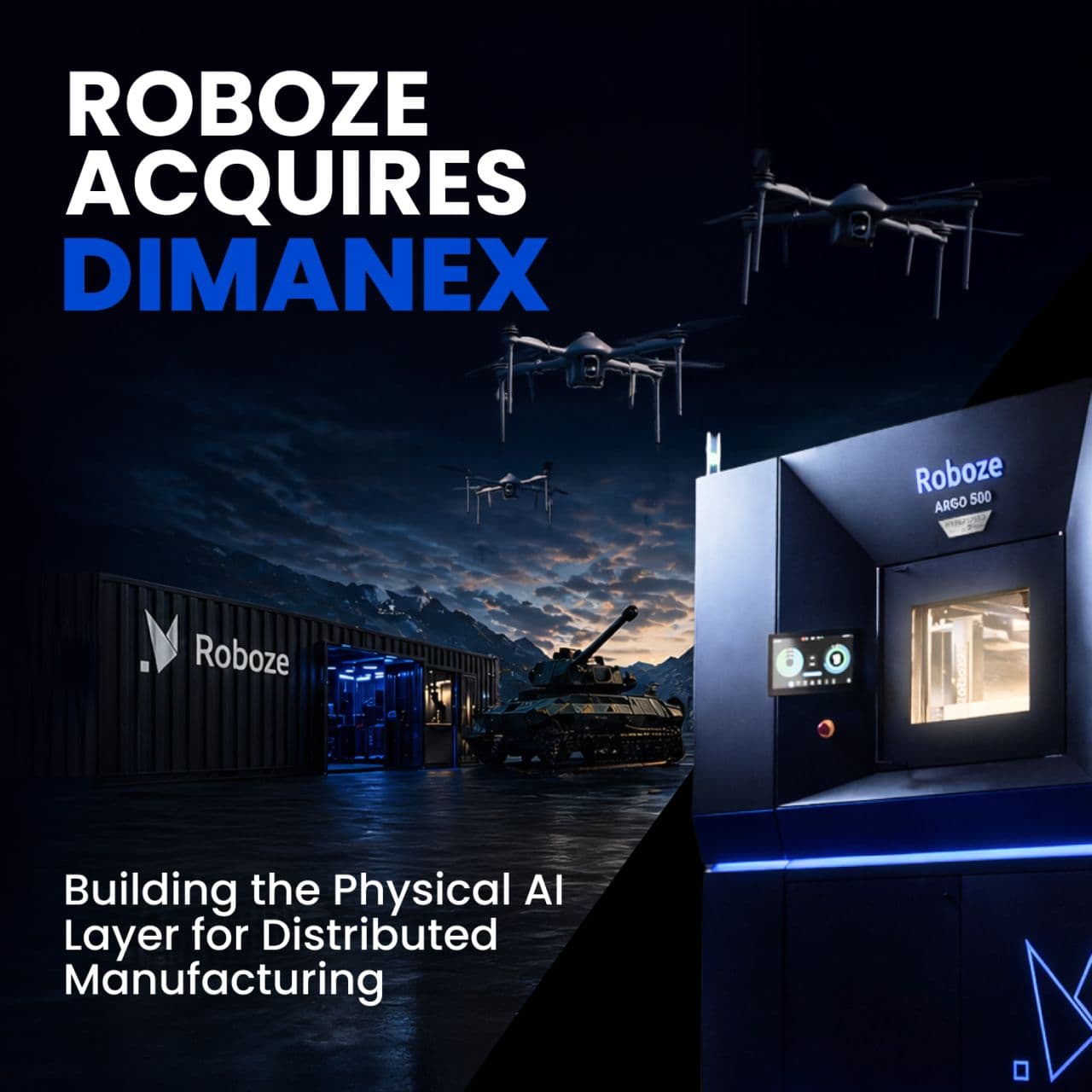
Roboze has moved to tackle one of additive manufacturing’s stubborn bottlenecks: matching the right part, file, material and machine quickly enough to make distributed production useful. The company said on June 10 that it acquired key Dimanex assets and will fold Dimanex’s AI-driven supply-chain technology into a broader manufacturing network built to connect digital inventory with physical output.
Dimanex had focused on part identification and on-demand spare-parts planning, which makes this more than a simple software buy. The point is to stitch together the front end of manufacturing, where a request is identified and routed, with the backend where a part is actually printed and delivered. Roboze has described that effort as building a physical AI layer, a phrase that points to a more practical goal than hype: making design, production and logistics behave like a single coordinated stack.

For 3D printing users, the logic is easy to recognize. Most shops already know that a printer alone does not solve the problem if the wrong file is used, the material profile is off, or the same part comes out differently on another machine. Roboze is betting that distributed manufacturing becomes far more valuable when the system can determine what is needed, where it should be made and how inventory should be managed digitally before a job ever reaches a build chamber.
That matters most in settings where downtime is expensive and supply chains are fragile. Faster lead times, less waste and more localized production are the obvious wins if the software-to-machine handoff works the way Roboze wants it to. The company’s chief executive framed the acquisition as a way to connect design, production and supply chain in one seamless ecosystem, which captures the strategic aim clearly even if the execution will take time.
The larger signal for the 3D printing market is that some of the most important competition is moving away from nozzle size and machine speed and toward orchestration. Roboze is not just buying assets; it is trying to solve the old problem of repeatability across a network, where the real breakthrough is getting the same result from different machines, different locations and different parts of the chain.
This article was produced by Prism’s automated news system from verified source data, official records, and press releases, then run through automated quality and moderation checks before publishing. The system is built and supervised by the people who set the standards it runs under. Read our full AI policy.
Did this article answer your question?