Stockwell Elastomerics adds silicone 3D printing to cut prototype time
Stockwell Elastomerics said its Lynxter S300X has pushed silicone validation from weeks to days, letting customers test real LSR parts before tooling.

Stockwell Elastomerics cut one of the slowest steps in elastomer development by bringing silicone 3D printing into the validation loop. The Philadelphia manufacturer said a Lynxter S300X now lets it move customer parts from concept to approved prototype in days instead of weeks, with less risk that early samples miss how the finished part will actually behave.
The shift matters less as a machine install than as a change in workflow. Stockwell said it now prints silicone parts in liquid silicone rubber and room-temperature vulcanizing silicone for soft robotics, seals, vibration dampeners, and medical components such as custom orthotic and prosthetic parts. Instead of forcing customers to choose between speed and material fidelity, the company is using additive to produce functional silicone parts earlier in the design cycle, before tooling decisions harden the project.
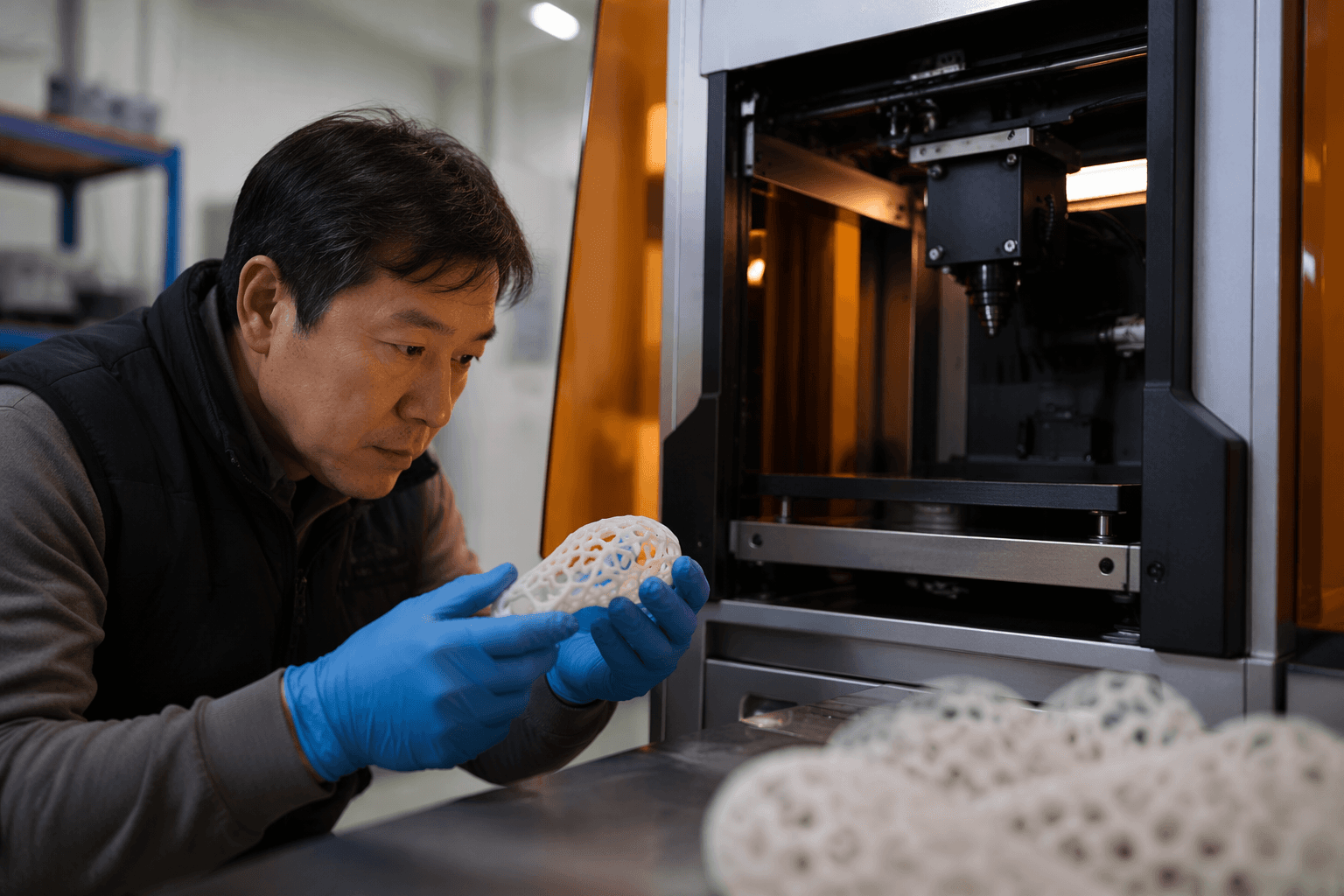
That is the real break from the old prototype path. On June 1, 2026, Lynxter said Stockwell could make functional parts using the same LSR materials it uses in its mold shop before a single cavity has been machined. Those printed parts can be used to test compression, assembly, and sealing performance, which is exactly where elastomer projects often succeed or fail. Lynxter also said the S300X can print industrial-grade silicone across a 5 to 70 Shore A range, and that Stockwell has cut validation lead times by a factor of six, with multiple prototype iterations deliverable within one week.
Stockwell’s own 3D printing operation already points to where this fits in the production chain. The company says in-house printing is meant to get customers functional parts in days, not weeks, and that the same team helps ramp projects from prototypes to production. Alongside the Lynxter platform, Stockwell’s additive lineup includes Formlabs Form 4 and Form 4L systems, a Markforged X7, and an Ultimaker S5, signaling a support workflow built for short-run functional parts and bridge manufacturing, not just sample pieces for display.
That approach fits a company with roots back to 1919. Stockwell Elastomerics has spent more than a century serving aerospace, defense, medical, telecommunications, and electronics, industries that do not tolerate guesswork in seals, dampers, or patient-facing components. In that context, silicone 3D printing is not a novelty layered onto an existing shop floor. It is a way to close the loop faster, get customer approval on real parts sooner, and reach tooling with fewer costly detours.
This article was produced by Prism’s automated news system from verified source data, official records, and press releases, then run through automated quality and moderation checks before publishing. The system is built and supervised by the people who set the standards it runs under. Read our full AI policy.
Did this article answer your question?