Student research flags privacy risks in public medical 3D models
A student study warned that public STL and OBJ medical models can expose patient identity through anatomy, metadata and rehosting.
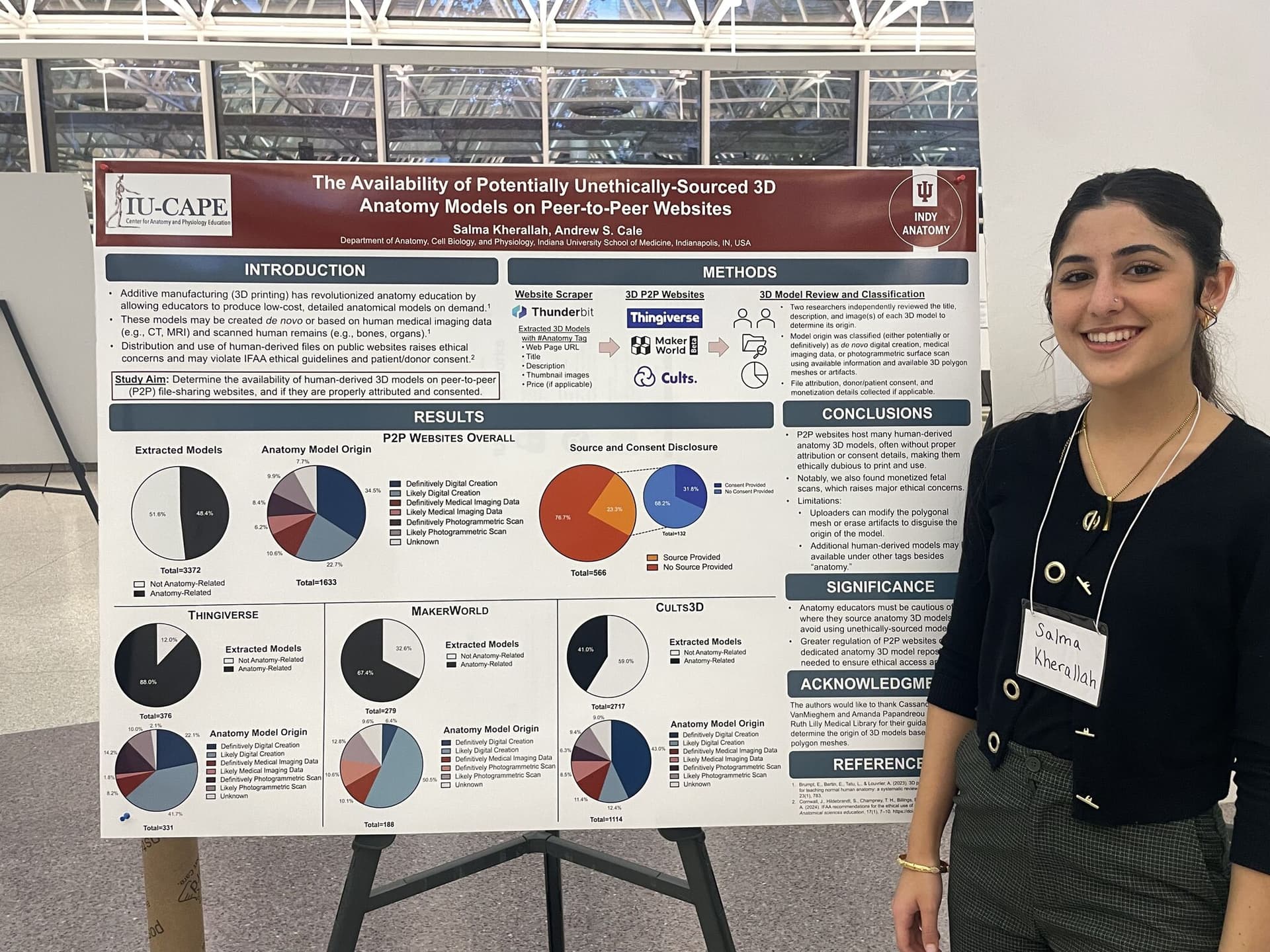
The easy part of sharing a medical model is the upload button. The hard part is knowing whether an anatomy file has quietly carried patient identity into public view, where it can be copied, rehosted and stripped of context forever. That warning came into sharp focus in research by a student at Indiana University Indianapolis, who flagged privacy risks in public 3D printing websites built to make file sharing simple.
The concern is not abstract. Anatomical models used for medical education or patient-specific planning can be derived from scans that contain sensitive details, and careless preparation can leave those details inside the geometry or attached metadata. Once a file is posted publicly, it can be duplicated and redistributed outside the original creator’s control, turning something meant for one patient or one classroom into a permanent web artifact.

That is the central tension now facing the 3D printing community. Public model repositories and print-sharing platforms have made it easy for students, clinicians, researchers and hobbyists to exchange STL and OBJ files, and that openness has helped medical printing spread faster. But the same convenience can become a liability when the model is anatomy-based, because a file that looks harmless on the surface may still encode patient-specific features that should never have been exposed.
The risk chain starts before a model ever reaches a public site. A scan can be converted into a printable file, cleaned for presentation and uploaded with little friction, yet still retain identifiers in its structure, file data or surrounding records. If the file is not fully anonymized, the geometry itself can become a privacy leak. If it is public, the problem grows, because anyone can copy it, mirror it or republish it elsewhere, making removal nearly impossible.
The broader lesson for platforms, labs and makers is immediate: medical content needs stronger handling than a standard hobby file. Public repositories need clearer consent workflows, tighter review of sensitive uploads and better automated screening for identifying details. Makers and educators need to check what is embedded in a model before treating it like any other printable download. In a field that depends on sharing, this is the line that cannot be ignored: once a medical model goes public, the privacy risk can travel farther than the print itself.
This article was produced by Prism’s automated news system from verified source data, official records, and press releases, then run through automated quality and moderation checks before publishing. The system is built and supervised by the people who set the standards it runs under. Read our full AI policy.
Did this article answer your question?