UK Defence uses 3D printing to speed submarine maintenance
A handheld scanner and a digital file are now part of submarine support, as UK Defence pushes 3D printing into a world built on traceability and quality checks.

A handheld scanner and a digital file have become part of Royal Navy submarine maintenance, with the UK Ministry of Defence saying additive manufacturing is now being used to keep boats available when conventional supply chains cannot deliver fast enough. The Submarine Delivery Group said on 25 June 2026 that its Additive Manufacturing team was cutting reliance on traditional suppliers and building an enduring capability across the submarine programme.
That team was set up in February 2024 inside the Platform Equipment Delivery Team to tackle the slow, unforgiving reality of obsolete parts and long lead times, the kind that can keep a submarine alongside for far longer than planned. Its central coordination point is the Market Access Cell, which takes demand signals from ship’s staff and joint planning teams when components are unavailable or delivery times are too long, then works with QinetiQ, the SDG Design Authority and other in-service teams to decide the best manufacturing route and get a part back to the submarine as quickly as possible.
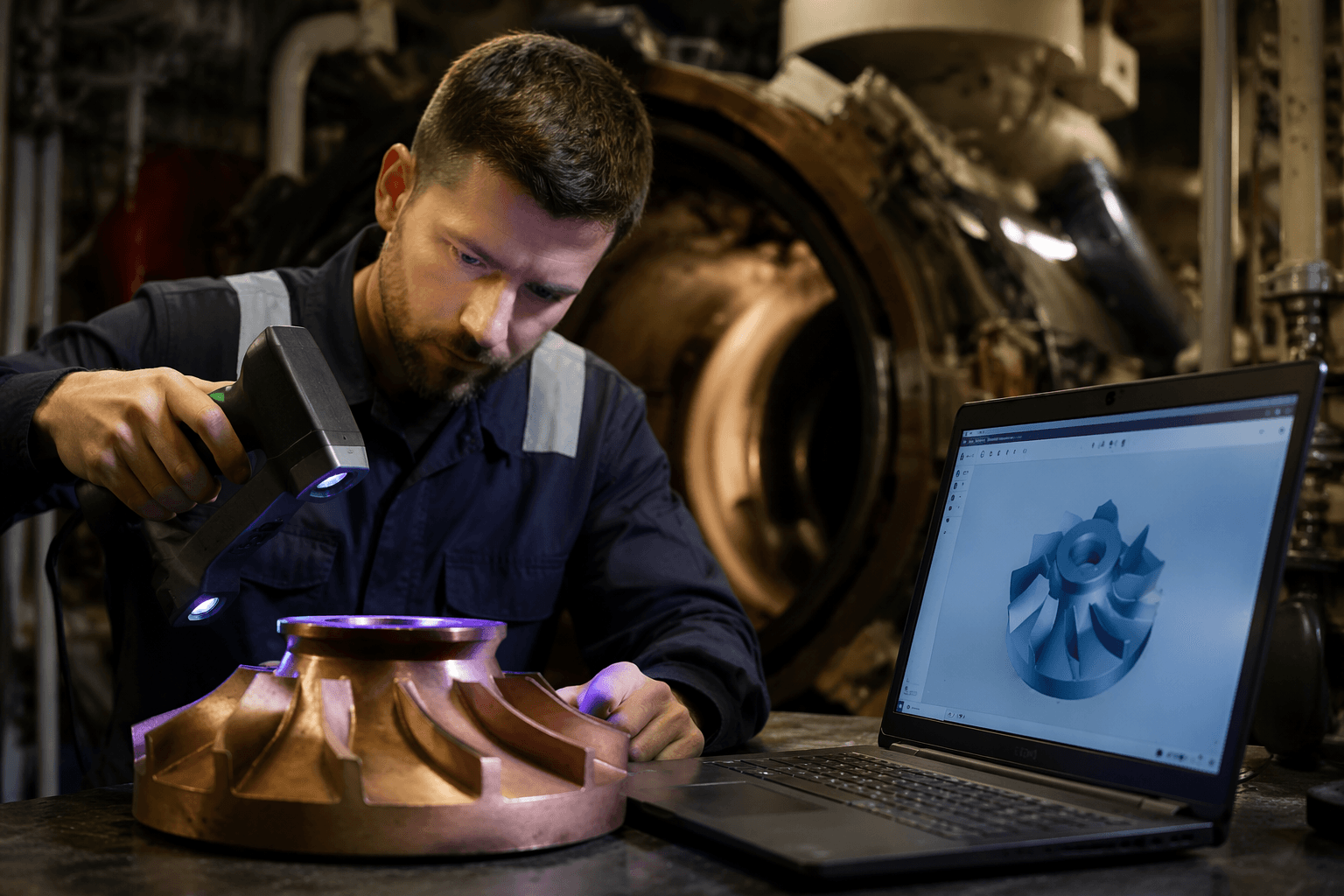
The MoD says the process starts with capturing exact measurements from onboard components using handheld scanners. Those scans are converted into digital files, then used to manufacture bespoke replacements in stainless steel and other materials, but only after legal, safety and quality checks. That is the key distinction from casual workshop printing: in submarine support, a part is not accepted because it prints cleanly, but because it can be traced, repeated and cleared for a failure-intolerant environment.
The wider Defence Nuclear Enterprise sits under new Defence Reform structures, and its 2025 Annual Update to Parliament said workforce demand across the enterprise was expected to exceed 65,000 by 2030 as it handled Dreadnought, AUKUS and infrastructure recapitalisation. Sir Chris Gardner KBE, director general of the Submarine Delivery Group, has championed the additive push as part of that pressure on capacity and availability.
The Submarine Delivery Agency, the DNE’s delivery agent for submarines, leads on design, construction, maintenance and disposal for the Royal Navy. Its 2024-2027 corporate plan said it had supported the Continuous At Sea Deterrent, including the life extension of HMS Vanguard, while also making progress on Dreadnought and the next-generation SSN-A programme and removing about 300 tonnes of low-level radioactive waste from decommissioned submarines.

The approach also fits a broader shift in the Defence Advanced Manufacturing Strategy published in 2025, which said defence would increase its use of additive manufacturing and pointed to a Mastiff rear door catch assembly made by Laser Powder Bed Fusion. For hobby printers chasing stronger parts, the lesson is plain: in submarine work, the print is only the beginning, and qualification is what turns a file into a trusted component.
This article was produced by Prism’s automated news system from verified source data, official records, and press releases, then run through automated quality and moderation checks before publishing. The system is built and supervised by the people who set the standards it runs under. Read our full AI policy.
Did this article answer your question?