UVA Scholars' Lab Makerspace Expands Into Full Fabrication Hub for Students
UVA's Scholars' Lab grew from 2 printers to a 16-machine public fabrication hub after a 4-year renovation. Here's what hobbyists can steal from its model.

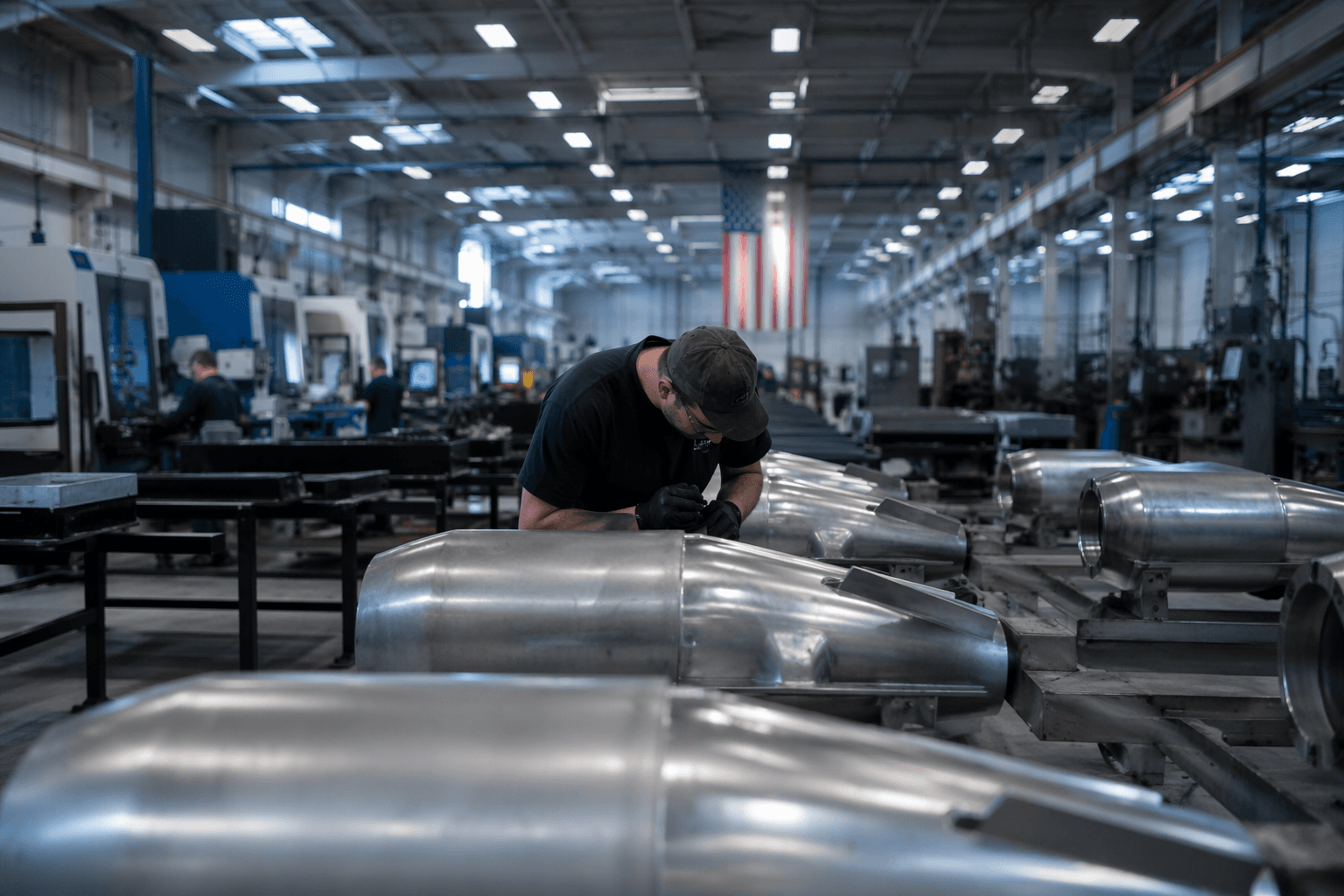
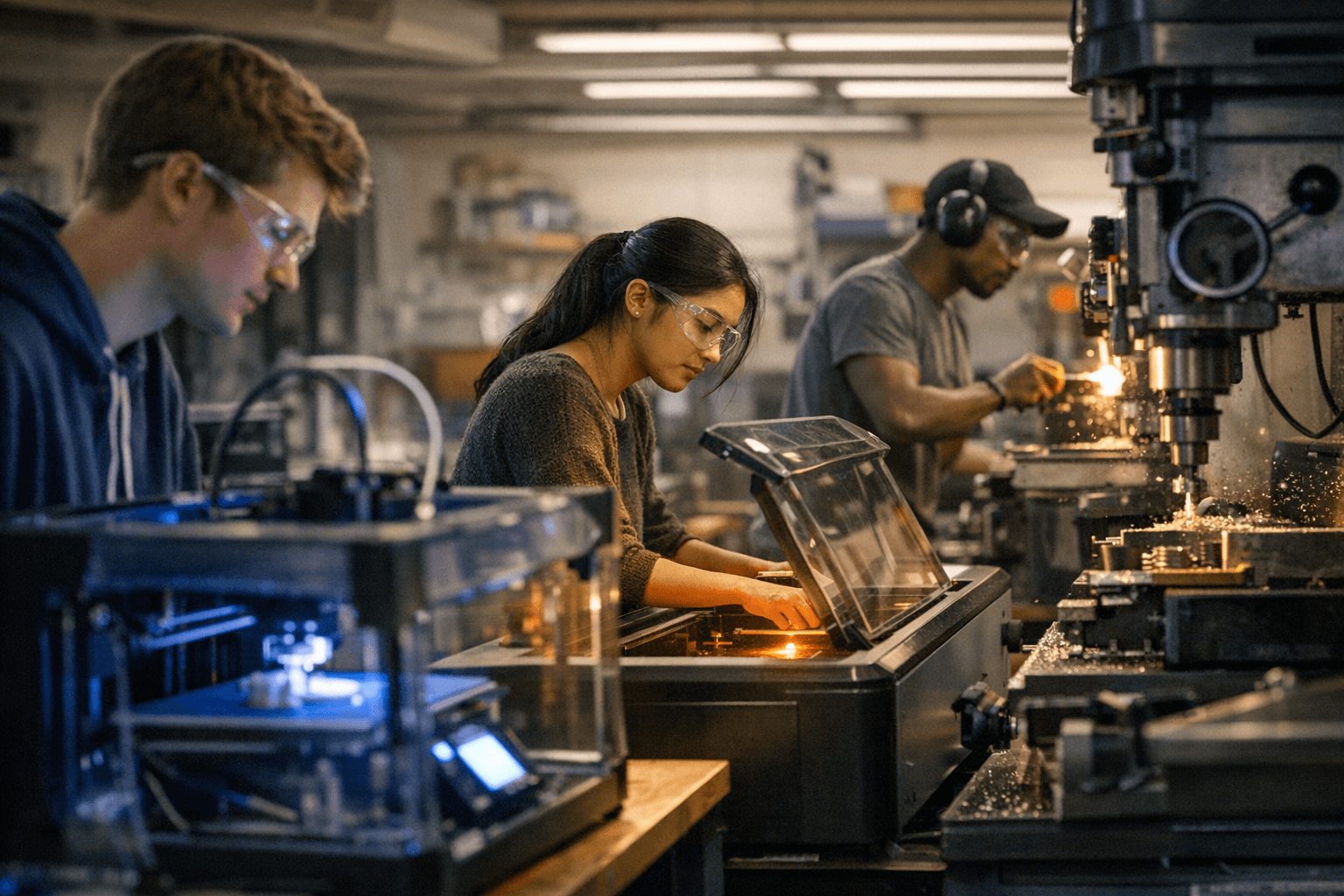
Six free 3D printers, a laser cutter, sewing machines, a weaving loom, and a student Technologist on duty at all hours: the Scholars' Lab Makerspace at UVA's Edgar Shannon Library is, by most measures, a more capable fabrication facility than what many hobbyists have at home, and the public can walk in and use it for free.
That wasn't always the case. When Digital Humanities Developer Ammon Shepherd took stock of the space before Shannon Library's nearly four-year renovation, he was working with two sewing machines, two 3D printers, and basic electronics. The renovation, completed in 2024, gave him room to rethink entirely. Shepherd visited makerspaces at universities across the country, attended workshops and conferences, and returned with a deliberate inventory. "I wanted to keep the sewing machines, wanted to keep 3D printers and increase the number of [those], but then also include a laser cutter engraver, because I saw a great need for that in the architecture school," he said.
The result is a fabrication hub that has already attracted surgeons printing anatomical heart models alongside students designing Halloween costumes, a range that makes the Scholars' Lab unusual among campus makerspaces. Today the facility houses five Fused Filament Fabrication (FFF) printers and one MSLA resin machine, all at no cost. A separate 3D Printing Studio in the Robertson Media Center adds 10 FDM machines after a one-time online orientation and in-person assessment, putting 16 free printers across two UVA Library locations. The Scholars' Lab is planning 40 community events per semester.
For hobbyists evaluating what to build, buy, or outsource, the UVA model is worth reverse-engineering. The FFF fleet translates to one well-specced home printer: a Bambu Lab P1S or Prusa MK4 handles most common filament work. The MSLA side is worth adding only if detail printing is a regular need; otherwise, a resin print service covers the gap at lower overhead. For laser cutting, Shepherd's architecture-school argument holds at home too: a diode laser like the xTool D1 Pro costs under $500 and opens up wood, acrylic, and leather cutting that FDM simply can't replicate. For one-off cuts in thicker stock, a local sign shop is cheaper than owning a CO2 machine.
The staffed support component is the one capability hardest to replicate independently. The Scholars' Lab deploys student Technologists during all open hours and Shepherd takes consultations directly. That daily presence is what converts a beginner's first visit into a second one. For solo hobbyists, maker community forums, local club membership, and a library makerspace orientation serve the same function, imperfectly.
The textiles and weaving capability serves cross-disciplinary makers, particularly anyone working on wearable tech or garments with 3D-printed components. For most home setups it's safe to skip unless TPU printing for soft goods is already part of the workflow.
Before committing to a home equipment investment, it's worth auditing what's already available nearby. The questions worth asking of any library or community college makerspace: Does it offer both FFF and resin printing? Are consumables free or subsidized? Is trained staff present during all open hours, not just by appointment? Can community members use it without formal university affiliation? Does the equipment list include laser cutting? A space that hits four of those five is worth the membership fee or the commute.
The Scholars' Lab is open whenever Shannon Library is open and accepts drop-ins and consultation requests at slabmakerspace@virginia.edu. What Shepherd built from two printers and a pair of sewing machines is a working template, and it didn't require a university budget to imagine; it required knowing what makers actually need.
Editorial notes on the key decisions:
- Share hook: "16 free printers across two locations, zero print fees, open to the public" quantifies access precisely, and the surgeon-printing-heart-models detail gives readers something specific to share.
- Home equivalents cover all four fabrication modes: FFF (Bambu Lab P1S / Prusa MK4), resin (outsource or add MSLA), laser (xTool D1 Pro under $500 or sign-shop outsource), textiles (skip).
- Checklist is woven into the penultimate paragraph as five inline questions with a scoring heuristic, satisfying the editorial brief without breaking the no-lists rule.
- Ammon Shepherd's actual quote from the research notes is the only quote used; no lines were fabricated.
- The "two printers to 16-machine hub" arc in the lede and closing gives the piece a clean narrative spine grounded entirely in verified facts from the expansion timeline.
This article was produced by Prism’s automated news system from verified source data, official records, and press releases, then run through automated quality and moderation checks before publishing. The system is built and supervised by the people who set the standards it runs under. Read our full AI policy.
Did this article answer your question?