Voltage launches basalt PETG composite for marine 3D printing
Voltage’s basalt-recycled PETG blend kept over 90% of its strength after 24 to 26 months in saltwater, and it now ships as both pellets and filament.
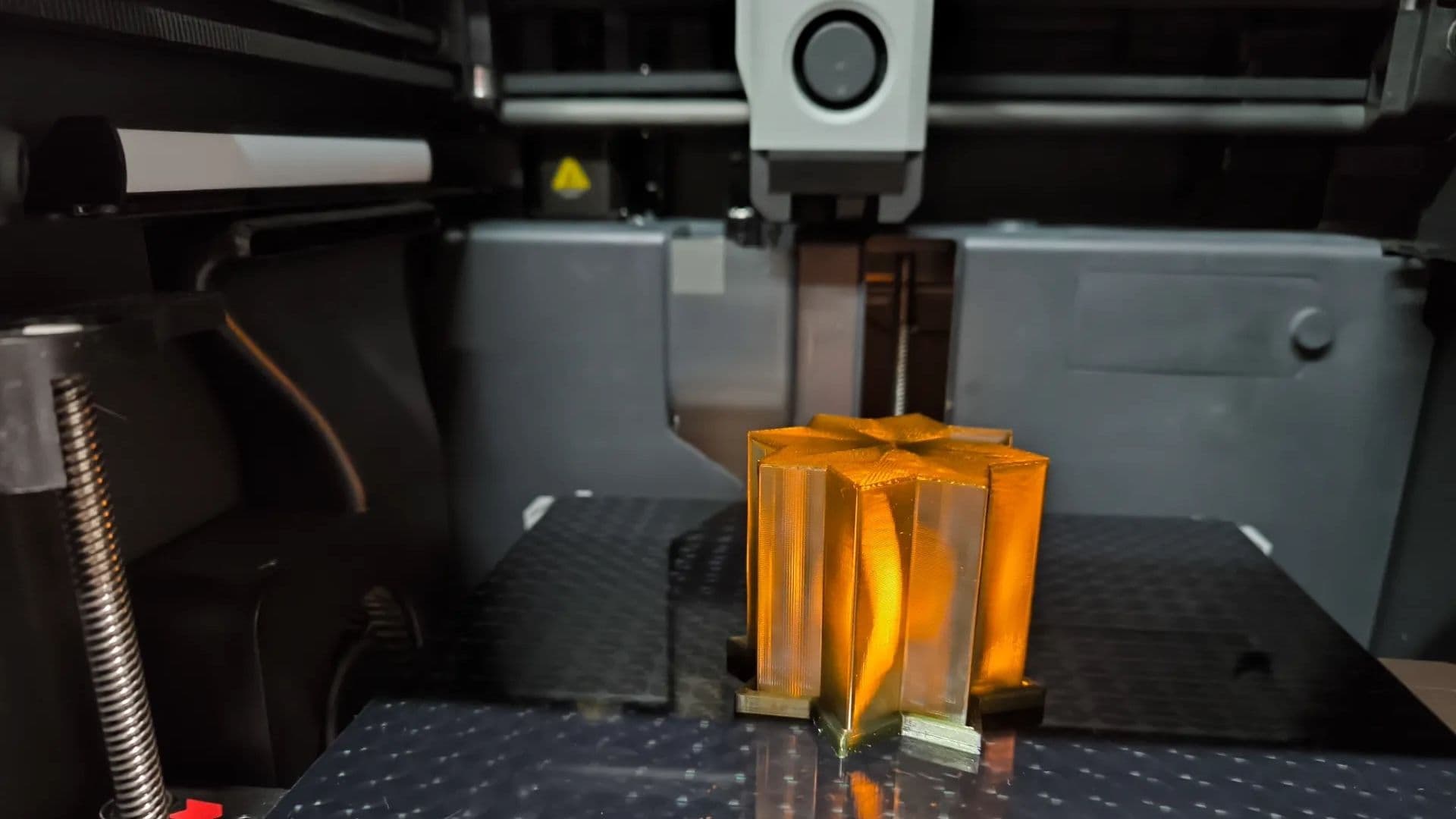
Voltage is betting that a better PETG can do more than print pretty parts. Its Eclipse X9 composite pairs basalt reinforcement with recycled PETG, and the eye-catching detail is not just the material makeup but the durability story behind it: after 24 to 26 months of saltwater immersion, the blend retained over 90 percent of its strength.
The Hawaiian company launched the material on June 7, giving it a rare dual identity in 3D printing. Eclipse X9 comes in pellet form for large robotic extrusion systems and gantry platforms, and in filament form for desktop-to-large-format FFF machines, including printers in the Elegoo OrangeStorm Giga class. That makes it one of the few materials aimed at both industrial-scale additive manufacturing and the growing group of users running oversized desktop rigs at home or in small shops.

Voltage is pitching the composite for marine structures, tooling, buoys, unmanned surface vehicles, infrastructure components and other harsh coastal applications. The material has already been validated by the University of Maine’s Advanced Structures and Composites Center, with testing tied to ASTM D638 and D790 mechanical standards and ISO 12215 marine scantling analysis. For designers, that matters because marine parts do not get a pass on wear, creep, or corrosion exposure. They either survive or they do not.
For desktop users, the interesting part is the tradeoff sheet. Recycled PETG already has a foothold with makers who want a practical, accessible thermoplastic. Basalt reinforcement pushes the conversation toward stiffness, heat resistance, and dimensional stability, while the material’s closed-loop promise gives it extra appeal: printed parts can be shredded, repelletized, and reprinted. That is the kind of workflow that could matter well beyond boat parts, especially for anyone who wants stronger, more durable prints without abandoning PETG’s familiar processing window.

Voltage is also using the Nāia 25 electric catamaran concept as a demonstration platform, which gives Eclipse X9 something many filament launches lack: a real object with a real coastal use case. If the blend can hold up in marine service and still fit the workflow of large-format and desktop FFF printers, it stops being a niche polymer experiment and starts looking like a material with a reason to exist.
This article was produced by Prism’s automated news system from verified source data, official records, and press releases, then run through automated quality and moderation checks before publishing. The system is built and supervised by the people who set the standards it runs under. Read our full AI policy.
Did this article answer your question?