Alabama film office guide explains how property owners get paid
Alabama’s film money often starts on private land, so the first thing to vet is the deal, not the camera. Get insurance, hours, parking, damage, and restoration nailed down before you hand over the keys.
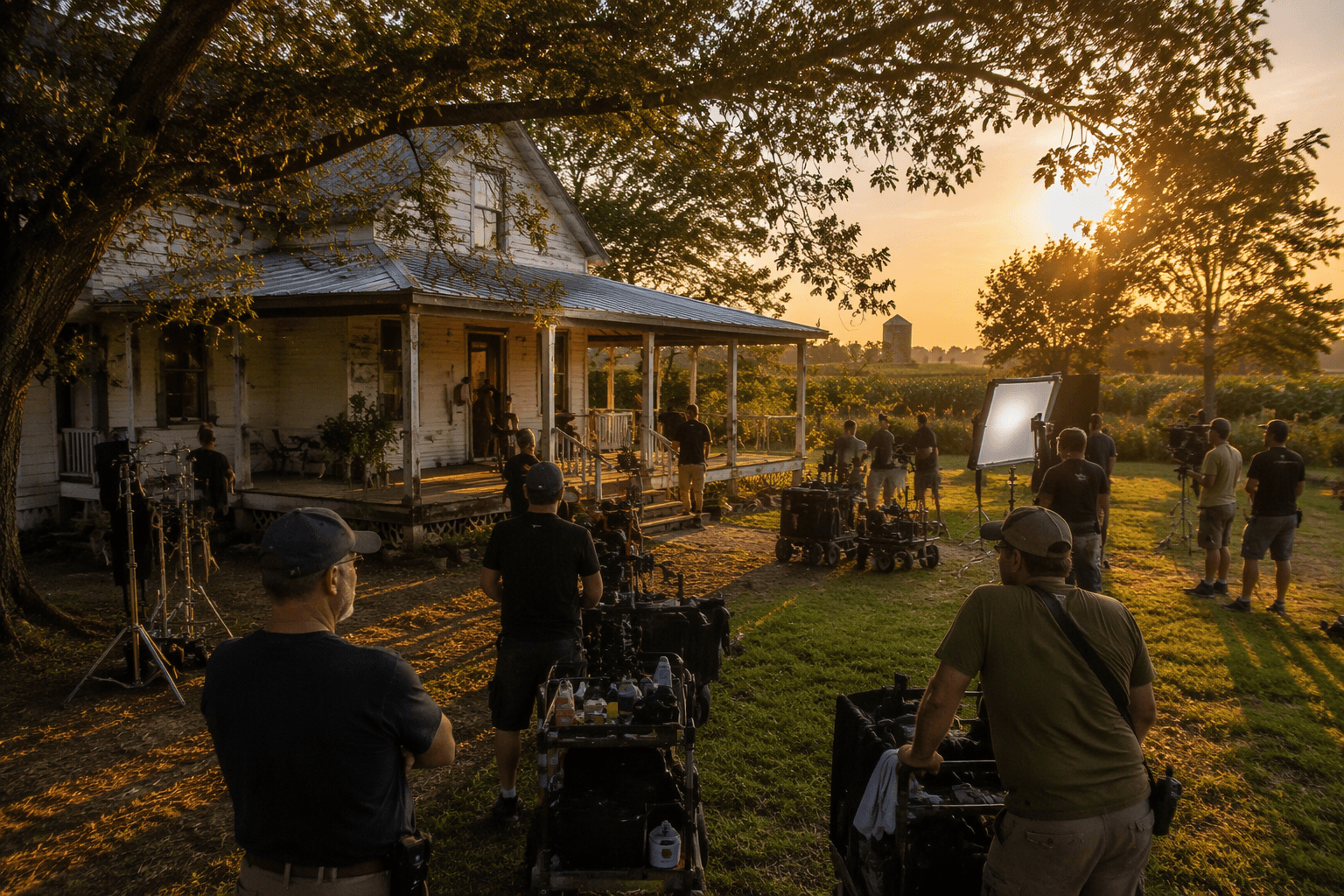
Before a production truck rolls onto your driveway, the crew needs to prove the property is covered, when they want access, where the trucks will park, and who pays if a wall gets scuffed or the lawn gets torn up. That is the real use case behind the Alabama Film Office’s Location Owners Guide: private property is often where production dollars enter the state, and the owner who understands the paperwork can turn a shoot into income instead of a headache.
Why your property matters to an Alabama production
Film and video production companies and commercial still photographers add millions of dollars to Alabama’s economy each year. One of the ways those dollars get in is through fees paid to private property owners for use of “locations.” That is why a single house in Birmingham, a storefront in Mobile, or a rural road outside town can matter just as much as a soundstage.
Small productions do not build everything from scratch. They need real places that already have the right look, and Alabama’s range makes that easier to find. Alabama is one of the most geographically diverse states in the nation, with urban cities, small towns, rural areas, mountain and river valleys, and Gulf Coast beaches.
Know what kind of production is asking
Not every shoot is the same, and neither should you treat it that way. The Alabama Film Office lists feature films, documentaries, television shows, television commercials, print ads, and catalog photographs as production types. That matters because the demands are not interchangeable.
A documentary crew may want lighter footprint access and longer interview time. A scripted short may need stricter control over sound, background traffic, and parking. A commercial can be brief but intense, with a compressed setup window and a lot more gear moving in and out fast. Before you agree to anything, make sure the deal matches the exact kind of production coming to your property.
The money side is not theoretical
Alabama’s incentive system is part of why productions keep circling back. The rebate is 25% of certain state-certified production expenditures incurred in Alabama, plus 35% of payroll paid to residents. The Alabama Department of Commerce rules for state-certified productions sit in Administrative Code Chapter 281-3-1, which also covers continuing requirements and the final incentive audit and report.
The process has a specific cash-flow wrinkle that owners should understand. During the application process before principal photography begins, the state will “EARMARK” the amount. After the audit process and verification of qualified expenses, the production is entitled to the earmarked amount. The incentive structure is built around documented spending, not hand-waving.
The scale is real too. In 2019, 13 production companies claimed Alabama’s tax credit rebate for $10,892,794.12. Those companies were also exempt from $17,715.05 in sales tax and $68,280.69 in lodging tax. That is the kind of state-level money that explains why productions keep asking for private locations in the first place.
What to ask before you say yes
This is where owners protect themselves. Get a certificate of insurance, including a hold harmless clause for protection in case of injuries on the property. That is not the kind of detail to wave off until later; it is part of the basic yes-or-no decision.

Before anyone rolls a truck onto your land, make the production answer these questions:
- What insurance are you carrying, and can I see the certificate of insurance?
- Does the policy include a hold harmless clause?
- What hours do you need access, and what happens if the crew runs late?
- Where will cast, crew, trucks, and catering park?
- Which rooms, buildings, fields, or lots are off limits?
- What power do you need, and where will generators go?
- How will you handle neighbors, traffic, and noise?
- What is the cleanup plan, and who restores the site when you wrap?
- Who signs off that the property was returned in the same condition?
That list sounds fussy until you have seen a production arrive at dawn, take over a driveway, and leave without a clear end-of-day plan. If you are hosting a shoot, you are not just lending scenery. You are lending access, utilities, time, and a piece of your liability profile.
Why Alabama keeps drawing crews back
The state is attractive for more than one reason. Lower expense costs, state tax incentives, and a growing, ready talent pool of experienced crew members and support services all help. The National Conference of State Legislatures found that film and television incentive support has spiked in the wake of the COVID recession, which has made every state with a usable program pay closer attention to how it competes.
That competitive pressure helps explain why private property owners are suddenly central to the conversation. Productions looking for Alabama value are not only hunting for crew deals and tax treatment, they are hunting for the exact house, storefront, church, farm, warehouse, or roadside stretch that can sell the story.
This article was produced by Prism’s automated news system from verified source data, official records, and press releases, then run through automated quality and moderation checks before publishing. The system is built and supervised by the people who set the standards it runs under. Read our full AI policy.
Did this article answer your question?