Alabama Film Office helps indie filmmakers find locations, crews, support
Alabama’s film office can turn a maybe into a shoot by pointing filmmakers to locations, crew, and incentive rules before the calendar gets away from them.
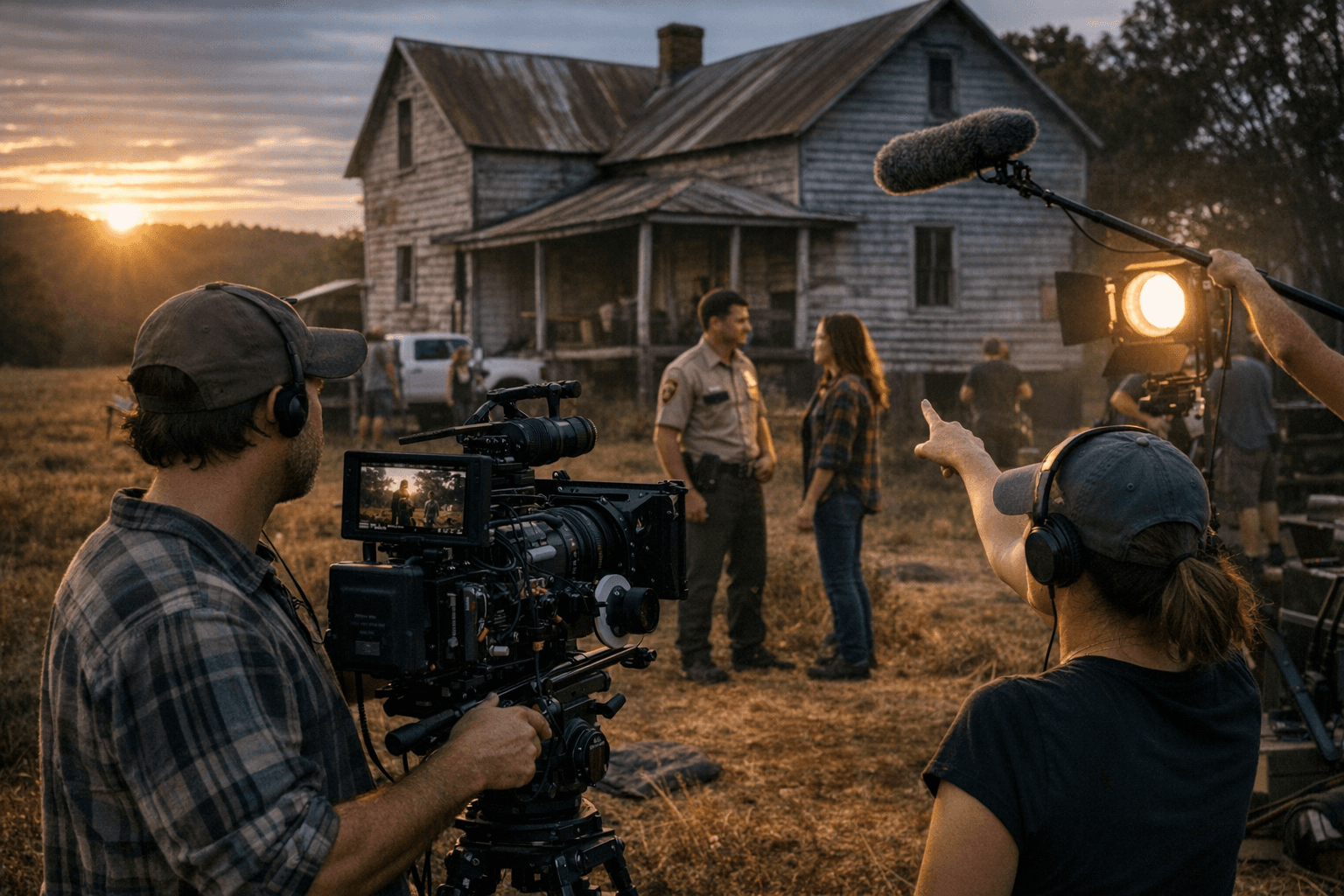
From script idea to a shootable plan
For an Alabama indie, the hardest part is often not the script. It is the logistics that decide whether the script ever gets shot: where the cameras can go, who can crew the day, how the neighborhood should be approached, and whether the budget can survive the trip from idea to call sheet. That is where the Alabama Entertainment Office, still serving the same practical role many filmmakers know as the film office, becomes useful fast. Its mission is straightforward enough to matter in real life: accelerate the state’s economy and create jobs by attracting film, music, and television productions to Alabama.
The office’s public-facing materials make the pitch feel concrete, not ceremonial. Alabama says it has a growing crew and support-services base, plus locations support and a production directory. For a short, a documentary, a student film, or a first feature, that means there is a place to start when the project is still fluid and the schedule is not yet real. The office also says it has worked with hundreds of projects, which is exactly the kind of experience that matters when a production needs the quickest path from “we could do this here” to “we are actually doing this here.”
What the office can solve first
The office is most valuable at the moment when a filmmaker is trying to reduce guesswork. A good film office does not make creative decisions, but it can narrow the practical ones. It can help you think locally first: local locations, local technicians, local vendors, and local partnerships that keep money and time from leaking out of the production.
Locations that fit the script
When location scouting begins, the office gives you a way to stop treating Alabama as a blank map. The support system is built to help productions identify places that work for the scene, the budget, and the reality of shooting in-state. That matters because location choices ripple outward: travel time, gear moves, day players, and meals all get easier when the shoot stays close to the crew and the story.
The bigger win is confidence. Instead of wondering whether a county road, storefront, warehouse, or neighborhood can support a production, filmmakers can start with a state office that understands what kinds of shoots have already happened here and how to connect a project to the right local information. That can save days of back-and-forth, and on an indie schedule, days are money.
Crews who already live here
The office’s FAQ says Alabama has an online film directory of local crew who choose to be listed, though it is not a complete list. That detail matters because it tells you what the directory is and what it is not. It is not a magic roster that replaces hiring work, but it is a strong starting point for productions coming from out of town, and it can be just as useful for Alabama-based projects that need to fill a gap fast.
For low-budget filmmaking, that local crew network can change the whole math of the production. A local sound mixer, grip, production assistant, or location contact can keep a project from paying extra for travel, lodging, and the time it takes to bring in help from elsewhere. Those small savings are often the difference between a film that stays nimble and a film that stalls out.
Introductions that lower the friction
The less visible value of the office is community introduction. When a production is trying to shoot in a place that has never hosted one, the hardest part is often not the camera package. It is trust. A film office helps make the first conversation feel less like a cold call and more like a known process, which is essential if you want a town, business owner, or neighborhood group to understand what your shoot will actually look like.
That also helps communities beyond the filmmakers. A more organized production pathway makes it easier for nearby businesses to benefit from crew spending, and it helps towns host shoots without confusion. In practical terms, the office becomes part of the infrastructure that keeps local production repeatable instead of accidental.
The incentive rules that shape the calendar
If the office helps you imagine the shoot, the incentive rules help you plan it. The current film and television incentives require productions to apply at least 30 days before starting any activities in Alabama. They also require a minimum of $500,000 in qualified in-state expenditures, and principal photography has to begin within 90 days of application approval.
Those numbers are not background noise. They tell you whether a project belongs in the incentive lane at all and when the paperwork needs to move. They also force indie producers to think early, because a late application can kill momentum before locations are locked or crew are booked.
A simple way to read the program is like this:
- Apply at least 30 days before any activity begins in Alabama.
- Plan for at least $500,000 in qualified in-state spending.
- Start principal photography within 90 days after approval.
- Count on a 35% rebate on payroll paid to Alabama residents.
- Count on a 25% rebate on other qualified production expenses.
- Remember that the state allocates $20 million per fiscal year for eligible film projects.
Those incentives can be decisive for a small production. A 35% resident payroll rebate rewards local hiring, while the 25% rebate on other qualified expenses can soften the hit from gear, services, and other in-state spending. For a production trying to keep enough money for sound, travel, or post-production, that difference can be the thing that keeps the whole project alive.
The structure also reveals the office’s real job: it is not just handing out forms, it is helping productions understand whether their idea fits the state’s production lane before they burn weeks chasing a plan that cannot clear the rules. The entertainment incentive law was originally enacted in 2009, so this is not a brand-new experiment. It is a system Alabama has been building for years.
Who you are actually calling
At 401 Adams Avenue in Montgomery, the office gives the state a human face as well as a bureaucratic one. Meghann Bridgeman is listed as Chief Officer, Kathy Faulk as Project Coordinator, Brenda Hobbie as Film Incentives Specialist, and Brian Jones as Media and Location Coordinator. That lineup is useful because it shows the office is not one general inbox pretending to do everything. It has specific people attached to specific parts of the process.
That matters for indie filmmakers who need a direct answer, not a maze. The right question often lands with the right person: incentives, location help, production coordination, or a broader introduction to how the state wants to handle a shoot. The more clearly you know what stage you are in, the faster the office can move you.
Why the 2025 shift matters
In 2025, the Alabama Legislature renamed the Alabama Film Office the Alabama Entertainment Office and expanded qualified productions to include music albums. That change matters because it shows the state is widening the tent, not narrowing it. The office is becoming a broader creative-industry hub, but for filmmakers the day-to-day value stays the same: a central place to start, a directory to consult, a staff to contact, and a set of incentives that can make an in-state shoot possible.
For Alabama indie filmmakers, that is the real takeaway. The office can solve the first hard problems, especially locations, crew, and the path into the state’s incentive system. The rest, the budget discipline, the creative choices, the local relationships, and the actual work of making the film, still belongs to the production itself. That split is what makes the office so useful: it clears the road just enough for the filmmakers to do the part only they can do.
This article was produced by Prism’s automated news system from verified source data, official records, and press releases, then run through automated quality and moderation checks before publishing. The system is built and supervised by the people who set the standards it runs under. Read our full AI policy.
Did this article answer your question?


