Sidewalk Film Center anchors Birmingham’s year-round indie film culture
Sidewalk Film Center gives Birmingham’s indie scene a true home base, keeping Alabama films visible year-round between festivals, premieres, and production cycles.
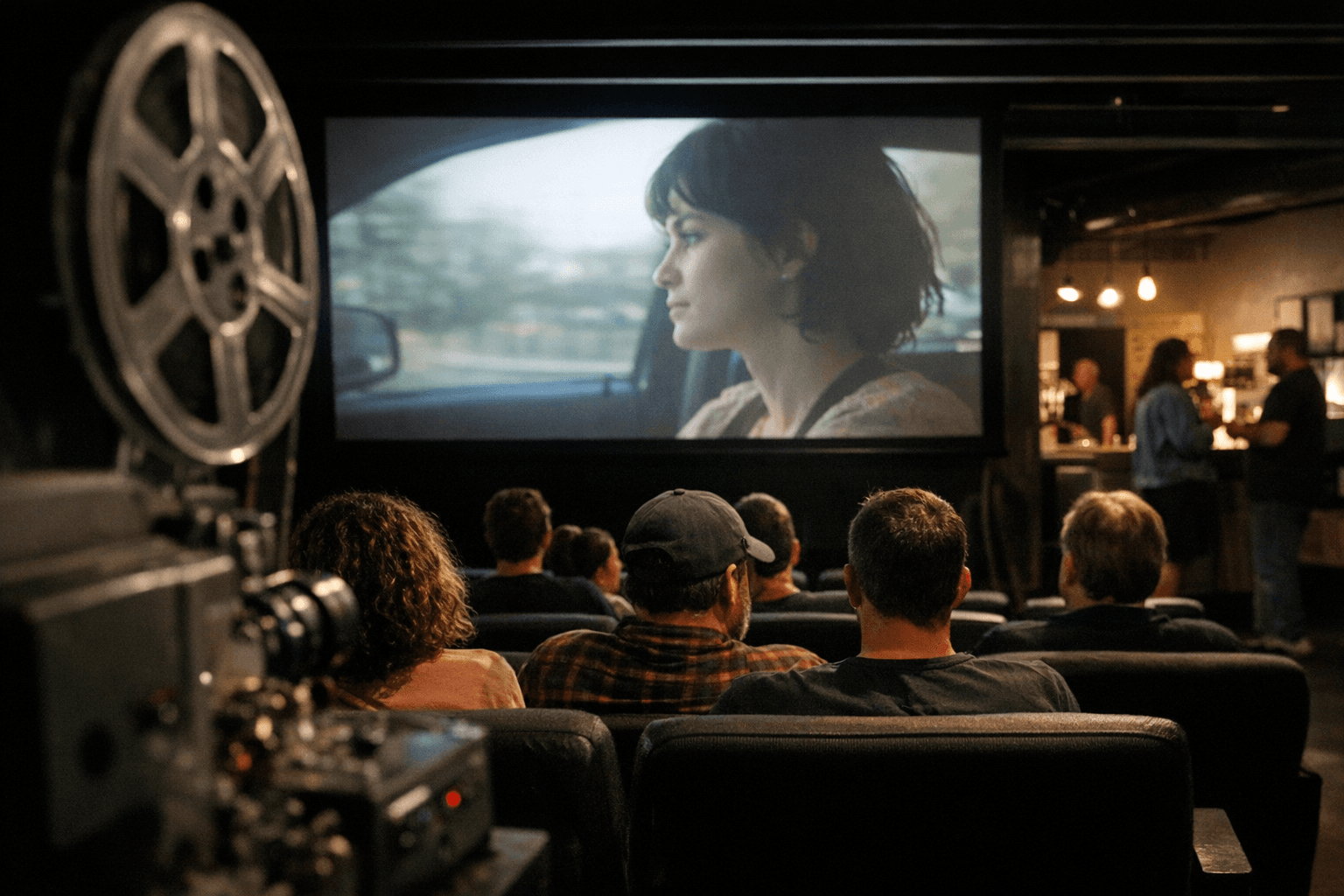
A home base for the work between the events
Sidewalk Film Center & Cinema matters because it gives Birmingham’s indie film world something that festivals alone cannot: a place to keep showing up. Independent film communities do not survive on production alone, and Sidewalk turns that truth into daily practice by giving Alabama filmmakers and film lovers a recognizable home base for screenings, conversation, and community life around the movies.
That role is bigger than exhibition. A film is not finished when the credits roll at a local premiere. It still needs viewers, discussion, and momentum if it is going to find its audience, and Sidewalk helps shorts, documentaries, and regional features feel like events instead of uploads. In a state where many creators are working outside the biggest national distribution channels, that steady visibility is what keeps the scene from going dark between bursts of festival attention.
Built as audience infrastructure
Sidewalk describes itself as a federally recognized 501(c)(3) nonprofit dedicated to encouraging filmmaking in Alabama and building audiences for independent film. That mission is visible in the way the organization has built not just a festival, but a year-round venue that supports the entire ecosystem around it.
Sidewalk Film Center + Cinema opened in August 2019 in The Pizitz Building, right in downtown Birmingham’s historic theatre district. The facility is an 11,400-square-foot, two-screen independent movie theater with two auditoriums of about 95 seats each, plus bar and concessions space and a multipurpose room. The design makes the venue feel less like a one-off screening room and more like civic infrastructure for film culture, a place where audience-building can happen week after week instead of once a year.
Why the year-round model matters
For Alabama filmmakers, the value of a dependable independent cinema is practical and cultural at the same time. It gives creators a place to meet one another, meet critics and supporters, and build the kind of word-of-mouth network that often determines whether an indie title keeps moving after its first screening. That is especially important for films made here, about here, and for audiences who want to see their own communities reflected on screen.
The cinema’s year-round presence extends the festival’s reach beyond a late-summer calendar spike. Instead of concentrating all the energy around one weekend, Sidewalk creates ongoing reasons for audiences to return and for local film culture to stay visible as part of Birmingham’s regular life. The result is a healthier ecosystem: more opportunities for exhibition, more chances for collaboration, and a stronger bridge between Alabama filmmakers and the communities that watch their work.
A festival-first organization that grew into a city institution
Sidewalk’s roots go back to 1998, when the organization was founded under the Alabama Moving Image Association name by a group that included Erik Jambor, Wayne Franklin, Kelly Franklin, and Kelli McCall Franklin. The Sidewalk Film Festival debuted in downtown Birmingham in 1999, and the first edition drew about 4,000 attendees. That early turnout matters because it shows how quickly the idea took hold: Birmingham was ready for a serious independent film gathering with its own identity.
Since then, the festival has grown into a major Birmingham cultural institution and now uses multiple venues in downtown Birmingham. Sidewalk says the festival has showcased work from more than 250 filmmakers and welcomed 15,000 film lovers to Birmingham annually. Those numbers tell the story of a festival that is no longer just a weekend event. It has become a recurring cultural anchor, one that now depends on the cinema as much as the cinema depends on the festival.
Programming that widens the circle
Sidewalk’s year-round reach is not limited to the marquee festival. The organization also produces the SHOUT LGBTQ Film Festival and offers a range of educational programs for filmmakers, which broadens the kinds of stories and voices that can find an audience in Birmingham. That breadth matters in a regional scene, where a healthy film culture depends on more than one lane, one aesthetic, or one kind of audience.
The venue has also hosted the Southern Circuit Tour of Independent Filmmakers, giving Alabama audiences a chance to hear directly from filmmakers through Q&As and workshops. That kind of programming does more than fill seats. It helps audiences understand the labor, process, and regional specificity behind the work, which strengthens the bond between local viewers and the people making films in and about the South.
Sidewalk has also used Black Lens programming to spotlight films centered on Black characters and Black filmmakers. Curator T. Marie King said she wanted to see a broader range of Black stories represented, and that intention fits the larger Sidewalk model: use the cinema to make room for work that might not get sustained play elsewhere, then give audiences a place to encounter it in community rather than isolation.
What the venue signals for Birmingham now
The clearest evidence that Sidewalk has become more than a theater is the way it is being treated in the civic life of the city and the state. In 2026, the Alabama State Council on the Arts awarded $2,768,800 in grants to 60 arts facilities statewide, including Sidewalk-related improvements. That kind of support underscores what people around the Birmingham arts scene already know: this is not just a place to watch movies. It is part of the infrastructure that keeps artistic life active.
Sidewalk’s 2026 membership drive and its slate of upcoming Sidewalk Film 101 screenings keep that rhythm going, reinforcing the idea that independent cinema belongs in Birmingham year-round, not only when the festival tents go up. With a two-screen home in The Pizitz Building, a festival that still draws thousands, and a programming calendar that keeps local audiences engaged between major events, Sidewalk has made itself the place where Alabama indie film stays visible, stays social, and stays alive.
This article was produced by Prism’s automated news system from verified source data, official records, and press releases, then run through automated quality and moderation checks before publishing. The system is built and supervised by the people who set the standards it runs under. Read our full AI policy.
Did this article answer your question?


