Alabama Filmmakers Co-op helped build the state’s indie film scene
The Alabama Filmmakers Co-op turned scattered talent into a working pipeline, giving Alabama indie film equipment, training, screenings, and a statewide network.
The Alabama Filmmakers Co-op gave Alabama independent film the practical support systems usually missing in a young scene: access to gear, a place to screen work, instruction for beginners, and a network that reached beyond one city or one arts venue.
A co-op built for the work, not just the image
Founded in north Alabama in 1976 and incorporated in January 1977 as a nonprofit media arts center, the Alabama Filmmakers Co-op was set up with an unusually concrete purpose. Its mission centered on public film screenings, instruction, and access to film and video equipment, addressing the daily problems that stop filmmakers before they ever get to a premiere.
Its early board linked Alabama A&M University, the University of Alabama in Huntsville, and Redstone Arsenal, with Wade Black serving as executive director. The board tied the co-op to educational, civic, and technical institutions rather than a single arts bubble. Alabama A&M brought the legacy of a land-grant university rooted in the 1873 founding of a normal school for Black teachers, while Redstone Arsenal and the University of Alabama in Huntsville connected the organization to Huntsville’s broader research and civic landscape. The result was a structure that could reach students, public audiences, and working filmmakers at the same time.
The first public programs were a test run for a scene
The co-op’s first public program was a film festival that featured experimental filmmaker Will Hindle, Memphis lab president Frank McGeary, Army Motion Pictures editor Neale Traugh, and screenwriter Bill Irwin. Even with limited publicity, it drew people from Birmingham and as far away as middle Tennessee, showing that the need for this kind of gathering extended well beyond Huntsville.
Hindle became a long-term supporter and mentor. Local donors also made Wade Black a full-time director, giving the organization someone whose job was to keep the operation moving.
The audience that followed came from more than one corner of the state. Filmmakers from Birmingham, Anniston, and Tuscaloosa began connecting to the co-op, and the organization quickly became a statewide magnet by offering actual services instead of symbolic encouragement.
Equipment access changed what filmmakers could attempt
By early 1978, the co-op had acquired Super-8 equipment, opened public access to basic 16mm gear, and started offering filmmaking instruction to schools statewide. Filmmakers with an idea but no camera, no projector, and no place to learn could suddenly test a project, borrow or use equipment, and find a path into the medium.
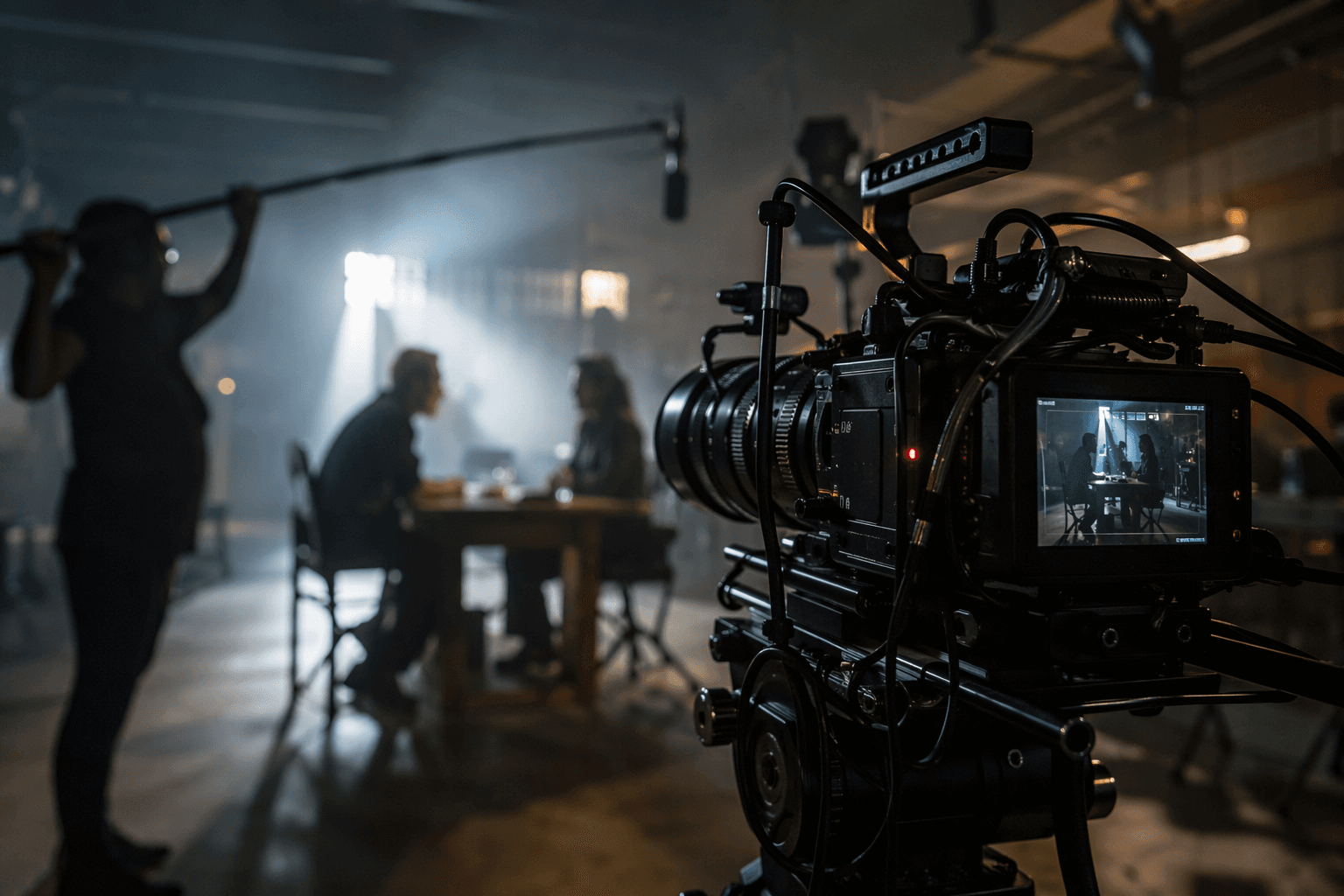
That practical access also widened the kinds of films people could make. The co-op began screening foreign and alternative films while networking with other Southeast media arts centers, which gave Alabama filmmakers a broader visual vocabulary and a way to see themselves as part of a regional movement rather than an isolated local effort. For a state scene still finding its footing, that mix of equipment, education, and programming created an actual pipeline.
The Alabama State Council on the Arts was part of that same support structure. As the state’s official arts agency and a major grant-maker, it helped provide the broader funding climate that made this kind of media arts work viable. Independent film infrastructure is expensive to maintain, and the co-op’s growth depended on more than volunteer energy.
A statewide network, not a single chapter
The co-op’s influence did not stop at Huntsville. A Birmingham Filmmakers’ Co-op operated as a local chapter of the statewide Alabama Filmmakers’ Co-op, and it drew support from the National Endowment for the Arts, the Alabama State Council on the Arts and Humanities, the Southern Arts Federation, and private foundations. The chapter structure made the co-op a distributed media arts network that could adapt to different cities.
That statewide shape helped independent film in Alabama grow horizontally. Instead of one center controlling the whole scene, the co-op model allowed local chapters, local donors, public arts agencies, and national funders to support one another. In a state where filmmakers were spread across Huntsville, Birmingham, Anniston, and Tuscaloosa, that flexibility supported the whole scene.
National attention followed the local foundation
In 1979, the National Endowment for the Arts funded a major summer residency program called Baillie, Bartlett, Brakhage, and Hindle, in Alabama. The program brought Bruce Baillie, Scott Bartlett, Stan Brakhage, and Will Hindle into the co-op orbit and drew national attention to what was happening in Huntsville. By the early 1980s, the co-op was one of the largest media arts centers supported by the NEA.
The residency also reinforced the co-op’s role as a place where Alabama filmmakers could encounter major experimental voices without leaving the state. For a regional scene, that kind of contact raised the technical bar, deepened the artistic conversation, and confirmed that serious work could grow in Alabama rather than only elsewhere.
The organization kept evolving. By 2006, it was celebrating 30 years as an alternative screening society, and the later Alabama Film Co-op identity at the Flying Monkeys Arts Center shows how the grassroots model survived by changing shape. The current association with the Flying Monkeys Arts Center, along with archived material describing films made there by Alabama Film Co-op members, shows that the group kept working as a place for making and showing films.
This article was produced by Prism’s automated news system from verified source data, official records, and press releases, then run through automated quality and moderation checks before publishing. The system is built and supervised by the people who set the standards it runs under. Read our full AI policy.
Know something we missed? Have a correction or additional information?
Submit a Tip