Theo M. Moore II brings community-first Africatown stories to film
Theo M. Moore II makes Africatown documentaries that listen first, then preserve local memory for the people who live it.

Theo M. Moore II has built a documentary practice around a simple but uncommon idea in independent film: the people onscreen come first. Through Hiztorical Vision Productions, the Anniston filmmaker turns Alabama’s overlooked Black history into short films made in close collaboration with local communities, with the goal of educating the public about African Americans in the South and preserving memory for the people who carry it.
A filmmaker shaped by Alabama history
Moore’s path gives that mission real weight. He is an Anniston native who studied history at Troy University, and those details help explain why his films feel grounded in public memory rather than outside interpretation. He has been recognized for using film to celebrate African American history, a thread that runs through the subjects he chooses and the care he gives them.
Two milestones sharpen the picture of where his work sits in Alabama independent film. In December 2022, Moore became the first recipient of the David Brower Alabama Filmmaker Grant. A little more than five months later, PBS named him one of 12 early-career filmmakers selected for the inaugural Ignite Mentorship for Diverse Voices cohort, a hybrid one-year program designed to reduce barriers and increase access for filmmakers from underrepresented communities.
Why Africatown is the right lens
Moore’s Africatown work shows the clearest version of his method. Africatown is not a museum piece or a distant historical footnote. It is the community founded by descendants of the Clotilda, and the story remains active in Alabama public history, heritage tourism, and descendant advocacy. That matters because Moore is not filming a closed chapter. He is documenting a living place where memory, identity, and local stewardship are still being negotiated.
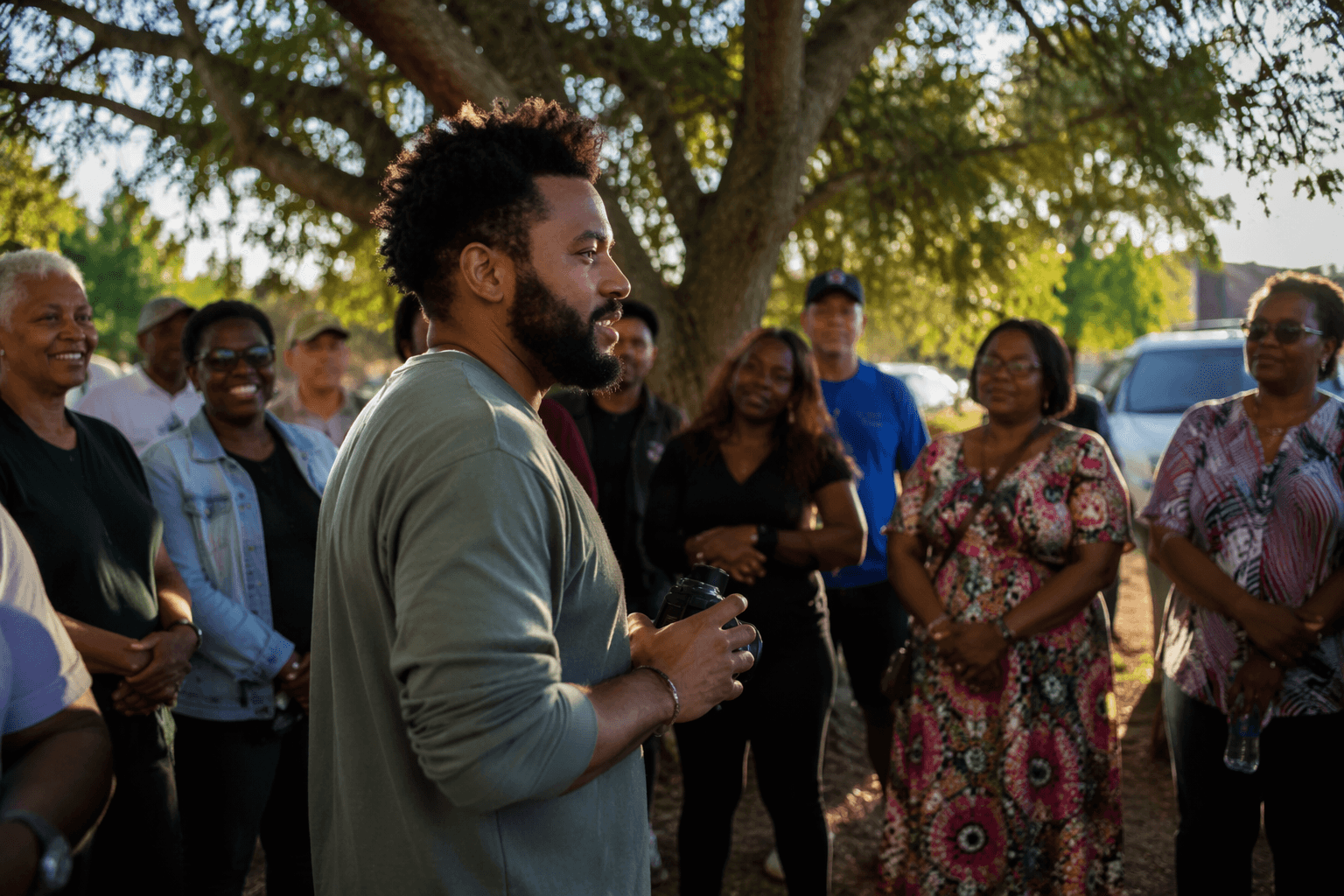
His Africatown documentary work is people-centered: he arrived without a camera and came to listen before filming. In documentary practice, that signals a relationship built before access becomes imagery and helps explain the community-accountable approach of his work.
Afrikan by Way of American and the community-first model
Afrikan by Way of American is the clearest example of Moore’s approach in action. It is a collaborative project made with the Africatown community that highlights unsung heroes while tracing the legacy and future of the place. The film was also partly funded by the Alabama State Council on the Arts and the National Endowment for the Arts, a detail that places it within a broader public-support ecosystem for Alabama arts work.
For filmmakers looking to understand the mechanics of community-first nonfiction, the important part is not just the topic but the method. Moore’s process in Africatown reflects three decisions that define the film’s accountability:
- He starts with listening, not shooting.
- He treats local people as partners in the telling, not just subjects in frame.
- He builds the film around what the community wants preserved, remembered, and shared.
That approach changes the audience too. Afrikan by Way of American fits into efforts to present an Africatown tourism experience, which means the film is meant to work in multiple settings: as a documentary for viewers, as a public-history tool for educators, and as a heritage asset for local institutions. That kind of distribution logic extends a film’s life beyond festival circulation and gives the community a practical use for the work.
A broader catalog built from local memory
Moore’s Africatown film is part of a larger body of work that follows the same principles. His other titles, including Crown the County of Lowndes and Hobson City: From Peril to Promise, point to a filmmaker drawn to county-level history, Black community life, and stories that often sit outside the state’s mainstream cultural frame. That subject matter is not accidental. It reflects a documentary practice rooted in archival research, oral history, and local partnership rather than outside discovery.
That mix gives his films their structure. Archival material provides the documented backbone, oral histories bring lived memory into the frame, and community partnership keeps the final work responsive to the people who know the story best. Moore’s catalog shows how to build films that are not only informative but useful to the communities they depict.
Africatown as living public history
Africatown’s annual Spirit of Our Ancestors festival honors the Clotilda survivors who founded Africatown, a reminder that the story is actively maintained through local observance, not just archived in headlines. In 2023, the Clotilda Descendants Association was still seeking meetings, artifacts, and oral histories tied to the ship and Africatown’s evolution, further underscoring that this history is being preserved in real time by descendants and community members.
This article was produced by Prism’s automated news system from verified source data, official records, and press releases, then run through automated quality and moderation checks before publishing. The system is built and supervised by the people who set the standards it runs under. Read our full AI policy.
Know something we missed? Have a correction or additional information?
Submit a Tip