Alabama Filmmakers Guide to Planning Successful Community Screenings
Getting your film in front of an Alabama audience takes more than booking a room; a rights-first checklist turns any one-off screening into a repeatable community event.
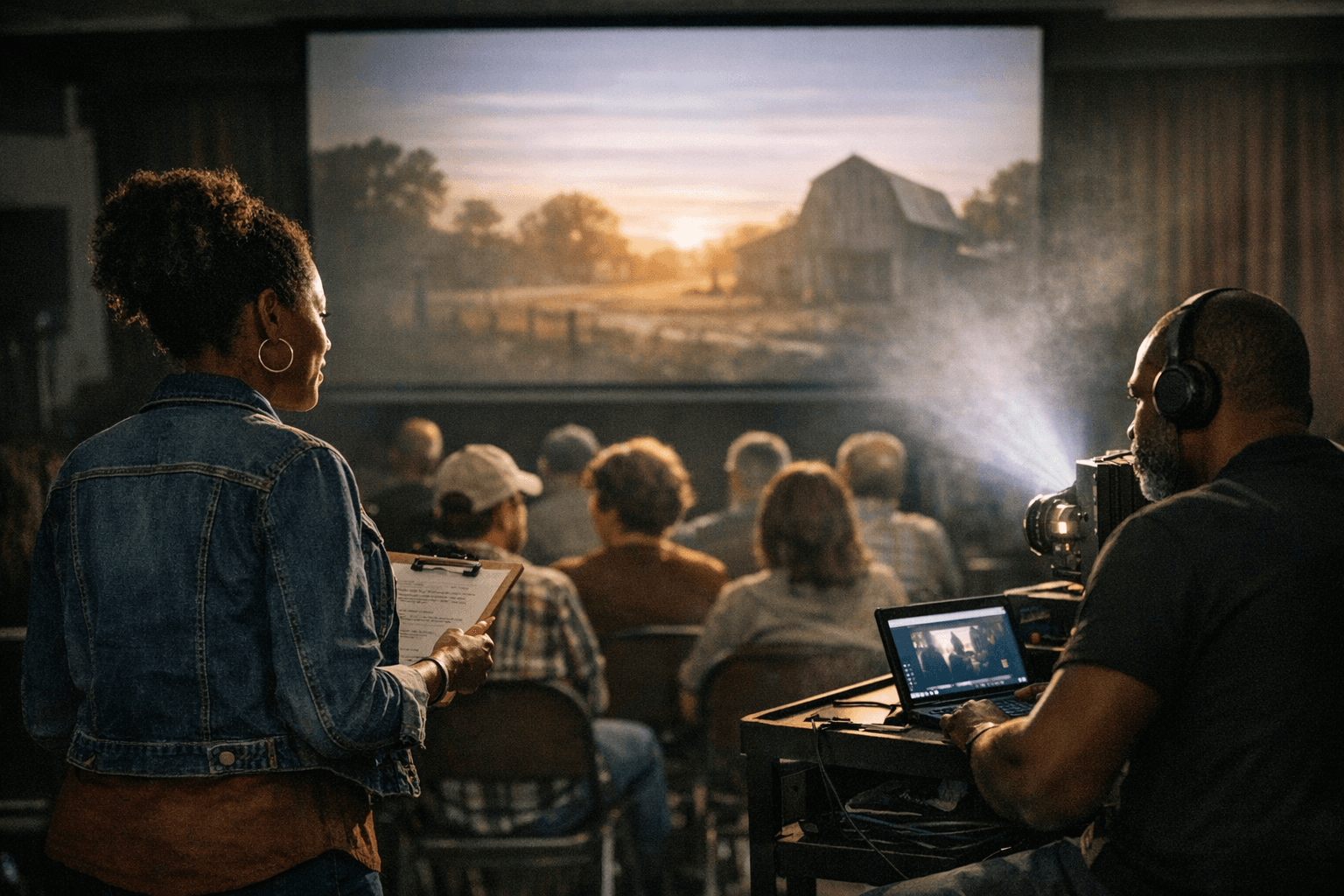
The short film you brought home from a festival deserves more than a private link and a few Instagram stories. Community screenings are one of the most powerful tools in an independent filmmaker's distribution kit, building real audiences, satisfying grant reporting requirements, and seeding the kind of local film culture that sustains the whole ecosystem. But a successful screening is a small production in its own right. Get the legal and logistical foundation right, and a single event can generate the momentum for a recurring series.
Start With the Venue, Not the Date
Alabama offers a surprisingly wide range of screening venues, and your choice shapes every decision that follows. Film Birmingham's calendar is a practical starting point for identifying venues that already have experience with film programming across the Birmingham and Jefferson County area. Beyond the obvious options, the landscape includes community centers, church fellowship halls, public library meeting rooms, university lecture halls, and historic theaters. The Sidewalk Film Festival, which has been running every August in Birmingham's Theatre District since 1999, operates across seven downtown venues including the restored Alabama Theatre, a 2,200-seat movie palace originally built by Paramount in 1927. You don't need that scale, but venues with existing projection infrastructure and established film audiences give you a head start.
Outdoor sites, from public parks to historic landmarks like Sloss Furnaces National Historic Landmark, add atmosphere but multiply logistics. You'll need to confirm generator access, test your projector's brightness in daylight or twilight conditions, plan for weather contingency, and sort out sound in open air. For any venue, request a tech rider in writing. Confirm whether the space prefers DCP, H.264/MP4, or Blu-ray, and verify that the playback hardware actually exists and works before you commit to a date.
Lock the Rights Before You Announce Anything
This is the step most first-time organizers skip, and it's the one that can derail everything. Securing a public performance license is not just a recommendation but a legal requirement: copyright law mandates that you obtain permission from the copyright holder to screen a film publicly, and failure to do so can result in legal repercussions. For films you didn't make yourself, contact the distributor or rights holder directly. Swank Motion Pictures is one of the most prominent licensing clearinghouses in the public performance field. For documentary and independent titles, a community screening license covers any public showing at a venue open to members of the public, including churches or community theaters, and can allow you to charge admission or accept donations.
If you're screening your own festival short, read your festival agreement carefully. Many festivals include embargo clauses that restrict public screenings until the festival's theatrical run concludes. Violating those terms can jeopardize future festival submissions. Public-performance rights and distributor terms vary by title and territory, so don't assume.
Insurance, Permits, and the Paperwork Nobody Enjoys
For public outdoor events or ticketed screenings, confirm whether the venue requires general liability insurance and whether the city or county requires a special event permit. If food or alcohol is being served or sold, health and alcohol licensing adds another layer. Film offices and city event portals can direct you to permit application windows and typical insurance minimums. Film Birmingham, as an initiative of Create Birmingham and the film commission for the Greater Birmingham region, is a logical first call for navigating local requirements and agency contacts.
Build Your Partner Network Early
The difference between a well-attended screening and an empty room is usually the strength of your outreach network, not the size of your marketing budget. Co-promoting with libraries, universities, civic organizations, and community groups gives you access to established mailing lists and built-in credibility. Partners can also supply discussants for post-screening Q&As and help unlock matching funds for community engagement activities, which matters enormously for public funder support.
Alabama-specific outreach moves worth prioritizing:
- Submit your event to Film Birmingham's film calendar, which aggregates independent screenings across the region.
- Reach out to film programs at the University of Alabama, UAB, Auburn, Samford, and historically Black colleges and universities with film studies or communications departments.
- Contact the Alabama State Council on the Arts, which funds community arts engagement. The Southern Fried Film Festival in Huntsville received a $20,000 grant from the Alabama State Council on the Arts for its 2026 season, demonstrating that the council actively supports film programming when proposals show clear community engagement value.
- Pitch to Southern Circuit, a South Arts program that pairs curated independent films with screening partners across the South and evaluates proposals based on subject matter, community programming potential, and the film's relationship to the region.
- Local radio stations, neighborhood listservs, and hyperlocal newsletters consistently outperform general social media for community-driven events.
Promotion Flow That Works
Create one central ticketing or RSVP page (Eventbrite works well and is free for free events) before pushing any promotion, so every channel drives to a single link. From there, the flow looks like this:
1. Submit to Film Birmingham's calendar and any relevant university event calendars four to six weeks out.
2. Pitch local press, city calendar editors, and neighborhood newsletters three to four weeks out.
3. Activate your partner organizations' email lists two to three weeks out.
4. Run social media promotion with targeted local ads if budget allows, starting two weeks out and increasing frequency in the final week.
5. Send a reminder email to RSVPs 48 hours before the event.
Day-of Operations
A smooth day-of experience requires more people than most organizers plan for. Assign specific roles: box office, ushers, an AV operator who has tested the full playback chain that day, a hospitality point person for any guests or panelists, and a moderator for the Q&A. The moderator role is worth investing in. A well-run Q&A transforms a screening into a community conversation, increases perceived value for attendees, and creates natural moments for announcing future events or fundraising asks.
On accessibility: offer closed captions or FM assistive listening systems when feasible, and include ADA access information in all promotional materials. For issue-driven documentaries, inviting local experts, advocates, or activists as panelists adds interpretive context that a filmmaker alone can't provide. The Alabama State Council on the Arts grant to the Southern Fried Film Festival specifically funded filmmaker travel for post-screening Q&As and panel discussions, recognizing that audience engagement extends the educational value of the film itself.
Turning One Screening Into a Series
Every event is a data-collection opportunity. Capture email addresses at the door (a simple sign-in sheet works) and build an audience list you own. Document attendance with photographs, keeping release forms handy for any identifiable faces you plan to use in grant reports or promotional materials. Track attendance numbers, press coverage, and partner engagement, and package those metrics into a one-page summary you can share with funders and venue partners within two weeks of the event.
That documentation is the foundation for the next booking. When you approach a library, church, or indie theater with a proposal to host a screening series, showing that your last event drew a specific, engaged audience and generated press coverage is far more persuasive than a pitch deck. Pair screenings with workshops or panels wherever possible; public funders respond to programming that carries educational value alongside entertainment, and it gives civic partners a concrete reason to co-sponsor.
The filmmakers who build lasting community audiences in Alabama aren't the ones with the biggest budgets. They're the ones who treat each screening as a link in a chain, with the legal work done right, the partners genuinely invested, and the follow-up already planned before the credits roll.
This article was produced by Prism’s automated news system from verified source data, official records, and press releases, then run through automated quality and moderation checks before publishing. The system is built and supervised by the people who set the standards it runs under. Read our full AI policy.
Did this article answer your question?


