Alabama Filmmakers Guide to Submitting Short Films and Features to Regional Festivals
Getting your Alabama short or feature into a regional festival takes more than uploading a screener link — here's the submission workflow that actually moves the needle.
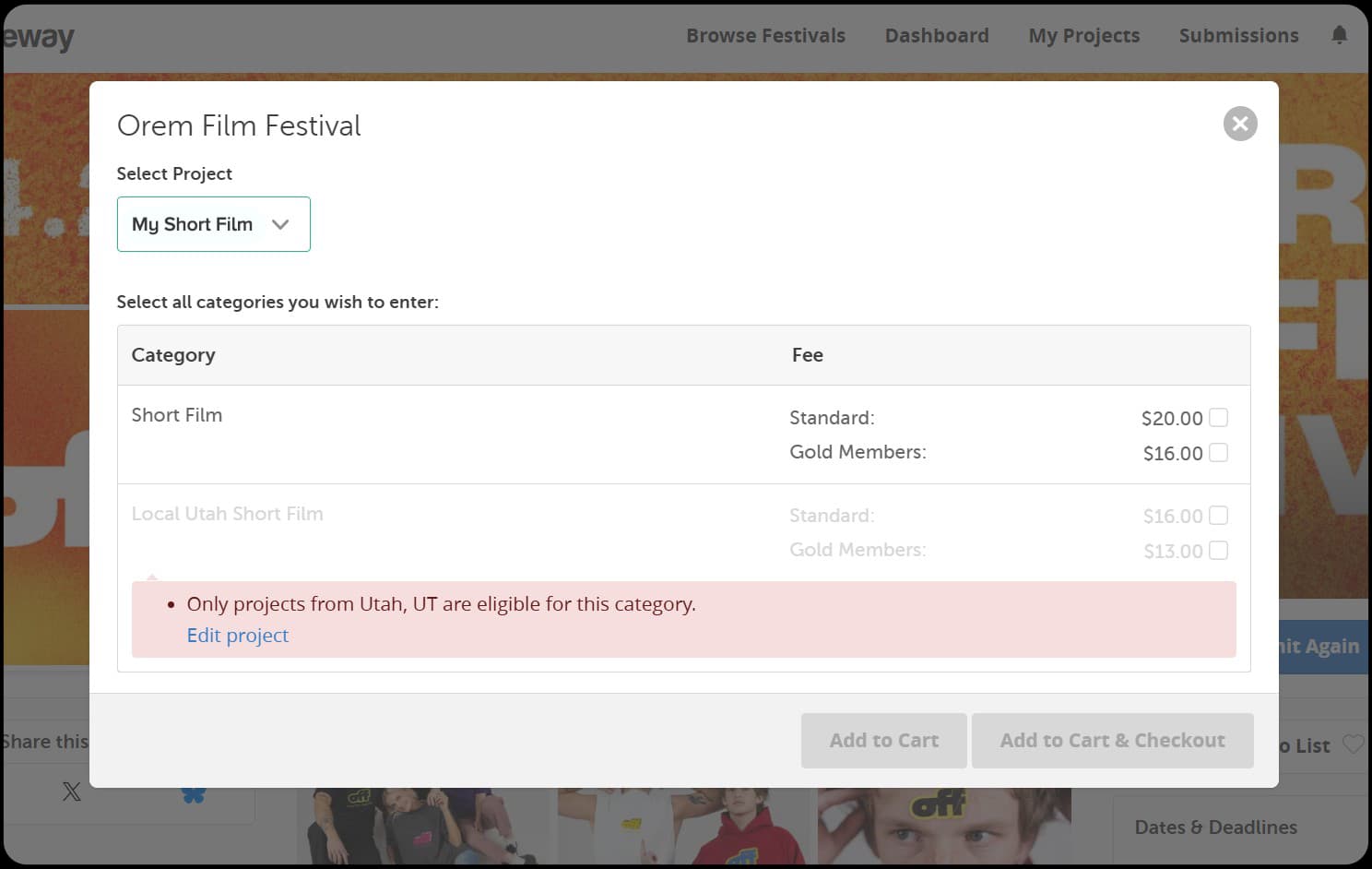
Getting into a regional festival isn't a lottery. It's a workflow. For Alabama independent filmmakers, the difference between a screener that gets watched and one that gets skipped usually comes down to preparation: the right target list, a clean materials package, and a submission calendar that doesn't leave you scrambling at the early-bird deadline. Before anything else, build a spreadsheet. Track festival name, deadline, submission fee, required format, premiere status, and submission status. That one document will save you money, stress, and the embarrassment of sending a DCP to a festival that only accepts H.264.
Know Your Budget and Timeline Before You Submit Anything
Submission fees are a real line item, and they stack fast. Budget them before you start clicking "submit." Most Alabama regional festivals and university film nights cost less than major national festivals, but you're still looking at $15 to $50 per entry at the lower end of the fee scale, multiplied across a submission season. Plan your submission window at least six to nine months out, especially for fall festivals, which close earlier than their national counterparts. And if fees are genuinely a barrier, don't skip the waiver option. Many festivals offer waivers for students, low-income filmmakers, or filmmakers local to the festival's region. FilmFreeway's help center explains how waivers and refunds are handled; the key is to request early and follow each festival's specific instructions, because waiver processes are not standardized.
Choosing Festivals That Actually Program Southern and Low-Budget Work
Start with FilmFreeway's browse and filter tools to map eligibility requirements (short vs. feature, premiere status, category definitions) and identify which festivals explicitly welcome regional programming. For Alabama filmmakers, a few anchors belong on every target list.
The George Lindsey UNA Film Festival, hosted annually by the University of North Alabama in Florence, is the state's longest-running film festival. It draws from the culturally rich Shoals region and carries genuine international reach while remaining rooted in the independent spirit that defined the Muscle Shoals music era. Crucially for local filmmakers, it awards a $2,000 prize specifically for the best film made in Alabama, making regional origin a competitive advantage rather than a footnote. Admission is free and open to the public, which means strong community attendance and real audience energy for Q&As.
Sidewalk Film Festival, held annually on the last weekend of August in Birmingham's Theatre District, has been recognized by MovieMaker Magazine as one of the Top 25 Festivals in the World and by TIME Magazine as one of the Top 10 Festivals for the Rest of Us. It programs over 250 independent films across multiple venues, including the restored Alabama Theatre, a 2,200-seat movie palace built by Paramount in 1927. Sidewalk actively programs thematic tracks, including a Life and Liberty Track for civil and social issues, and dedicated programming spotlighting Black filmmakers and diversity-related work. If your film fits those curatorial interests, say so directly in your submission note.
Beyond those two anchors, target Selma Cinema, the Montgomery Film Festival, and Sidewalk's partner series and university film nights as entry points for work that fits specific regional, thematic, or community contexts. A conservation documentary should chase environment-oriented series like Southern Exposure; a music-rooted doc belongs in front of music-film crossover programmers who already have an appetite for Shoals-connected or Southern music narratives.
Building a Materials Package That Meets Common Requirements
A complete submission package contains more than a screener link. Festivals expect:
- A short synopsis (one to three tight sentences written for a general audience, not a pitch room)
- A long synopsis (150 to 250 words that gives programmers enough context to make a programming decision)
- Full credits and key crew bios, at minimum the director, producer, and director of photography
- Technical specs: runtime, aspect ratio, codec, frame rate, and language/subtitle information
- A high-quality poster or key art (minimum 300 DPI for print use; check each festival's pixel requirements)
- Production stills suitable for press use
- A trailer, if you have one
For screeners, upload a private Vimeo link with a password or use FilmFreeway's direct upload. Broken links and unclear passwords are among the most common reasons a film loses programmer consideration, not because the film was bad, but because access failed. Embed closed captions wherever possible; many festivals now expect them as standard, not optional.
DCP, ProRes, or H.264: Matching Format to Festival
Your screener and your exhibition deliverable are two different things. For the screener, a secure H.264 file or password-protected Vimeo stream is the norm. For exhibition, what the festival actually projects, you need to know what their venue supports.
DCP (Digital Cinema Package) is the gold standard for theatrical projection. It supports cinema aspect ratios like 1.85 and 2.39 without letterboxing, and some venues support 4K DCP playback. If your film was shot with cinema-grade cameras and you want the full theatrical experience, budget for a DCP master. ProRes is a common alternative accepted by many festivals that screen from laptop or broadcast-grade playback systems, particularly smaller festivals and university venues. Always confirm the required delivery format upon acceptance, because sending the wrong file wastes everyone's time, including yours.
Sidewalk's FilmFreeway page, for example, specifies that accepted filmmakers must deliver exhibition materials digitally by a firm deadline, at the filmmaker's expense. That's not unusual. Budget for deliverables as a separate cost from submission fees.
Music Rights, Captions, and E&O
Three things that catch first-time submitters off guard: music rights, caption files, and Errors and Omissions (E&O) insurance.
Music rights matter at the submission stage only if your film uses unlicensed tracks. Programmers aren't clearing your rights for you; they're trusting that you've done it. If you used copyrighted music without a sync license, resolve that before you submit, not after you get accepted and the festival's legal team flags it. For regional and community festivals, this is less of an immediate barrier than for festivals that lead to distribution deals, but it becomes critical the moment your film moves toward any kind of release or broadcast.
Caption files (typically SRT or SCC format) are increasingly a baseline requirement, not an accessibility add-on. Embed them in your screener and have a standalone file ready for exhibition. Several Alabama screening venues have ADA compliance requirements that make this a practical necessity.
E&O insurance is rarely required at the festival submission stage for short films and low-budget features, but it becomes relevant if a festival acceptance leads to a broadcast or distribution conversation. Know where you stand on it before that conversation catches you flat-footed.
Your FilmFreeway Page Is a Programming Tool
Set your project page to public so programmers can find your film independently of a formal submission. Fill out every field: technical details, festival history, category tags, and production stills. Incomplete pages signal an incomplete filmmaker. Think of it as your film's professional profile, not just a submission portal.
Write your logline with the programmer in mind. They are reading hundreds of entries. A logline that clearly communicates genre, protagonist, conflict, and stakes in one sentence earns the click to watch your screener. A vague logline loses it.
Local Relationships Matter More Than Mass Submissions
Blasting 40 festivals with a generic submission note is less effective than sending 15 tailored submissions with a short, personalized note to the programmer explaining exactly why your film fits their program. For Alabama festivals especially, local ties carry real weight. If your cast and crew are from the region, say so. If your film was shot in Alabama or deals with stories rooted in Alabama communities, that context belongs in your cover note.
A one-sheet (a single-page PDF with your poster, logline, synopsis, director bio, technical specs, and contact information) is worth building once and using everywhere. Attach it to outreach emails; include it in your press kit. Offer to attend in person for a Q&A if the festival is within driving distance. If you can't make it, offer a virtual director Q&A. Many programmers genuinely welcome the option, and it transforms a screening into a community conversation.
The Alabama Film Guild is a direct resource for this kind of local networking. Its mission focuses on workshops, hands-on training led by working professionals, and mentorship across all levels of experience. For filmmakers navigating their first submission season, connecting with the Guild can provide peer knowledge about which regional programmers are most receptive to local work, what waiver processes actually look like in practice, and how other Alabama filmmakers have built momentum from festival runs into ongoing projects.
After the Decision: Leverage Everything, Including Rejections
Acceptance opens specific doors. Festival laurels belong on your poster, your trailer, your FilmFreeway page, and your social media immediately. Even a regional acceptance carries credibility when you're submitting to the next tier of festivals. If your film screens publicly, document the audience response. Clips of a packed house, a standing ovation, or a lively Q&A are assets for your next pitch.
Rejection is data. If a festival offers feedback, read it seriously. If they don't, look at what they did program that cycle and compare it honestly to your submission. Programming is curatorial, not purely evaluative; a "no" often means "not right for us this year" rather than "your film isn't good." Keep submitting. Build the laurel list incrementally, starting with festivals like George Lindsey UNA where local origin is a genuine competitive factor.
And when your festival run wraps, bring your film home. Organize a local screening, partner with a library, a community center, or a university film night. FilmInAlabama and the Alabama Entertainment Office provide production resources and regional incentive information for projects moving from festival recognition into full production pipelines. The festival circuit is the beginning of your film's public life, not the end of it.
This article was produced by Prism’s automated news system from verified source data, official records, and press releases, then run through automated quality and moderation checks before publishing. The system is built and supervised by the people who set the standards it runs under. Read our full AI policy.
Did this article answer your question?


