Auburn University Screens Southern Exposure Conservation Documentaries at Free Outdoor Event
Southern Exposure's 14-year environmental film fellowship screened river conservation short-docs at Auburn's Pebble Hill, showing how a six-week summer shoot becomes a statewide civic exhibition.

The Pebble Hill Courtyard at Auburn became a working study in Alabama's conservation doc pipeline on Wednesday night, when the Office of Sustainability screened short films from Southern Exposure, a six-week fellowship hosted by the Alabama Rivers Alliance now in its 14th year of operation.
The April 1 event drew conservation groups, students, and film-curious attendees to 101 Debardeleben Street starting at 5:30 p.m. for a mix-and-mingle, with the documentary program beginning at 6:30. Auburn Outdoors co-sponsored the evening alongside the Auburn Fly Fishing Club, handling refreshments: free popcorn and s'mores for attendees who brought their own blankets and chairs into the outdoor courtyard. Informational tables staffed by watershed and conservation organizations lined the space before the films rolled.
The production model behind the films is worth understanding if you're navigating Alabama's short-doc landscape. Southern Exposure places emerging documentary makers, drawn from applicants across the country, into a six-week summer immersion where they gain equipment access, content-area expertise, and direct relationships with state environmental organizations. That pipeline runs from the mountains to the Gulf Coast, with films built around the people and landscapes tied to Alabama's biodiversity, waterways, and conservation fights. Fellows come in without needing professional filmmaking credentials; the fellowship provides the skills, gear, and community contacts to get the work finished and into distribution within a single summer cycle.
What separates the Southern Exposure model from a conventional festival-circuit strategy is what happens after the credits roll. The Alabama Rivers Alliance actively books the finished films into civic and campus venues across the state, and any organization interested in hosting a community screening can contact ARA directly to arrange it. The April 1 Auburn event is part of a recurring Sustainability Film Series that has brought Southern Exposure films to Pebble Hill in both 2024 and 2025, which means Auburn is already an established leg of the program's exhibition calendar, not a one-off booking.
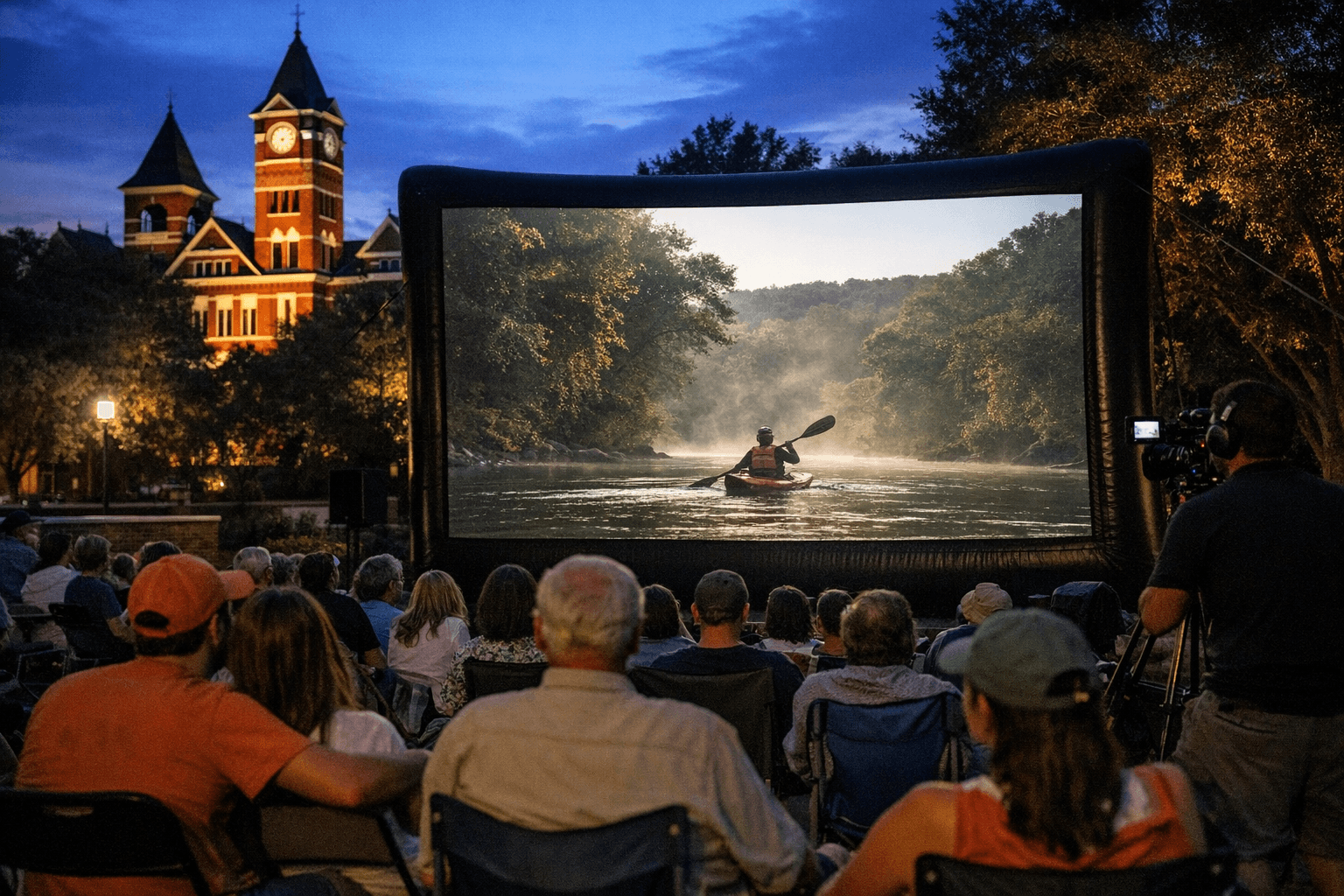
For filmmakers working in Alabama's indie community, the Q&A session that followed Wednesday's screenings is where the campus venue model earns its keep. A post-screening conversation in an outdoor courtyard, with watershed scientists and conservation staff at adjacent tables, puts documentary makers face to face with the subject-matter experts who could anchor a follow-up project, an outreach campaign, or a funding pitch. That kind of direct access to issue stakeholders is something a festival submission alone cannot replicate.
For small theaters, libraries, and community programmers looking to add short nonfiction content without building a distribution operation from scratch, the Southern Exposure slate offers a clear path. The Alabama Rivers Alliance handles the logistics, which means venues without dedicated programming staff can bring a full curated program of Alabama-made environmental docs to their screens. Details on hosting a screening are available through the Alabama Rivers Alliance and on the Southern Exposure website.
This article was produced by Prism’s automated news system from verified source data, official records, and press releases, then run through automated quality and moderation checks before publishing. The system is built and supervised by the people who set the standards it runs under. Read our full AI policy.
Know something we missed? Have a correction or additional information?
Submit a Tip