Iñárritu's Sueño Perro Turns Amores Perros Outtakes Into Museum Installation
Over a million feet of Amores Perros footage, buried 25 years in a Mexican university archive, now flickers through analog smoke at LACMA through July 26.

Over a million feet of film sat untouched for 25 years inside the archives of the National Autonomous University of Mexico. Alejandro G. Iñárritu shot that footage for Amores Perros, his 2000 debut that announced him to the world at Cannes, then left it there. "Sueño Perro," now on view at the Los Angeles County Museum of Art through July 26, is what happened when he finally dug it back out.
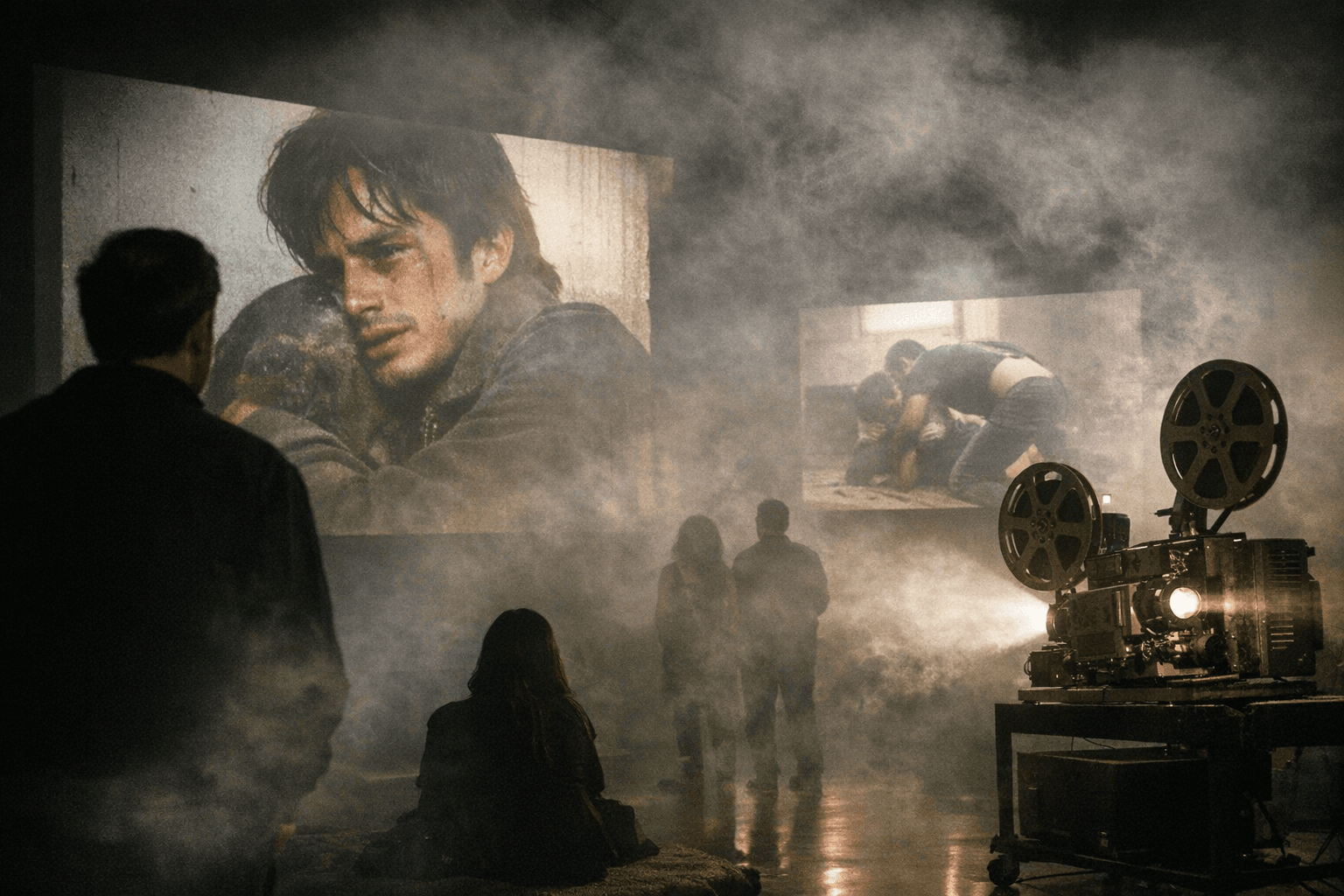
The installation occupies the first floor of LACMA's BCAM building and functions as much as sculpture as cinema. Six vintage 35mm analog projectors, sourced from a Regal cinema in Los Angeles, throw raw, nonlinear clips of unreleased footage through water-based smoke. Clapperboards still open scenes. Retakes roll directly into each other. Crew members and microphones appear along the uncropped edges of the frame. Nothing was sanitized. A Mexico City soundscape runs beneath it all. The sensory centerpiece is the film's notorious car crash sequence, originally captured in a single dangerous take using nine cameras, given its own dedicated section of the space.
Before arriving at LACMA, "Sueño Perro" ran at Fondazione Prada in Milan from September 18, 2025 through February 26, and at LagoAlgo in Mexico City from October 5, 2025 through January 4. Those iterations spread across multiple rooms. The LACMA version, which Iñárritu called the "paranoic version," compresses everything into one space. He described excavating the footage as "unfreezing the placenta of a 25-year-old baby," where "you take the DNA and put it together and it comes alive in a certain way." On why he keeps returning to installation work, he was blunt: "I love doing installations. It's like playing a game with your friends. And it's liberating for me, because I don't have to think about selling tickets."
LACMA previously hosted Iñárritu's "Carne y Arena," a VR installation simulating a pedestrian border crossing. Coinciding with "Sueño Perro" is a 336-page bilingual book, also titled Amores Perros, published by MACK, with storyboards by Fernando Llanos, handwritten production notes, and unseen on-set photography pulled from those same university archives.
For Alabama festival programmers and cinema directors, the project is worth studying in structural terms. Iñárritu did not make a new film; he converted a production archive into a ticketed gallery experience, drew museum crowds into a cinema context, and used a 25th-anniversary milestone as the programming hook. The outtake reel, the discarded take, the behind-the-scenes photograph: all of it carries real value when the right institutional frame is built around it. Alabama filmmakers cataloging unused material from their own productions should take note. The archive is not the leftover. It can be the exhibition.
"Sueño Perro" runs at LACMA through July 26, 2026. Admission is included in general entry at $30, or $25 for Los Angeles County residents, with free weekday access after 3 p.m.
Know something we missed? Have a correction or additional information?
Submit a Tip