Bama Art House Film Series returns to Historic Bama Theatre with summer lineup
The Bama Art House is back with a summer slate built for easy entry, low prices, and repeat visits. In Tuscaloosa, a historic theater is doing the heavy lifting for indie and specialty film culture.

The Bama Art House Film Series is leaning hard into accessibility this summer, and that is the right move. The return to the Historic Bama Theatre comes with a lineup that blends classics, family favorites, blockbuster hits, and seasonal screenings, which gives Tuscaloosa moviegoers a reason to treat the series as more than an artsy side project. It is being pitched as a broad invitation, not a gatekept niche, and that matters in a state where a reliable repertory screen can still be the difference between seeing a film in community and not seeing it at all.
What is new in the summer slate
The biggest shift is not just that the series is back, but that the summer programming is clearly designed to pull in different kinds of audiences at once. The season includes themed blocks such as the Bama Blockbuster Series, Marvel Fridays, and Morning Movies, which tells you this is not a one-note art-house run. It is a seasonal rhythm built to catch families, casual fans, comic-book regulars, and the people who want a matinee without turning the whole day into a production.
That mix is smart. A lot of art-house programming gets stuck talking only to the already-converted, but this lineup makes room for people who may want a comfort watch one week and a classic the next. By stitching together recognizable titles and specialty screenings, the series gives Tuscaloosa a movie calendar that feels welcoming instead of self-serious.
Why the pricing matters
The pricing is one of the strongest signals that the Bama Art House wants a wider audience in the room. Adult tickets are $10, student and senior tickets are $9, and Tuscaloosa County employees and Arts Council board members can get in for $8. On top of that, the $70 punch card covers any ten screenings through July 31, which lowers the per-screening cost for anyone willing to make the theater part of a routine.
That kind of structure changes behavior. Low-barrier pricing makes it easier to take a chance on a title you might otherwise skip, and the punch card rewards repeat attendance instead of one-off visits. For a local film culture, that is not a small thing. It builds habits, fills seats, and gives specialty programming a steadier base than a simple one-night event ever could.
The Historic Bama Theatre is the point
The Bama Theatre is not just a room with a projector. It opened in 1938 as a movie theater, and the Arts Council of Tuscaloosa says it was constructed in 1937 and 1938 during the New Deal era as a joint effort between the City of Tuscaloosa and the federal Public Works Administration. That origin story still shows in the building’s role today: it has always been bigger than a commercial cinema, and it remains one of downtown Tuscaloosa’s most important civic arts spaces.
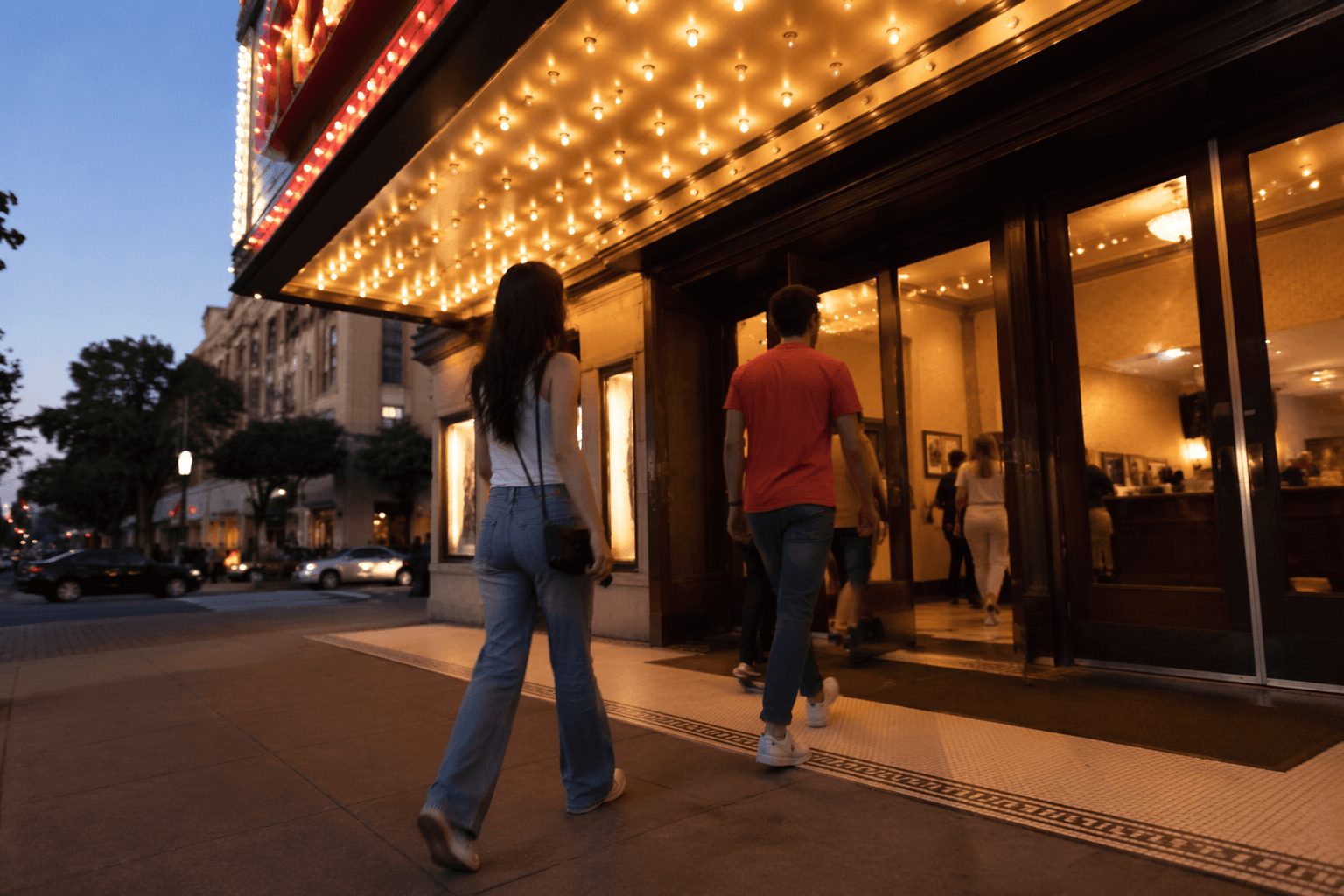
The building’s status backs that up. The theatre was designated an Alabama Register Landmark on June 30, 1983, and added to the National Register of Historic Places on August 30, 1984. Those markers do not just protect a pretty facade. They reinforce the idea that this is infrastructure for culture, a place where independent film, music, school events, and community gatherings can all coexist under one roof.
A venue that has already reinvented itself before
The Bama Theatre has survived because it keeps adapting. Cinema Treasures notes that it was converted to a performing arts center in 1976, then returned to film programming with a Silver Screen Series after Theatre Tuscaloosa built its own home in 1999. That kind of pivot is exactly why the current Bama Art House model makes sense: the building has already proven it can change with the needs of the city without losing its identity.
That history also matters for the indie-film crowd. A venue that has already hosted classic, foreign, and art films understands repertory culture in a way a plain multiplex never will. It knows how to hold space for films that need a little context, a little patience, and a crowd that wants more than opening-weekend spectacle.
Why this matters for Alabama independent film
Tuscaloosa is not pretending to be Atlanta or New York, and that is the point. The Bama Art House gives Alabama independent film something sturdier than hype: a recurring place where audiences can show up, learn the rhythm of the room, and come back for the next slate. The Arts Council of Tuscaloosa, established in 1970 as the umbrella organization for 50 member organizations, already uses the theatre as a home for concerts, Acoustic Nights, and performances by local arts groups. Film fits naturally into that ecosystem because the building is already wired for public arts life, not just ticketed entertainment.
The downtown setting helps too. Being near restaurants and nightlife turns a screening into part of a full evening out, which lowers another barrier for casual moviegoers who might not otherwise carve out a trip just for a film. That is how a local series grows: not by chasing prestige alone, but by making attendance easy, social, and worth repeating.
The Bama Art House is doing exactly what a healthy film culture should do in Alabama. It is giving people a reason to keep coming back, and it is doing it in a theater that has been built, rebuilt, and reimagined for that job since 1938.
This article was produced by Prism’s automated news system from verified source data, official records, and press releases, then run through automated quality and moderation checks before publishing. The system is built and supervised by the people who set the standards it runs under. Read our full AI policy.
Did this article answer your question?


