How The Accountant put Alabama indie film on the Oscar map
The Accountant is the Alabama short that turned a Birmingham tie, Slamdance momentum, and a 40-minute farm story into a permanent Oscar-winning blueprint.
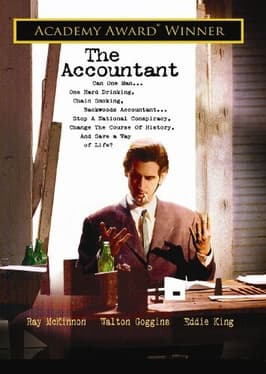
The Accountant is the kind of short Alabama filmmakers can study without squinting. It is specific, regional, and built to travel: Walton Goggins was born in Birmingham, later became a co-owner of Ginny Mule Pictures, and that company produced the 2001 Academy Award-winning short. A small film about an O’Dell family farm ended up in the Academy’s record at Kodak Theatre in Hollywood, which is exactly the kind of leap local indies try to make.
Start with a story that can cross state lines
The clearest thing to copy from The Accountant is the way it stays rooted while still feeling legible far beyond Alabama. Lightyear Entertainment describes it as a 40-minute film centered on the O’Dell family farm and the pressure on America’s family farms, which gives the story a hard, economic spine instead of a vague art-house premise. That matters because shorts usually do not have room to waste on mood alone. If the setting, the conflict, and the stakes are all instantly readable, the film has a much better shot at surviving outside your own local circle.
Goggins is the useful Alabama bridge in that story. He signed on as an actor, then was invited into the Ginny Mule Pictures team, which gives the project a built-in example of how a film can grow from one role into a production partnership. For Alabama filmmakers, that is the real lesson: the right short does not just cast faces, it builds a team that can carry the next project too.
Treat festival visibility as the first move, not the finish line
Slamdance’s timeline makes the path feel practical instead of mystical. The Accountant played in the festival orbit and then went on to win an Oscar, which is the sequence every indie team is trying to engineer even if they never say it out loud. Festival visibility gives a short its first proof that it can travel, and once that happens, the Oscar conversation gets much easier to hear.
The Academy’s acceptance-speech record locks in the result: Ray McKinnon, Lisa Blount, and producer Walton Goggins accepted the award for Short Film, Live Action, on March 24, 2002, at the Kodak Theatre. That date matters because it shows how quickly a short can move from scrappy production to formal recognition once the right chain of attention is in place. The Academy’s awards database, which keeps the official record complete through the 2025, 98th Academy Awards presented on March 15, 2026, is the permanent proof that the leap stuck.
For Alabama teams trying to build something similar, the order matters more than the fantasy of a single big break. The workable pattern looks like this:
- make a short with a regional anchor that still reads nationally,
- use festival exposure to establish credibility,
- keep the film in circulation long enough for awards attention to catch up.
That sequence is what The Accountant did right, and it is why the film still functions as a roadmap instead of just a trivia answer.
Make the film feel local, then make the impact feel national
What gives The Accountant its staying power is not just the Oscar. It is the way the film holds onto a Southern working-class world without flattening it into cliché. The O’Dell family farm is a concrete place with concrete pressure, and the plot turns on a stranger, an accountant, using unconventional methods to help the brothers avoid foreclosure. That mix of plainspoken setting and strange mechanics is exactly why the movie reads like an indie and not a brochure.
The film’s runtime helps too. At 40 minutes, it sits in that awkward but powerful space where a short can still feel substantial enough to build character and conflict, but brief enough to keep programmers and audiences engaged. That is a sweet spot Alabama filmmakers should take seriously, because it gives a project room to breathe without overbuilding it into a feature before it is ready.
The Academy win also gets more interesting when you look at who made it. Ginny Mule Pictures, formed by Ray McKinnon, Lisa Blount, and Walton Goggins, did not stop at one prestige title. After The Accountant, the company went on to produce Chrystal, Randy and the Mob, and That Evening Sun. That matters because it turns the film from a one-time miracle into the start of a track record. In indie film, one Oscar can open a door; a slate tells people you know how to keep walking through it.
Do not let the film die after the win
The other useful thing about The Accountant is that it did not disappear after the awards moment. Lightyear calls it a cult classic with many passionate supporters and says it was freshly scanned in 4K from the original film materials. That tells you the film still has life as a title people can discover, revisit, and circulate long after the original festival run. For local filmmakers, that is a reminder that distribution and preservation are part of the plan, not an afterthought.
A short that wins attention once can still keep earning it if the materials are strong and the film keeps finding new audiences. The Accountant has that afterlife because it was built around a story specific enough to endure and a production team flexible enough to keep the work moving. The Oscar did not invent its relevance. It confirmed it.
The Accountant still looks like the right Alabama example because it is all of the things a real indie has to be at once: local, collaborative, resourceful, and legible far beyond the state line. A Birmingham-born producer, a 40-minute farm story, a Slamdance bump, and an Oscar at Kodak Theatre add up to one clean lesson for Alabama filmmakers: if the film is specific enough, the road out of Alabama can be wide enough to fit the Academy.
This article was produced by Prism’s automated news system from verified source data, official records, and press releases, then run through automated quality and moderation checks before publishing. The system is built and supervised by the people who set the standards it runs under. Read our full AI policy.
Know something we missed? Have a correction or additional information?
Submit a Tip