Montgomery Museum's FLIMP Festival Returns with Free Family Art Activities
Free and landscape-themed, FLIMP packed the Caddell Sculpture Garden with Alabama Shakespeare Festival, Rosa Parks Museum, and Old Alabama Town educators in a single afternoon.
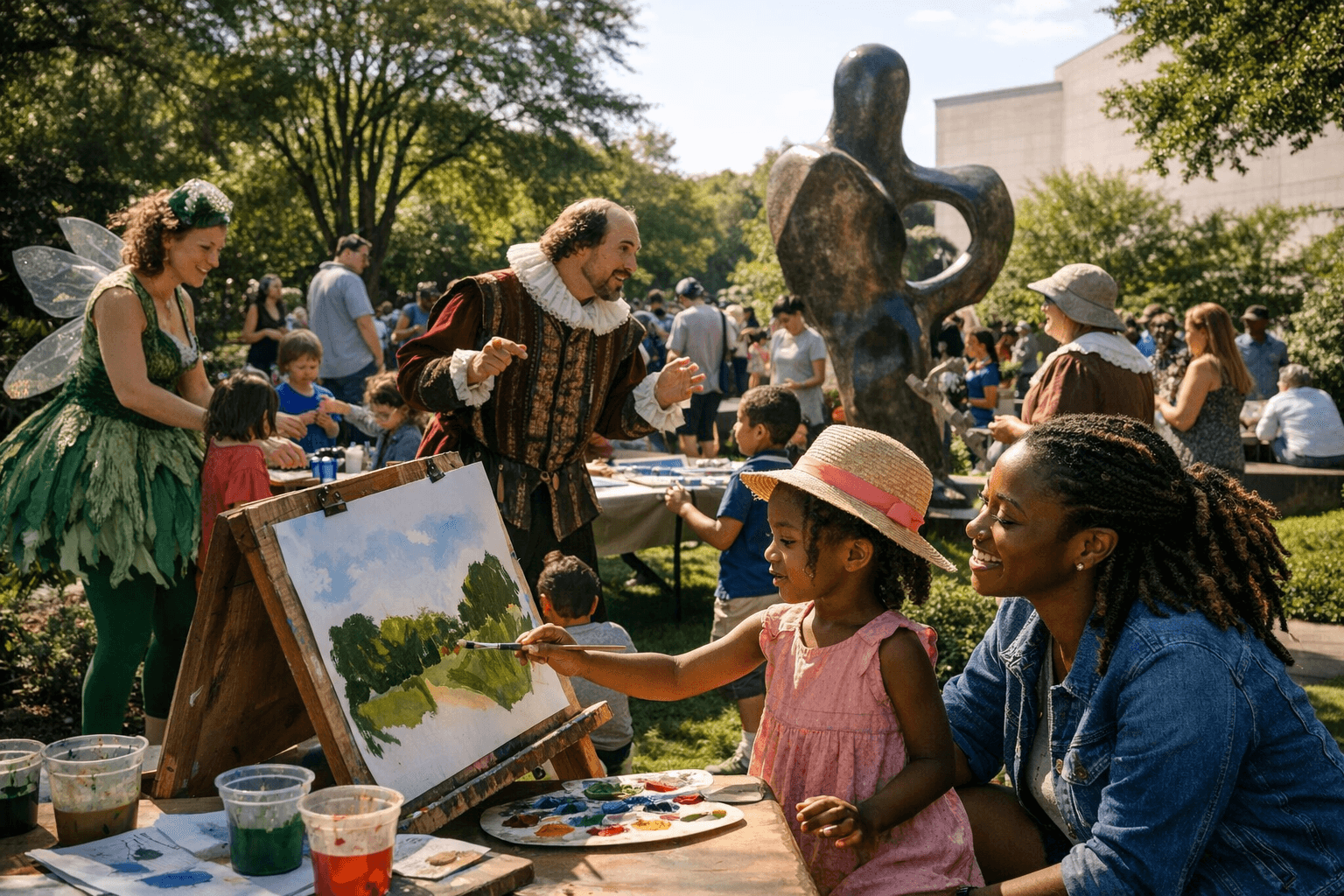
The John and Joyce Caddell Sculpture Garden at the Montgomery Museum of Fine Arts became an open-air studio on April 11, as the museum's annual FLIMP Festival filled four hours with landscape-themed art-making, DJ music, and a partner roster that reads like a working directory of Alabama's cultural infrastructure.
Running 10:00 AM to 2:00 PM, this year's festival featured stations for cardboard-city building, faerie-wand and flower-crown workshops, a "Make Your Own Bug Hotel" installation, and landscape-collage projects, all free and open to families. The community partner lineup, though, was what made FLIMP genuinely useful for indie filmmakers: the Alabama Shakespeare Festival, the Montgomery City-County Public Library, the Rosa Parks Museum, Old Alabama Town, and local arts education groups all shared a single event space on a single afternoon.
For anyone developing a documentary or narrative project rooted in Alabama history, landscape, or community life, that kind of convergence is worth treating seriously. Old Alabama Town holds institutional expertise in the state's built environment and historic spaces; the Rosa Parks Museum brings decades of civil rights education outreach. These are organizational relationships that typically take months of cold emails and formal introductions to build. FLIMP compressed those introductions into a two-hour window.
The landscape theme mapped cleanly onto production skills as well. Collage work is visual development: the same compositional thinking behind production design and set dressing. Cardboard-city building is physical storyboarding and prop fabrication. Filmmakers who participated hands-on rather than observed from the perimeter found those stations doubled as low-pressure conversations with educators and parents already tuned into creative problem-solving.
A few practical considerations for anyone treating a festival like this as a production resource: carry a business card or a simple one-sheet describing your project rather than a camera and a consent form. FLIMP is built around children and families, and arriving with visible production intent changes the dynamic in ways that undermine the very networking value you came for. Introduce yourself to partner-organization representatives as a filmmaker looking for collaboration, not a location. The connections worth making here are the ones that lead to a quieter follow-up conversation elsewhere.
The museum's noted contingency planning for inclement weather signals something worth filing away: organizations that build logistical flexibility into a free community event tend to be reliable long-term partners. That level of operational care matters when you're eventually pitching a co-presentation, a community screening, or a youth media workshop.
FLIMP is not a film festival, and treating it as one would miss the point entirely. What it is, year after year in the Caddell Sculpture Garden, is a concentrated cross-section of the Montgomery arts ecosystem: institutions with genuine roots in Alabama history and education, gathered in one accessible, informal setting. That ecosystem is what sustains independent production long after a single project wraps.
Know something we missed? Have a correction or additional information?
Submit a Tip