Sidewalk Alabama Spotlight Weekend showcases wide range of local shorts
Sidewalk’s 105-minute Block 2 is a sharp snapshot of Alabama shorts now, from river documentary and queer romance to horror, labor, and dark comedy.
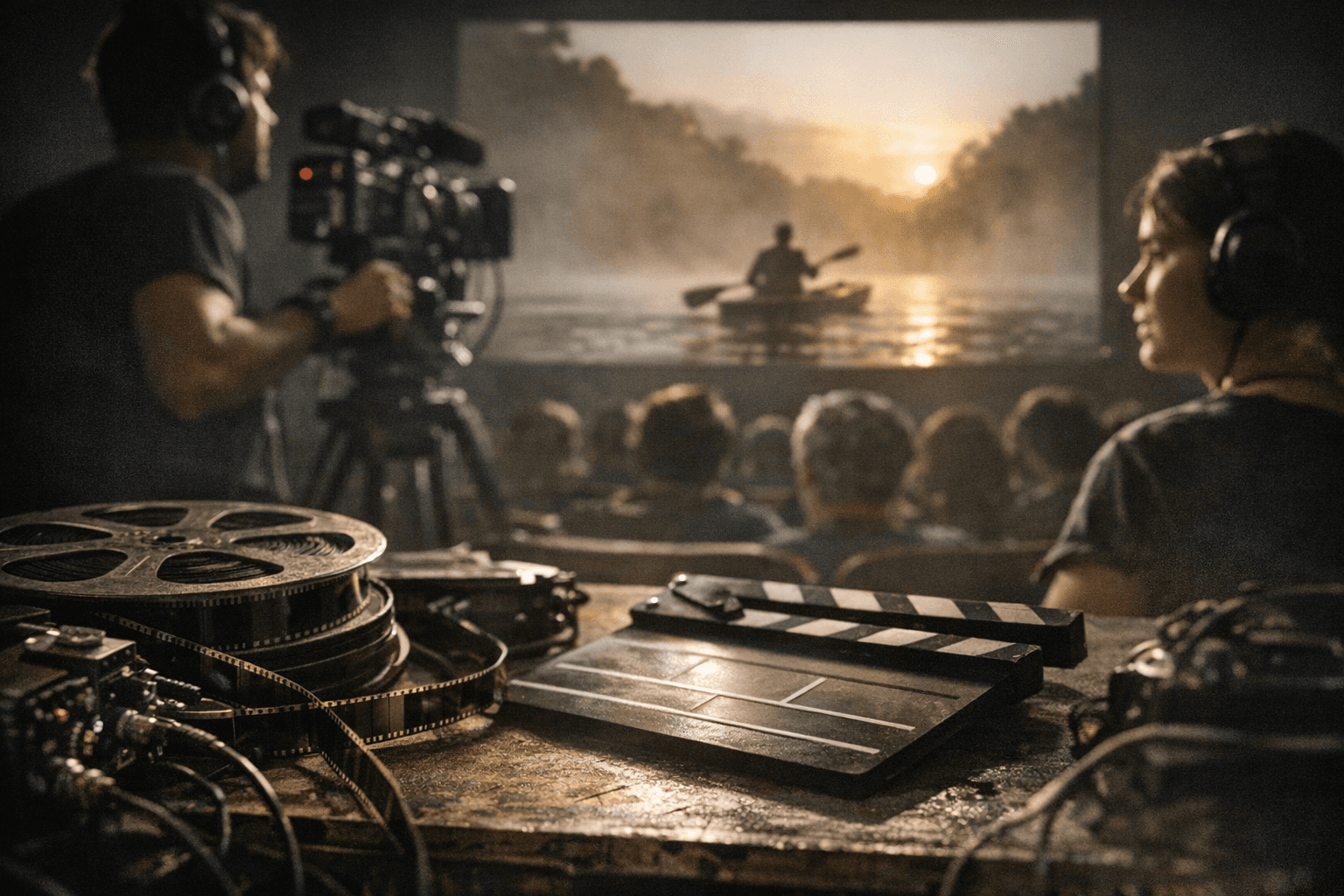
Sidewalk Alabama Spotlight Weekend showcases wide range of local shorts
The best thing about Sidewalk’s Alabama Spotlight Weekend is that it does not ask Alabama viewers to choose one version of local film. In Birmingham, the 105-minute Block 2 of *Alabama Film Spotlight: Shorts Showcase Vol. 2* gathers short films by Alabama filmmakers into a single program that moves from documentary to horror to music video-style storytelling, and the range itself is the point. If you want to know what the state’s indie scene looks like right now, this is the kind of lineup that answers the question fast: varied, restless, and confident enough to put ecology, labor, love, trauma, and absurd comedy side by side.
A bigger showcase, and a better snapshot
Sidewalk says this year’s Alabama Spotlight Weekend includes an expanded selection of films, and Block 2 makes that expansion feel earned rather than merely larger. The event listing also notes that Saturday and Sunday screening blocks will feature different lineups, which turns the weekend into more than a single stop-and-go screening. It becomes a curated field report on Alabama filmmaking, with each block offering a different slice of the state’s creative map.
That matters for anyone deciding what to support, because the program is explicitly billed as a lineup of short films by Alabama filmmakers, not a generic regional sampler. The presenting venue, Sidewalk Film Center + Cinema in Birmingham, is giving local work a proper stage, and the breadth of this block suggests there is enough momentum in the community to fill it. The surprise is not just that the films are different from one another. It is how clearly they reveal a local ecosystem that can hold documentary observation, narrative experimentation, and genre play all at once.
The documentaries give the block its grounding
Some of the strongest connective tissue in the program comes from the documentary-minded work. *Where The River Flows* follows Hana Berres and her nearly 30-year relationship with the Cahaba River, a premise that immediately gives the block a sense of place without turning the film into a postcard. It points to one of the most durable truths in Alabama nonfiction filmmaking: the natural world is never just scenery. It is memory, habit, stewardship, and identity.
*A Sense of Place* deepens that idea from another angle by pairing Cuban photographer Julio Larramendi with Alabamian photographer Chip Cooper. Even before you know the full shape of the film, the title suggests a conversation between two artists and two geographies, one outside Alabama and one rooted in it. That kind of pairing is a reminder that local film does not have to be isolated to feel local. Sometimes the strongest Alabama work is made sharper by looking outward and then back home.
*Mourning Due* shifts the documentary lens into more painful territory, centering a Desert Storm veteran in a community plagued by gun violence and trauma. The film’s subject matter gives the block a hard edge, but it also widens the emotional register of the weekend. Alabama shorts are not just finding beauty in place. They are also grappling with what place carries, what it survives, and what it leaves behind.
Narrative shorts keep the program moving
The fictional shorts in Block 2 do a lot of the heavy lifting when it comes to tone and pacing. *Robbers*, inspired by a viral theft trend, centers on a musician trying to finance studio time. That is a sharply contemporary setup, and it pulls together two pressure points that feel very now: online behavior and the practical economics of making art. The film’s hook is not just the crime trend. It is the fact that the character’s creative ambition depends on money he does not have, which makes the premise feel both timely and painfully familiar.
*The Daily Grind* takes a different route, juxtaposing homelessness, labor, and access to work. The title alone suggests repetition and strain, and the subject matter adds social urgency without flattening the people inside it. It is the kind of short that can sit in the same block as a music video or a comedy and still change the temperature of the room.
Then there is *Know This*, a relationship-centered short about self-acceptance and memory, with one partner more ready for commitment than the other. That tension gives the block a quieter emotional center. It is less about plot mechanics than about recognition, the kind of intimate conflict that local shorts often handle with more precision than feature-length melodrama.
*Cottonmouth* also reaches for that emotional terrain, exploring family, redemption, and first-gig anxiety. The mix is telling. Alabama short filmmaking here is not separating the personal from the practical. It is treating them as inseparable, the way real life usually does.
Horror, comedy, and the freedom to take risks
If the documentaries and relationship dramas anchor Block 2, the more offbeat titles show how much room Alabama filmmakers are giving themselves to play. *Don’t Look in the Closet* leans into horror after a debaucherous night out, which sounds like a setup with both atmosphere and a bite. *Mel* follows a man recounting a haunting dream, a premise that lives in that sweet spot between psychological unease and narrative minimalism.
At the other end of the spectrum, *The Great Burrito Mouth Get-In* goes into comic-survival mode, a title that already signals the kind of unbuttoned energy local shorts can carry when they are willing to be strange. That willingness is part of what makes a program like this feel alive. A strong regional showcase should not read like a syllabus. It should feel like a room where filmmakers are testing how far they can push tone without losing the audience.
The inclusion of *Choices*, listed as the official music video for Liam Giles’ single “Choices,” adds another layer to that range. Music-video storytelling belongs in a conversation about Alabama indie film too, especially when a showcase is trying to reflect the full ecosystem rather than only narrative shorts. It widens the definition of what counts as local screen work and keeps the block from settling into one expected rhythm.
Why this block feels worth showing up for
What Block 2 really proves is that Alabama shorts are not organized around a single regional identity. They move across subjects, forms, and emotional registers with enough confidence to make the whole 105-minute block feel like a survey of where the scene is right now, not where it used to be. The lineup includes ecological documentary, social realism, queer or relationship-centered storytelling, horror, music, and dark comedy, and that mix is exactly why the expanded Alabama Spotlight Weekend matters.
For readers deciding what to support, the appeal is simple: this is a rare chance to see a broad local cross-section in one place, at Sidewalk Film Center + Cinema, with different lineups across Saturday and Sunday. That kind of programming creates a fuller picture of the state’s filmmakers than any single film could. It also suggests a community with enough depth to keep widening the frame, and enough range to make every new block feel like a fresh look at Alabama’s creative present.
This article was produced by Prism’s automated news system from verified source data, official records, and press releases, then run through automated quality and moderation checks before publishing. The system is built and supervised by the people who set the standards it runs under. Read our full AI policy.
Did this article answer your question?


