Sidewalk Sweet Home Scramble screening turns shorts into audience event
The audience picks the winner at Sidewalk's Sweet Home Scramble screening, turning Alabama shorts into a live event with feedback, visibility, and real word-of-mouth.
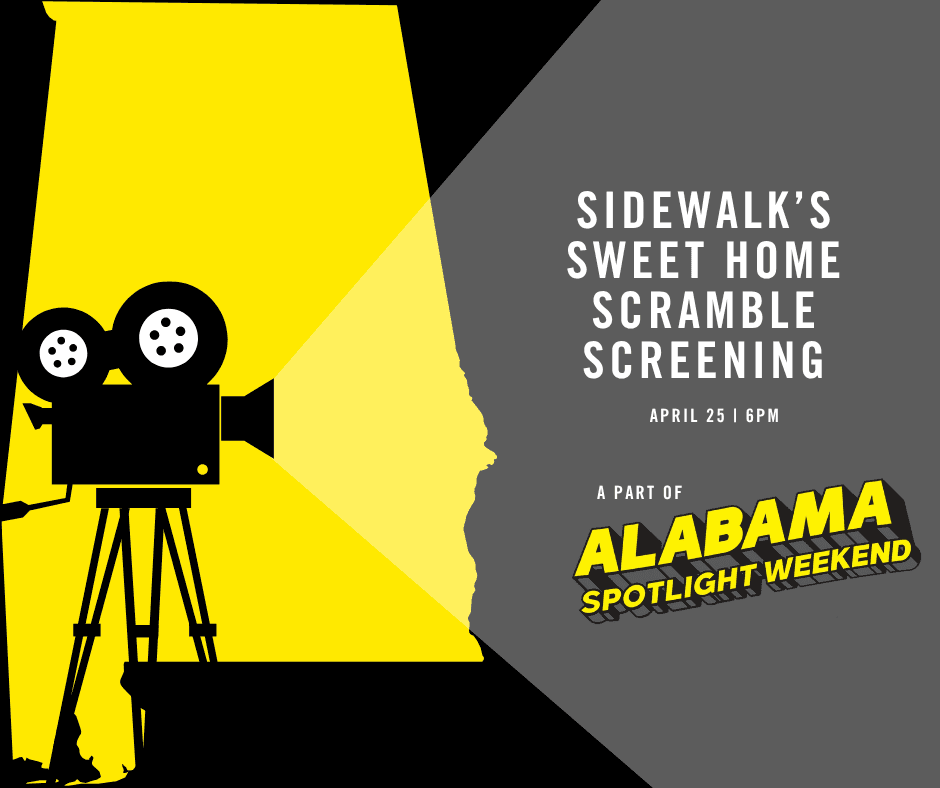
The smartest thing about Sidewalk’s Sweet Home Scramble screening is that it does not treat short films like filler. It turns them into a destination, with the audience voting on the audience-choice winner and the whole program staged as part of Alabama Spotlight Weekend. That single choice changes the feel of the night: attendees are not just watching finished work, they are part of the outcome.
A screening built for participation, not passivity
Sidewalk is using the Sweet Home Scramble to do what a lot of short-film blocks never quite manage: give the room a reason to care about every film in it. The event features shorts created through Sidewalk’s 2026 Sweet Home Scramble, and the audience gets to select the audience-choice winner. That matters because it gives local viewers a direct stake in the screening, which is the easiest way to turn a one-night program into something people talk about afterward.
The event is also designed to reach beyond the room. It will be held at Sidewalk Cinema in Birmingham and livestreamed for nonlocal participants and supporters, a smart move in a state where filmmakers and audiences are spread across multiple cities. When a screening can be attended in person and watched remotely, the conversation does not stop when the house lights come up.
What the Scramble actually is
If you only know the name, the mechanism is the part worth paying attention to. Sidewalk describes the Scramble as a 48-hour filmmaking competition, with teams challenged to create a short film from concept to completion in a two-day window. For the 2026 Sweet Home Scramble, Sidewalk says teams can be any size, only one person per team needs to attend the kickoff meeting, and that kickoff is virtual and open to teams in any geographic location.

That structure lowers the barrier to entry without watering down the challenge. A team can jump in from anywhere, take on the same 48-hour clock, and still end up in a Sidewalk screening with real local visibility. For Alabama filmmakers especially, that combination is hard to beat: you get a tight creative deadline, a public result, and a path into the festival conversation.
Why the event feels like something people will actually show up for
Sidewalk has also built Alabama Spotlight Weekend to feel like more than a placeholder for regional work. The organization describes it as an expanded selection of films by Alabama filmmakers, and the screening blocks for Saturday and Sunday each carry different lineups. That is a small logistical detail, but it is exactly the kind of detail that keeps a shorts weekend from blurring into one long stack of titles.
If you are buying a ticket, double-check which block you want. If you are trying to see a specific filmmaker or catch as much Alabama-made work as possible, the different Saturday and Sunday lineups make planning matter. That is the difference between a passive listing and an event with actual momentum.
- a clear hook, like audience voting
- a venue that feels like a destination
- enough local identity that the crowd knows this is their scene, not just another screening
- a reason to talk afterward, which in this case is the live competition element and audience-choice result
A strong shorts program needs a few things to pull people off the couch:
Sidewalk has all of that in place. The screening happens at Sidewalk Cinema in Birmingham, inside the organization’s own two-screen independent movie theater in the city’s historic theatre district. One of those theaters is equipped for hybrid meetings and live-stream events, which makes the in-person and virtual sides of the program feel like one event instead of two separate ones.
Why filmmakers should care even if they do not win
For filmmakers, the value is not limited to the trophy or the cash. Sidewalk says cash prizes go to the jury and audience winners, and the winning Scramble films are screened as part of the 28th Annual Sidewalk Film Festival. That gives the work a second life, which is the part a lot of short-form programming misses. A single screening slot is fine; a screening slot that leads into a major festival is better.
There is also the softer value that tends to get overlooked: exposure in a room full of people who care about Alabama-made work. A curated local showcase can produce audience feedback, word-of-mouth, and the kind of early visibility that helps a film travel through a scene built on festivals, campus venues, and community screenings. When a short connects, it does not just finish its run. It starts circulating.
The larger Birmingham and Alabama frame
Sidewalk’s approach fits into a bigger machinery that has been running for years. The Sidewalk Film Festival was established in 1999 as the organization’s flagship program, and Sidewalk says the festival annually brings over 250 independent films to Birmingham and welcomes about 15,000 film lovers. The 28th Annual Sidewalk Film Festival is scheduled for August 24-30, 2026, in downtown Birmingham’s Historic Theatre District, with more than 200 films plus filmmaker Q&As, panels, workshops, networking events, and parties.
That scale matters because it gives local shorts a ladder. The Sweet Home Scramble is not just a standalone showcase, it is one way Alabama filmmakers can enter a larger ecosystem that already has audience, infrastructure, and repeat attention. For a state trying to grow its production base, those repeat touchpoints are what create staying power.
The state’s rebate structure adds another reason these events matter. Alabama offers a 35% rebate on payroll paid to Alabama residents and a 25% rebate on other qualified production expenses for eligible projects spending $500,000 to $20 million in the state. That is the economic backdrop behind the cultural work. Screening nights, networking events, and festival visibility help keep people inside the pipeline long enough for the incentive structure to matter.
The best thing about Sweet Home Scramble is that it understands the assignment. It does not ask shorts to sit quietly at the edge of the program. It puts them in front of a live audience, gives that audience a vote, and lets the result carry forward into the festival itself. That is how a short-film block stops feeling like a slot on a schedule and starts feeling like a scene.
This article was produced by Prism’s automated news system from verified source data, official records, and press releases, then run through automated quality and moderation checks before publishing. The system is built and supervised by the people who set the standards it runs under. Read our full AI policy.
Did this article answer your question?


