Allen homeowner urges pickleball setback rules after court noise concerns
Jeff Kacines says pickleball noise now reaches his Allen home nonstop, and he wants setback rules before more courts land near houses.
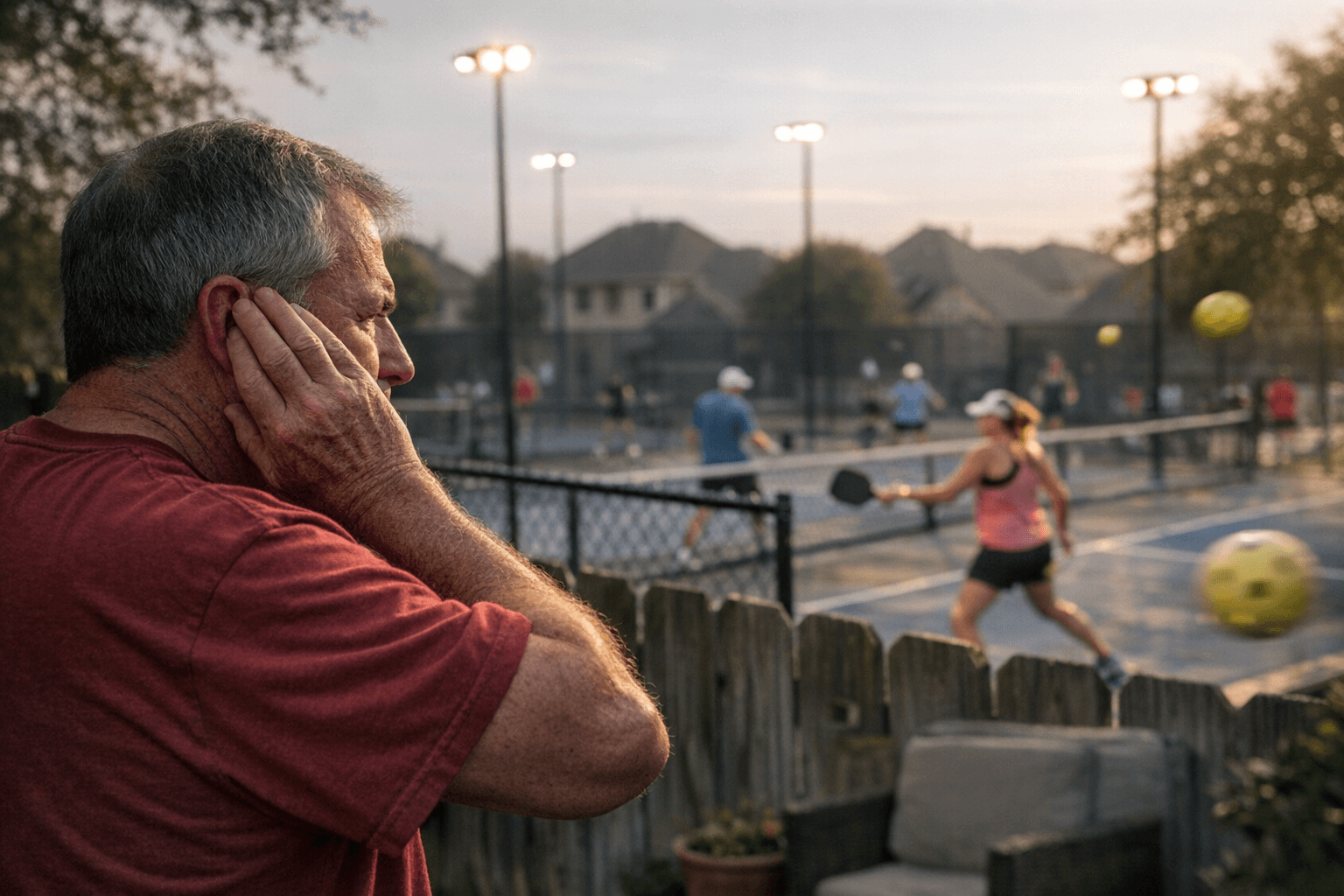
The fight in Allen is no longer about adding pickleball courts. It is about how close they can get to homes before the popping starts to overwhelm a neighborhood.
Homeowner Jeff Kacines pressed the City of Allen to adopt pickleball-specific noise rules after nearby tennis courts were converted and the sound began carrying into his house nonstop. His complaint landed at the Allen City Council’s regular meeting on April 14, 2026, and it put a very familiar suburban problem in front of city leaders: when a fast-growing sport moves from parks into established neighborhoods, who absorbs the noise?
Kacines said Allen should do more than lean on a general noise ordinance because the city does not have a rule aimed specifically at pickleball. He urged officials to set setback distances for future courts and said he had seen standards elsewhere, including places using 600 feet. He recommended 1,000 feet from homes, arguing that the city needs a clearer planning rule before more conversions happen near backyards and bedrooms.
One independent report put the courts about 350 feet from Kacines’ home, which makes the dispute more than a vague quality-of-life complaint. It becomes a siting question. In a sport built on quick conversions from tennis lines to pickleball lines, distance matters, especially in dense subdivisions where the high-pitched pop of the ball can travel far beyond the fence line.
Allen already has multiple places for the sport. Allen Parks & Recreation lists pickleball at Reed Park, Ford Park, Rolling Hills Park, Stacy Ridge Park and Joe Farmer Recreation Center. Allen ISD also opened four tennis courts and four pickleball courts for community use in late 2025, showing that the game’s footprint in the city is still expanding. The issue is not whether Allen supports pickleball. It is where the city chooses to place it next.
That puts Allen in the middle of a broader policy shift. The National Task Force on Pickleball Noise says local leaders should make fact-based siting decisions, while Quiet Communities says current research indicates courts should not be within 350 feet of homes and that impacts can still be hard to mitigate even at 1,000 feet. A model ordinance from the Noise Pollution Clearinghouse recommends an 800-foot setback from dwellings. Planning sources also point to noise barriers, limited hours and equipment rules as tools cities may need, especially because decibel-based ordinances often miss the impulsive, high-frequency character of pickleball noise. In Allen, the debate is already moving from court access to court proximity, and the next round will shape how the sport grows in neighborhoods built long before the first kitchen line was painted.
Know something we missed? Have a correction or additional information?
Submit a Tip