Long Island’s Glen Cove Imposes Three-Month Moratorium on Residential Pickleball Courts
Glen Cove’s City Council voted unanimously at its Feb. 10 meeting to bar homeowners from building or converting yards into pickleball courts for three months while officials draft rules.
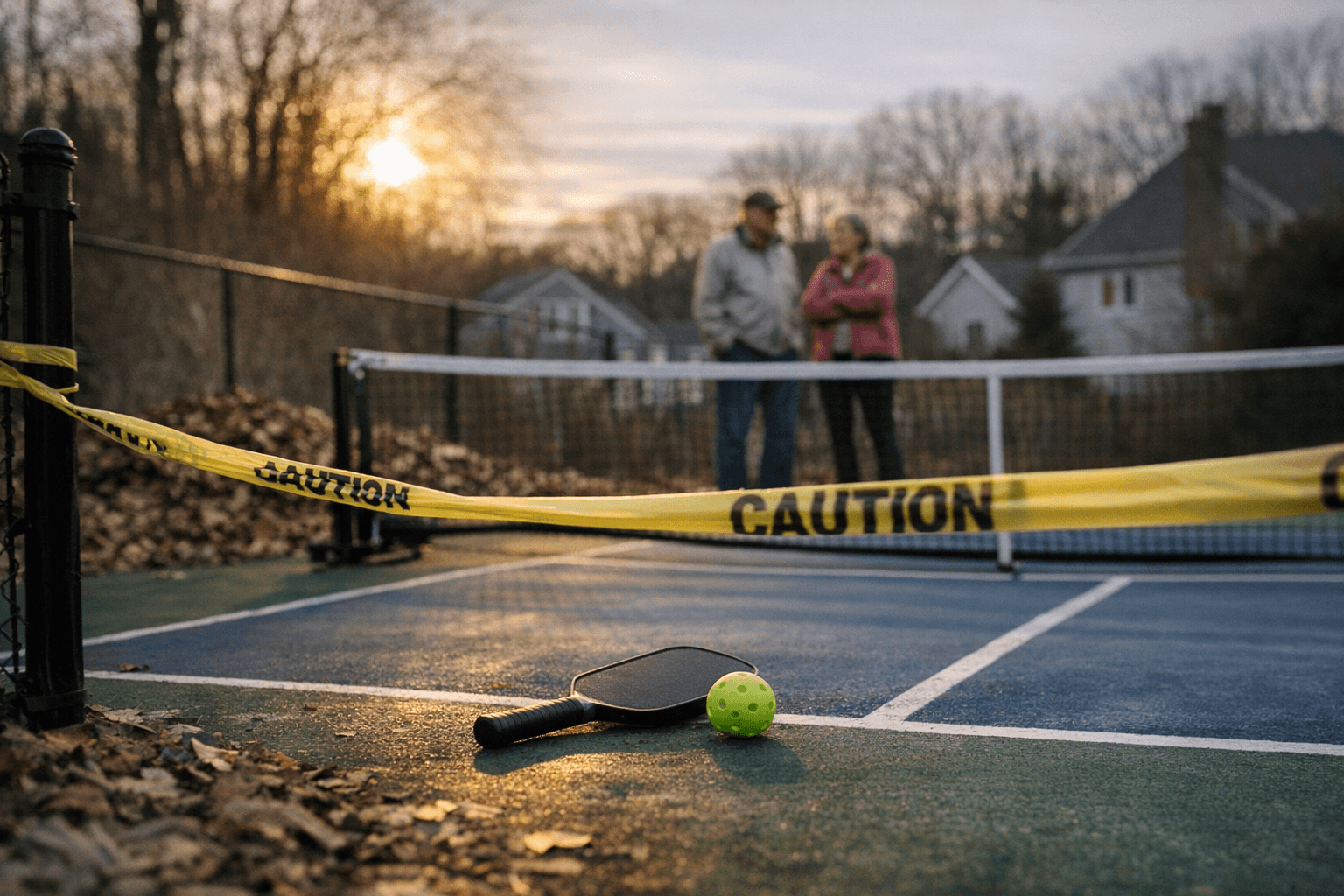
Glen Cove City Council voted unanimously at its Tuesday, Feb. 10 meeting to impose a three-month moratorium that bars the construction or conversion of residential property into pickleball courts while the city studies noise and zoning issues. The temporary law was approved as the city reported a recent bump in requests from residents seeking private courts and as neighbors raised complaints about sound.
City documents quoted by council staff state the law prohibits the “construction and/or development of pickleball courts on residential property, including the conversion of any surface on residential property for the purpose of playing pickleball.” The moratorium, as written in municipal materials, will go into effect after receiving state approval, and violators “will be subject to a civil penalty of up to $1,000 per day of each violation, according to city documents.”
Mayor Pamela Panzenbeck framed the pause as a time-buying measure for officials and neighbors. Panzenbeck told the council, “We would just like a little time.” She also said the decision responds to noise concerns: “Pickleball courts, they’re not like tennis courts, they create a lot of noise and bother, it’s a hard ball, it makes a very loud sound, not like a tennis ball.” Panzenbeck added, “We’re putting a moratorium so we can study it.”
Councilman John Perrone highlighted a code gap that the moratorium is meant to address, saying that “pickleball courts aren't clearly defined in the city's code.” Council members indicated the three-month window will be used to draft specific rules for private courts, including how far courts must sit from property lines and whether residential parcels must meet minimum size requirements before a court can be permitted.
The action follows a mix of local complaints and broader enthusiasm for the sport. City officials cited noise complaints centered on the distinctive “popping” sound of paddle-to-ball impacts, while some players and supporters pushed back by noting other backyard recreational features, such as basketball hoops, also generate steady noise from dribbling and rim impact. Across Long Island, officials say commercial and public courts are common and indoor facilities are expanding.
National participation estimates cited in local coverage put pickleball players between 20 and 48 million Americans, with organizations calling the sport one of the fastest-growing in recent years. Glen Cove leaders said that surge in popularity has driven more residents to request private courts, prompting the temporary ban so zoning, placement, playing hours, and sound-mitigation options can be considered.
At the same council meeting that approved the moratorium, officials also honored three youth athletes and appointed Connor Dunleavy to the city’s zoning board, actions that accompanied the Feb. 10 agenda as the city moves toward crafting permanent rules during the three-month pause.
Know something we missed? Have a correction or additional information?
Submit a Tip