Major League Pickleball Expands to 20 Teams, Eliminates Level Designations
Learn the 20 confirmed takeaways about MLP’s move to a single 20-team tier, how rosters, trades, event formats and deadlines will affect players and local clubs.
1. The league is operating as one division with 20 teams
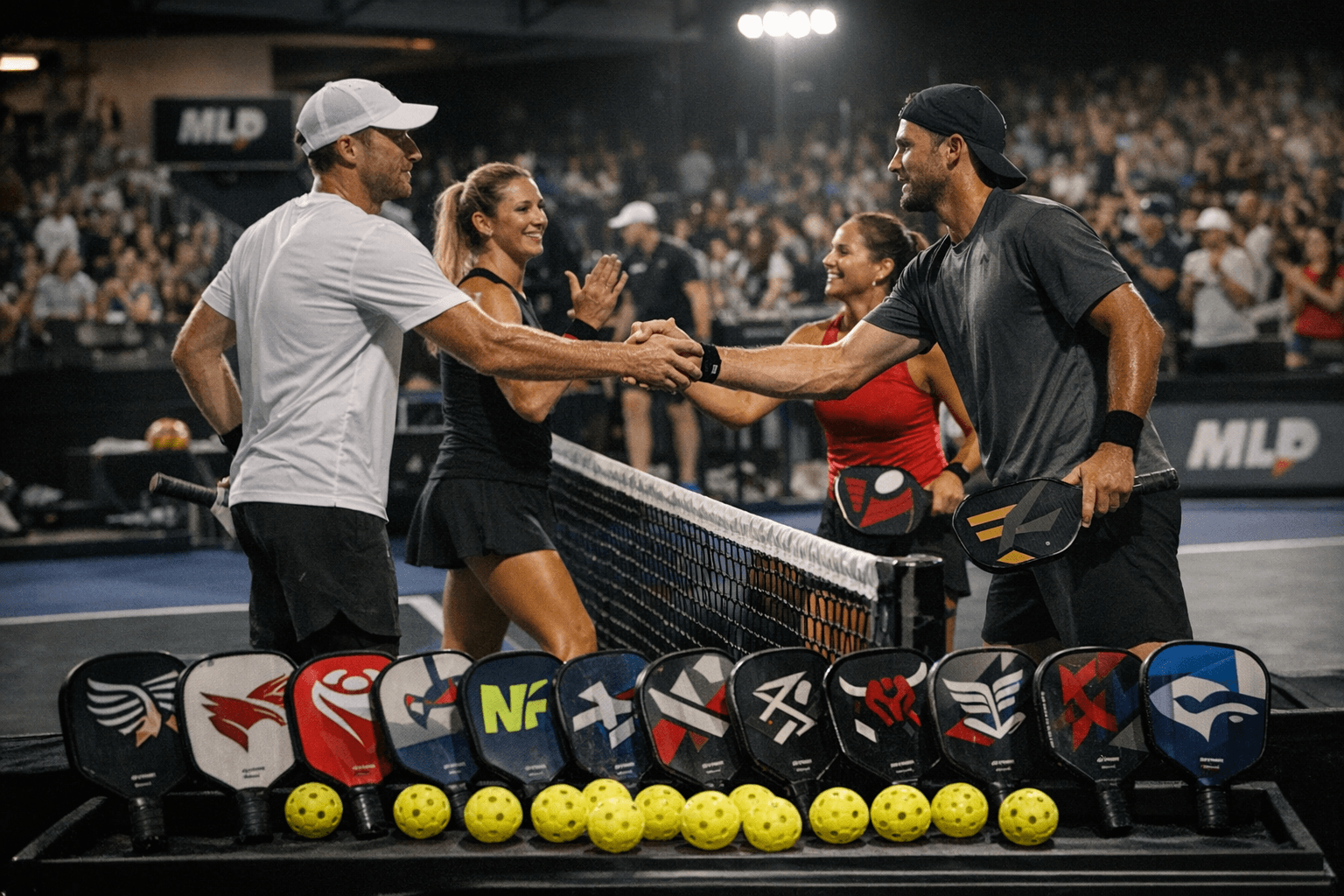
Major League Pickleball announced the 2026 season “will feature 20 teams and operate with a single division (no Challenger/Premier designations).” That single-tier setup redraws the competitive map and simplifies scheduling, meaning every franchise is playing under the same ladder and playoff path. For players and local league organizers, expect a clearer hierarchy and more predictable matchups across events.
2. The Challenger level is gone, emphatically
“Yes, you read that right – No. More. Challenger.” That blunt line captures the shift: MLP is consolidating talent into one level for 2026. For community players tracking pro pathways, this reduces the segmented chatter about Premier vs. Challenger status and should concentrate fan attention and media coverage on a single, deeper field.
3. Brooklyn Pickleball Team absorbs New York Hustlers
Sources state the New York Hustlers “will merge into the Brooklyn Pickleball Team.” Practically, that means Brooklyn’s roster and market footprint grow, while New York loses an independent identity in 2026. Players who were Hustlers in 2025 will be swept into league roster mechanics and the free-agency pool, so local supporters should expect rebranded lineups and new team chemistry.
4. Nashville Chefs will sit out 2026 while owners sort a sale
The Kitchen reports Nashville (the Nashville Chefs) “will not play in 2026. Both franchises asked the league for more time to finalize their potential sales, which could involve relocation/rebranding. The league agreed to let those teams spend this year finalizing those transactions and the plan is to bring those franchises back into the fold in 2027.” That pause affects the market in Nashville and gives community partners time to watch how a return might look next year.
5. D.C. franchise will also sit out 2026 pending owner decisions
Like Nashville, the DC Pickleball Team “will not play in 2026” while potential sales and rebranding are finalized, with an eye toward returning in 2027. That absence reshuffles regional rivalries and means D.C.-area fans may need to follow players through the free-agency pool to keep track of familiar faces.
6. Players from New York, Nashville and D.C. enter the free-agency draft pool
“All players who ended the 2025 season on the New York, Nashville and D.C rosters will go into the free-agency draft player pool.” That’s a big influx to the draft market and a rare opportunity for teams to retool rapidly. If you coach or run a local clinic, use this as a scouting moment, several pro-level players will be up for grabs and could join local exhibitions or clinics.
7. The full player pool drops after keeper selections on Feb. 15
“A full player pool will be released after all other teams have made their keeper selections on Feb. 15.” That timing means rosters will crystalize quickly: keepers get locked in the afternoon, and then teams and fans can digest who remains in the draft. Mark the calendar, that single afternoon reshapes draft strategy and late-market interest.
8. Trade Window #1 closes Feb. 15 at 10 a.m. ET
“Trade Window #1 will close on Feb. 15 at 10 a.m. ET.” Teams must move fast if they want to swap pieces before keeper deadlines, and local pro-watchers should expect a flurry of announcements in the run-up. Coaches and directors who follow pro trades can use the window’s cadence to advise players about midseason opportunities or showcase events.
9. Trade coverage is active and being updated in real time
“Trade Window #1 of the 2026 Major League Pickleball season is underway and will run through Feb. 15 at 10am ET.” Media outlets are tracking deals live, so fans should rely on up-to-the-minute trade logs during the window. That transparency helps amateur leagues plan exhibition matches and invite pro talent for local events when contracts change hands.
10. Keepers are due Feb. 15 at 4:00 p.m. ET, same day, later time
Keepers are due the afternoon of Feb. 15, at 4:00 p.m. ET, giving teams a few hours after the trade window closes to finalize protections. The same-day sequence forces rapid decision-making: teams must weigh late trades against keeper priorities. For players, that means notification timelines will be compressed; expect quick asks from agents and teams.
11. New/emerging players added after the 2025 draft get 80,000 Draft Points
“New or emerging talent added to the league’s approved player pool following the 2025 free-agency draft who were not eligible to be drafted in 2025 will have a Draft Points value of 80,000.” This puts a uniform valuation on late additions and simplifies how teams budget draft capital. If you’re tracking rising names, note that the 80,000 marker is the official baseline when assessing draft value.
12. Season structure: nine regular-season events; each team plays five
“All teams will participate in five of the nine regular season events.” That partial-event model keeps travel and scheduling lighter for franchises and allows fans to see teams rotate through markets. From a community standpoint, that also creates opportunities for local hosts to lobby for team appearances and plan regional clinics around specific events.
13. Event fields and the Walt Disney World exception
“All events will have 11 participating teams with the exception of Walt Disney World, which will have 12 teams.” Expect tighter draws at most stops, with Walt Disney World acting as a bigger festival-style stop. Tournament directors and fan groups should plan for slightly different spectator experiences at that WDW event since more teams means more matches and potential side programming.
14. Event grouping: one group of five and one group of six (WDW two sixes)
“There will be one group of five and one group of six at each event; Walt Disney World will have two groups of 6.” That group split defines match escalation and bracket mechanics, and coaches will have to manage player minutes across group formats. For fans, the group split creates clear mini-leagues inside each event, handy for betting pools, fantasy rosters and local viewing parties.
15. DreamBreaker™ lineups set after the second Mixed game, four players only
“If necessary, DreamBreaker™ lineups will be determined by teams following the second Mixed game, and teams may choose any four players from their roster – two men and two women – regardless of any substitutions used during doubles.” That rule changes late-match strategy: teams can preserve star combinations early and still unleash a fresh DreamBreaker quartet. Club directors and amateur players can use the DreamBreaker model to design balanced mixed squads and late-game tactics.
16. One waiver wire window on July 1 after event No. 6
“Teams will be allowed to participate in one waiver wire period to swap out up to one of their players ONLY for one UPA-signed, MLP non-rostered player during the 2026 season on July 1, following regular season event No. 6, which ends June 28.” This single midseason swap is constrained but strategic, it’s the one realistic in-season roster change aside from trades. If you run a pro-am or community showcase midseason, July 1 is the date to watch for last-minute roster shuffles.
17. Playoffs expand to three weeks and include 12 teams
“Playoffs will expand to three weeks and 12 teams for 2026.” A longer playoff window means more high-stakes events and greater chances for lower-seeded teams to make runs. For local leagues and sponsors, that adds programming opportunities and extends the season’s peak period for exhibitions, viewing parties and youth outreach.
18. Trade example: Layne Sleeth moved to Texas for cash
“A transaction was announced between the Texas Ranchers and California Black Bears: Texas receives Layne Sleeth; California receives cash.” That concrete trade shows teams are active already and demonstrates how cash-for-player deals will impact roster makeups. If you follow particular players, note where they land now, pro appearances at clinics and regional events will follow roster shifts.
19. Technology headline: Owl AI for line calls appears in reporting list
The Dink published a headline noting “Major League Pickleball Taps Owl AI to Automate Line Calls and Challenges for 2026 Season,” although implementation details were headline-only in the reporting list. That signals the league is testing or planning tech-driven officiating, and clubs should track confirmations, automated calls could change coaching advice, spectator experience, and how local tournaments think about replay or challenge systems.
20. What to track next, practical moves for players, coaches and fans
Keep Feb. 15 and July 1 circled: Feb. 15 is the trade/keeper fulcrum and July 1 is the singular waiver swap; both reshape rosters. Watch the full 20-team roster list and the official event schedule, and follow trade logs as they’re updated in real time so you can plan pro-am invites, local exhibitions, or scouting reports. Practical wisdom: monitor official releases, mark the deadline windows on your calendar, and use the consolidation to book clinics or events around predictable star appearances, a little advance planning turns league turbulence into local opportunity.
Know something we missed? Have a correction or additional information?
Submit a Tip