Pickleball for New Players: Essentials, Drills, Gear, Etiquette, and Mindset
New players can speed improvement and stay safe by focusing on grip, underhand serve, stance, soft-game control, proper gear, and fair court etiquette.
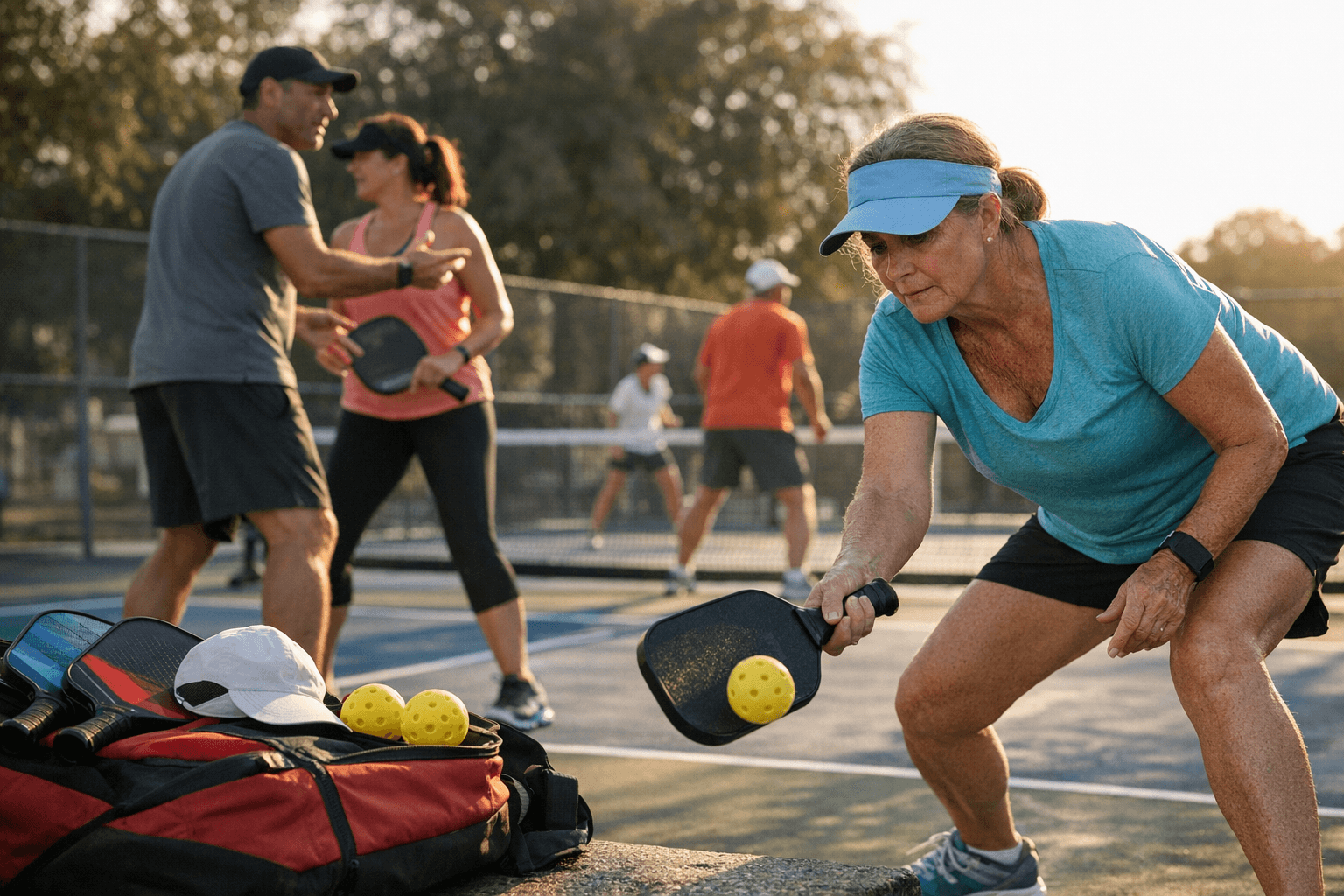
New players who want faster progress and more fun on court should start by mastering the fundamentals: a reliable grip, a consistent underhand serve, and a balanced stance. Technique and consistency matter far more than power in early play; building a repeatable motion pays dividends in rallies and reduces injury risk.
Gear choices shape that early progress. Begin with a forgiving paddle that offers control over raw pop and wear non-marking court shoes with lateral support to protect ankles and knees. Match balls to where you play - indoor or outdoor-appropriate balls make a difference in bounce and pace. Bring water, and many clubs recommend eye protection as an extra safety layer.
The soft game decides a surprising number of amateur matches. Practice dinks and short volleys at the kitchen line until you can sustain controlled exchanges. Short, focused drills - dinking exchanges, third-shot drop practice, and dedicated serve-return rep work - are more effective than random hitting for turning time on court into measurable improvement. Aim for compact practice sessions rather than marathon rallying: repeated short drills accelerate motor learning and make it easier to track progress.
Court etiquette keeps community play welcoming. Arrive early enough to warm up, rotate fairly during open play, and follow local facility rules so hosts and regulars continue to invite you back. Courtesy matters as much as strokes; sharing the ball, limiting consecutive games when the queue is long, and keeping conversation constructive will cement your place in local rotation.
Mix partners and opponents to broaden skills. Play with slightly stronger players occasionally to be pushed out of comfort zones, and rotate partners to test different shots and court positions. Treat early matches as learning opportunities rather than results-only contests. Patience and steady practice produce the biggest gains; progress often shows in small increments like cleaner third-shot drops and longer dink exchanges.
A simple weekly plan can help convert intent into progress: three 60-minute sessions that combine a 10-minute warm-up, 20 minutes of dinking, 20 minutes of third-shot and serve-return drills, and 10-20 minutes of controlled game play keeps focus and prevents burnout. Adjust frequency and duration to personal schedule and recovery needs.
For new players, the payoff is clear: better fundamentals, safer play, and faster skill gains lead to more enjoyable matches and stronger community ties. Keep practicing the basics, protect your body, play with variety, and the kitchen will start to feel like your favorite real estate.
Know something we missed? Have a correction or additional information?
Submit a Tip