Pickleball Line-Calling App Hits $100K Monthly Revenue Targeting Amateur Players
SwingVision's AI line-calling app has hit $100K monthly revenue, proving recreational players will pay to end "that was out" arguments once and for all.
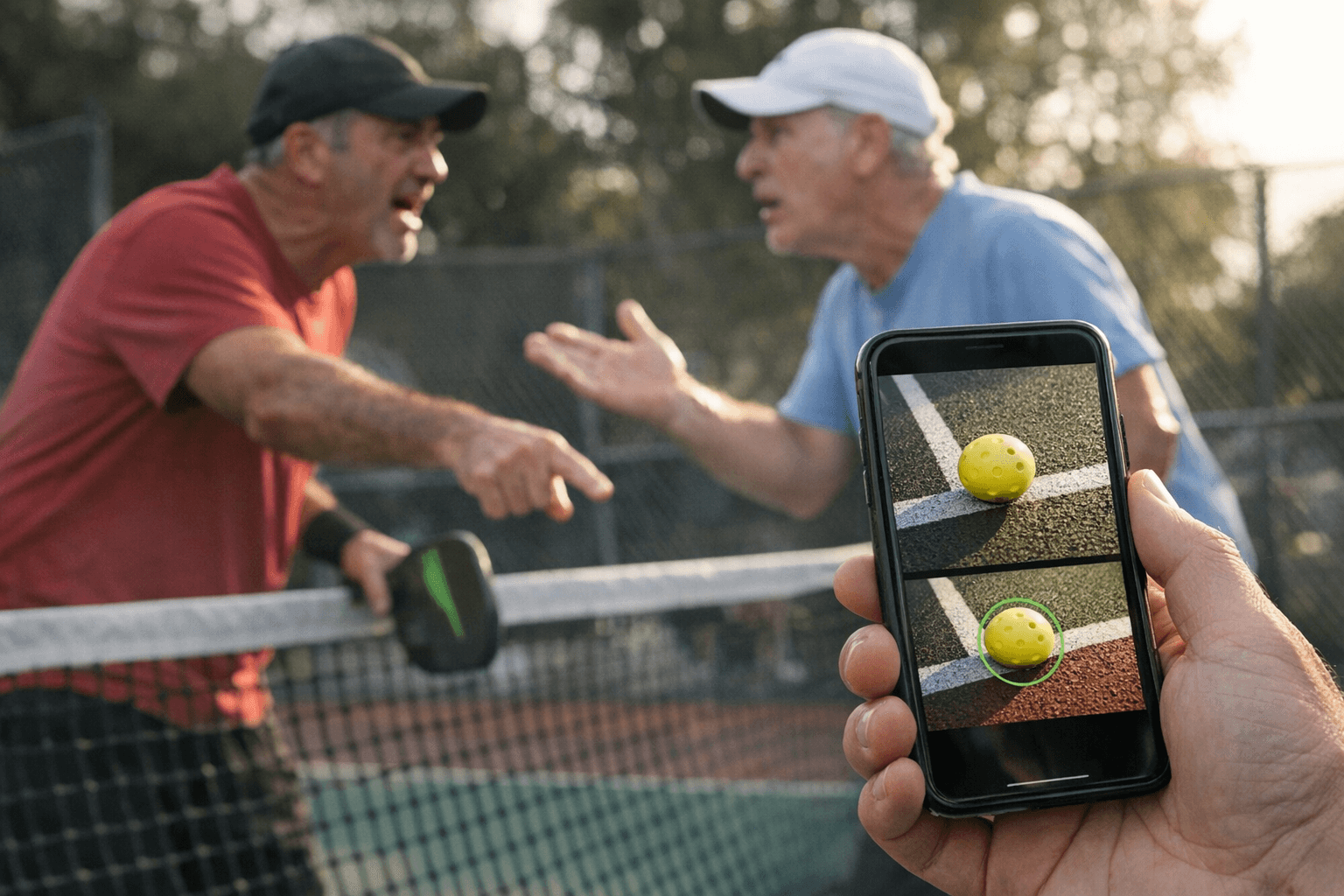
After years of arguing over whether that dink clipped the line or sailed wide, pickleball players have apparently decided they'd rather pay a subscription than argue. That shift, quiet but financially measurable, is exactly what SwingVision's revenue trajectory has been tracking.
SwingVision, the AI-powered line-calling and shot-tracking app co-founded by Swupnil Sahai and Richard Hsu, has crossed $100,000 in monthly revenue with a platform that migrated from tennis to serve pickleball's exploding player base. Sahai spent years working on autonomous driving algorithms at Tesla; Hsu came from an AI startup. Together, they applied the same computer vision techniques used in self-driving cars to calling balls in or out, at $15 a month.
The revenue milestone arrives as entrepreneurs increasingly identify pickleball's amateur tier as the sport's most underserved segment. With more than 15,000 paying subscribers and a $6 million Series A raised in October 2023, SwingVision has demonstrated that recreational players will spend money on tools that solve real problems, and the most persistent problem in recreational pickleball is arguably the line call.
For any regular open-play group, whether a ball was in or out can end friendships. SwingVision clips onto a standard court fence via an accessory called the Swing Stick and runs its AI from a single iPhone or iPad, automatically issuing line-call verdicts in real time. It also tracks shot depth, ball speed, spin rate, and rally length, data points that previously required a coaching session or guesswork.
A Pro subscription runs $179.99 a year, roughly the cost of one private lesson. That unlocks automated scoring, 30 hours of monthly cloud recording, shot breakdowns, and auto-generated highlights. Setup takes about three minutes if you own a compatible iPhone and a chain-link fence. Privacy is a legitimate consideration since matches are recorded to the cloud, though local storage is available for players who prefer not to upload footage.
Where the tool makes clearest sense depends on game context. In casual open play with rotating strangers, the friction of mounting and calibrating a device usually outweighs the benefit. In a dedicated weekly group, a DUPR-rated league, or any team that drills with purpose, the shot data compounds quickly. For tournament directors running club-level events, objective line-calling removes one of the most common officiating headaches at no extra staffing cost.
Sahai has pointed to scoring as the feature new users request most, but it tends to be the shot-tracking data that keeps subscribers renewing. The gamification loop of comparing stats across sessions, reviewing highlights, and setting weekly targets mirrors what fitness apps proved years ago: players return for accountability, not just features.
At $100,000 a month, SwingVision represents something larger than a single product's success. It marks the moment pickleball's amateur market started rewarding entrepreneurs who treated recreational players as serious athletes.
Know something we missed? Have a correction or additional information?
Submit a Tip