Seven Practical Coaching Tips Every Amateur Pickleball Player Needs
On December 27, 2025 I released a compact, coaching focused list of seven immediately actionable tips for amateur and recreational pickleball players, aimed at quick on court improvements. These small adjustments address common decision making and movement mistakes, and they matter because they produce clearer shot choices, fewer unforced errors, and faster progress for intermediate players.
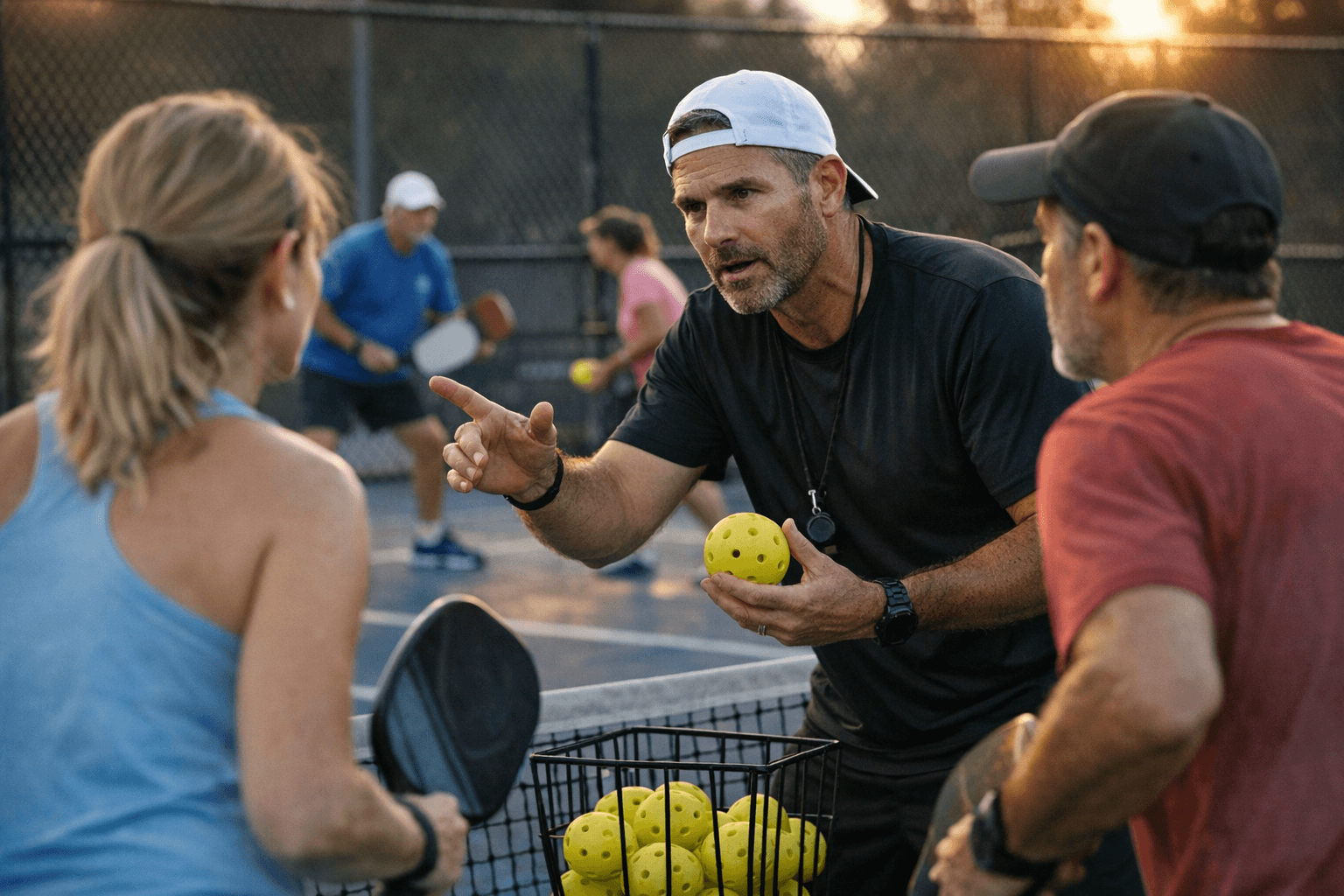
The seven tips concentrate on decisions and habits that cost points most often in casual matches. First, aim for your opponent's feet rather than the net. A low, feet level target forces awkward returns, reduces angles opponents can attack, and simplifies your next shot selection. Coaching cue, keep the ball low and aim at their toes instead of trying to clear the net.
Second, adopt a simple lob retrieval rule. Have the player opposite the lob run it down to track it cleanly, while your partner covers the court for the overhead. This division of labor reduces collision and confusion, and increases chances of converting the lob into a neutral or winning position.
Third, when unsure about placement, aim for the middle of the court. Center targets compress opponent angles and cut down passing options. The practical cue is, when you hesitate, aim middle and force opponents to make a choice under pressure.
Fourth, prioritize a solid return of serve before rushing to the kitchen. Deep, middle returns create confusion for the receiving team and delay their ability to attack. The coaching cue is, step in only after a reliable return lands and you have balance.
Fifth, master the split step and remain balanced when moving to the kitchen. A consistent split step improves reaction time and control when the ball arrives. Cue, land balanced and push forward rather than lunging, and you will reach more dinks and volleys and reduce misreads.
Sixth, be selective about around the post attempts. Look for shallow, wide, and spin friendly conditions before trying an around the post. The adjustment prevents high risk attempts that often give opponents free points. Cue, only go around the post when ball trajectory and court position clearly favor the shot.
Seventh, keep the paddle in front of you to improve contact, reaction time, and shot consistency. A ready paddle shortens reaction windows and produces cleaner exchanges. Cue, hold your paddle in front at chest level and adjust with small wrist and forearm movements.
These tips are designed to be practiced immediately in warm ups and short drills. They require little equipment and pay off in lower error rates and clearer team roles. Implement them during your next practice session, and you should see more consistent rallies, fewer miscommunications, and faster gains at the intermediate recreational level.
Know something we missed? Have a correction or additional information?
Submit a Tip